- Tel: +86 13451474678 / 13451474678
- Email: / hbzinanmech@gmail.com

Custom Worm Wheel: High Torque, Low Noise—Why Choose Us?
The Quiet Hero of Farm Gearboxes: Worm Wheel Dynamics and the Harvester Input Shaft
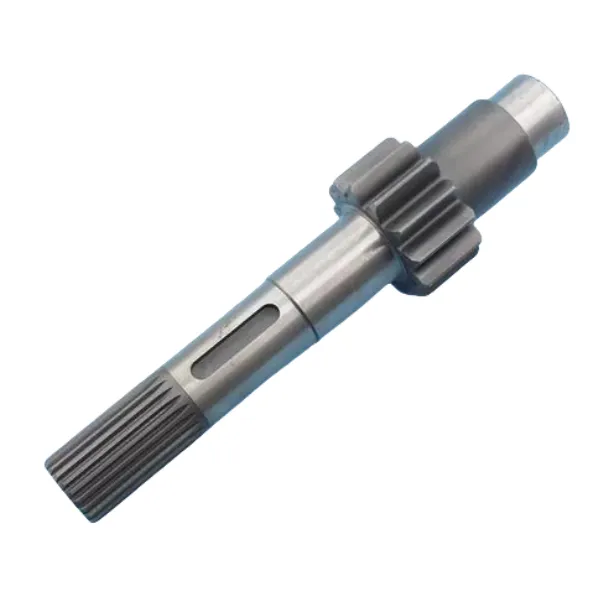
In every harvester gearbox I’ve opened (and I’ve seen a few, usually on dusty field edges), the first thing I look for is the worm wheel interface and how it mates with the input shaft. That junction tells you if the machine will purr through peak season or call it quits the minute the crop gets heavy. Our reference unit today comes from Shijiazhuang, Hebei Province, China—ZinanMech’s Harvester Input Shaft—built for real farm chaos, not just catalog photos.
Why obsess over the worm wheel? Because a worm-drive reduction is what tamps down engine speed and feeds smooth, high-torque motion to the cutting, threshing, and conveyor systems. If the input shaft isn’t right—materials, geometry, surface finish—the worm wheel wears prematurely, backlash grows, and efficiency drops. Many customers tell me the difference shows up as fewer mid-season stoppages and, surprisingly, a lower fuel bill.
Industry trends (and a few field truths)
- Higher torque density: compact gearboxes with hardened shafts to keep the worm wheel honest under shock loads.
- Lower noise and heat: better tooth micro-geometry and fine grinding reduce sliding losses at the worm wheel.
- Faster lead times: regionalized supply; Hebei shops are getting quick at custom splines and modules.
- Traceability: serial-level heat treatment reports now expected, not optional.
How the input shaft supports a worm wheel
The input shaft drives the worm; the worm engages the worm wheel. That sliding contact needs a hard, smooth, stable shaft surface and accurate concentricity to keep contact patterns centered. Real-world use may vary, but I look for runout ≤ 0.01 mm and a surface roughness around Ra 0.4–0.8 μm on bearing seats.
Product specs (harvester input shaft, worm-drive compatible)
| Parameter | Typical Value (≈) |
|---|---|
| Material | 20CrMnTi or 42CrMo alloy steel |
| Heat Treatment | Carburized + hardened, HRC 58–62; case depth 0.8–1.2 mm |
| Spline Standard | ISO 4156 / DIN 5480 (on request) |
| Runout | ≤ 0.01 mm (bearing journals) |
| Surface Roughness | Ra 0.4–0.8 μm |
| Service Life | ≥ 2 harvest seasons under typical duty, around 600–1,000 h |
Process flow and testing
- Materials: certified bars (GB/T 3077); forging for grain flow.
- Machining: turning, spline cutting/hobbing, grinding of journals to support the worm wheel mesh stability.
- Heat treatment: carburizing, quench, temper; distortion control with press quench where needed.
- QC: hardness mapping; case depth via microhardness; magnetic particle inspection; runout and CMM checks.
- Bench tests: 200 h endurance at rated torque; oil temp and noise logged; backlash growth checked vs AGMA/ISO limits.
- Certifications: ISO 9001 quality system; material RoHS statements available.
Vendor comparison (quick glance)
| Vendor | Strengths | Lead Time (≈) | Notes |
|---|---|---|---|
| ZinanMech (Hebei) | Tight runout; custom splines; good worm wheel pairing | 2–4 weeks | Solid heat-treatment traceability |
| Vendor A | Economy pricing | 4–6 weeks | Finish sometimes varies |
| Vendor B | Premium grinding | 3–5 weeks | Higher cost, stable for heavy worm wheel loads |
Applications and field feedback
Wheat, corn, and soybean harvesters; header drives and conveyor reductions; dusty, high-shock duty. One Hebei co-op ran ZinanMech shafts through two seasons—reported ≈6% fewer stoppages and measurable reduction in gearbox noise (informal dB readings, but still). To be honest, that tracks with what I’ve seen when the worm wheel contact pattern stays centered.
Customization options
- Module/spline variants to match your worm wheel set
- Coatings (phosphate) for corrosion-prone storage
- Bearing journal tolerances to fit specific gearbox housings
Spec note: always align lubricant choice with worm wheel metallurgy (bronze vs steel). Wrong oil, wrong season—painful.
Standards and references
- ISO 6336: Calculation of load capacity of spur and helical gears (applied to worm interfaces by analogy).
- AGMA 2001-D04: Fundamental rating factors and calculation methods for gear tooth strength.
- ISO 4156: Straight cylindrical involute splines—definitions, tolerances, inspection.
- ISO 9001:2015 Quality management systems—Requirements.
- GB/T 3077: Alloy structure steels (China standard for materials like 42CrMo).

Related Products
-
 Tractor Gear Shaft
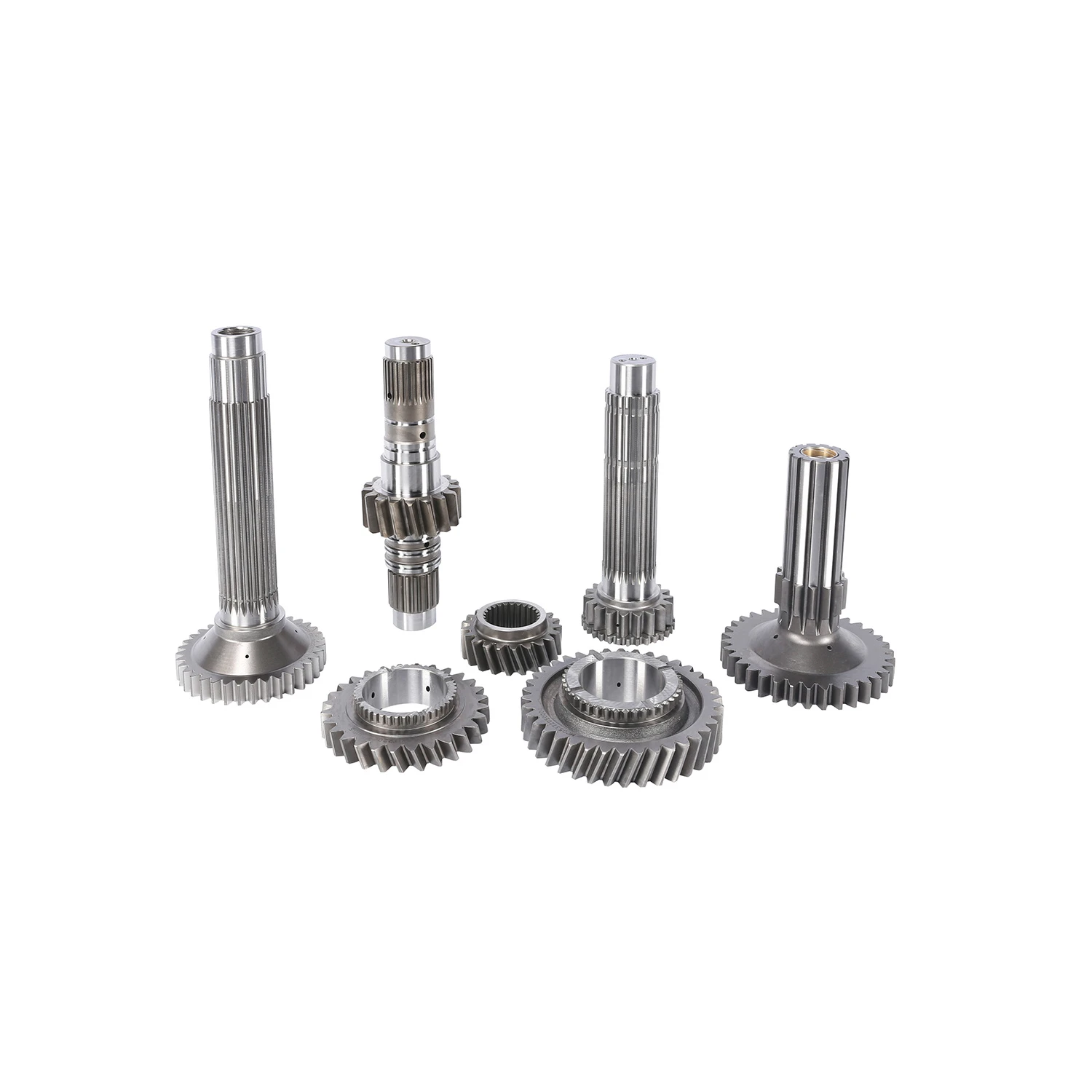
The tractor gear shaft is a crucial element in the power transmission system of a tractor. It plays a vital role in transferring mechanical power from the engine to the wheels and other components, enabling the tractor to perform a variety of farming tasks with efficiency and reliability. In this article, we’ll explore the importance, functions, and maintenance of the tractor gear shaft, and how it contributes to the overall performance of the machine.
-
 Transmission Gear
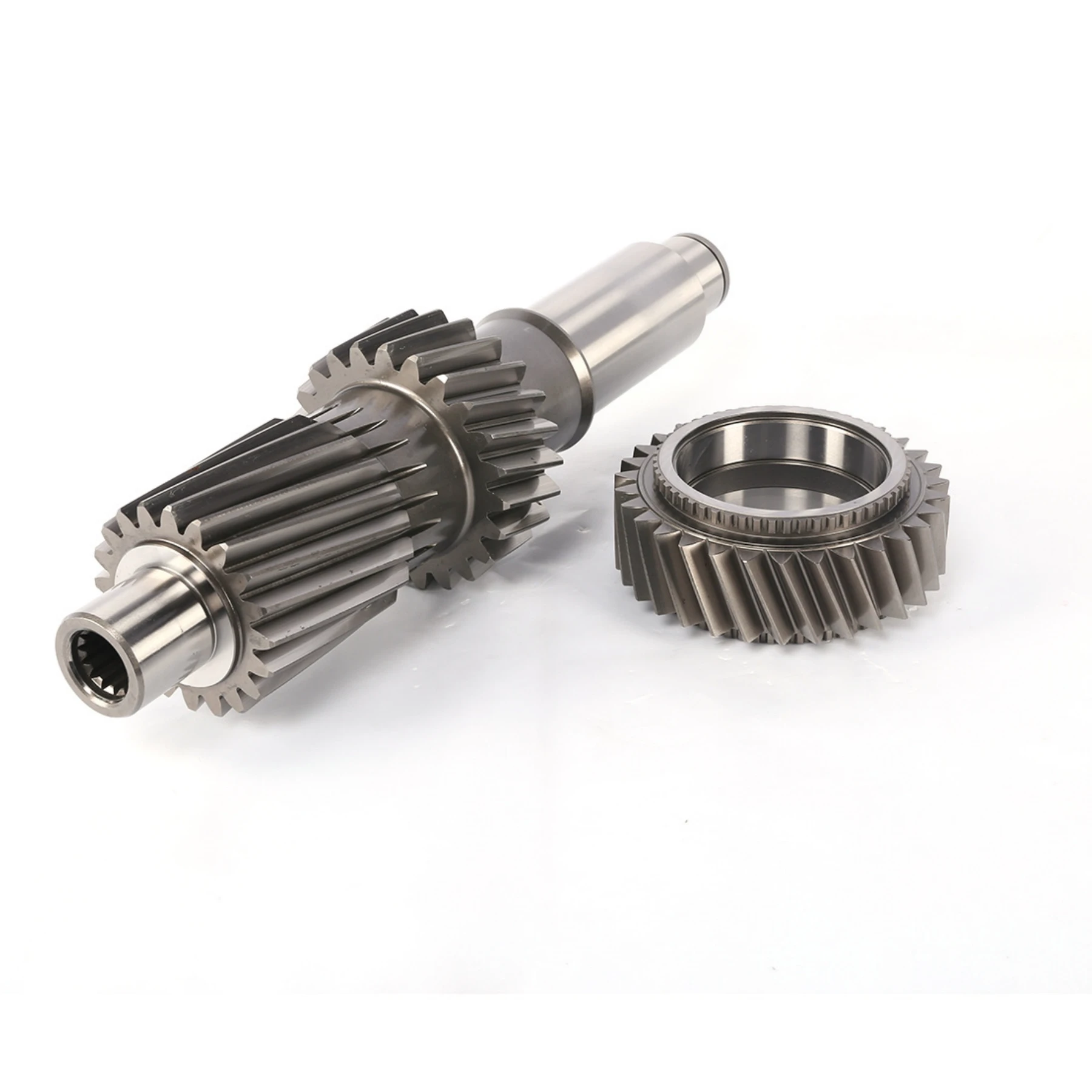
Power transmission: the engine operation drives the input gear on the input shaft to rotate, the input gear engages with other gears, and relies on the interaction between teeth and teeth to transfer the power to the intermediate gear (if any) and the output gear, and finally transfers the power to the driving wheel and other components through the output shaft to make the vehicle or equipment move.
Variable speed principle: Change the transmission ratio by meshing gears with different numbers of teeth. For example, when the big gear drives the small gear, the speed of the small gear will be faster than the big gear, but the output torque will be smaller, to achieve growth and torque reduction; On the contrary, when the pinion drives the big gear, the speed of the big gear slows down, the torque increases, and the torque increases. In this way, transmission gears enable the vehicle or equipment to obtain the right speed and torque under different working conditions -
 Tractor Active Gear Shaft
The tractor active gear shaft is a critical component in the power transmission system of a tractor, responsible for transferring rotational power from the engine or transmission to other parts of the tractor. By efficiently distributing torque and enabling smooth gear shifts, the active gear shaft plays a vital role in enhancing the performance and versatility of the tractor, making it essential for a wide range of agricultural tasks. In this article, we’ll explore the function, benefits, and maintenance of the tractor active gear shaft.
-
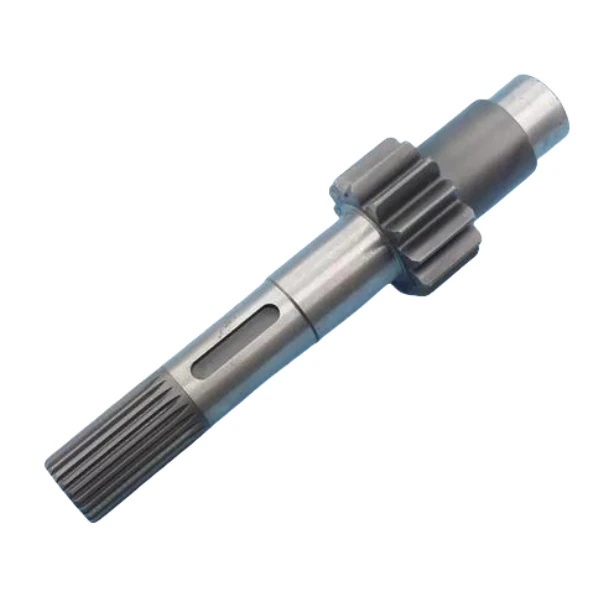 Harvester Input Shaft
The main role of the harvester input shaft is to introduce the power of the external power source into the internal transmission system of the harvester. When the power source (such as an engine) is running, the torque generated is transmitted to the input shaft through the connecting parts, causing the input shaft to start rotating. The gear, pulley or sprocket and other transmission parts installed on the input shaft will rotate with the rotation of the input shaft, and then transfer the power to the subsequent transmission parts and working parts, such as driving the cutting device, conveying device, threshing device, etc., to complete the crop harvesting, conveying, threshing and other work processes.
Related News

What Is the Use of Seeder? Air Suction No-Till Seeder FAQ
Learn what is the use of seeder equipment, how air suction seed placement works, supported crops, terrain features, and ordering checks for no-till planting.
>

Comparing A Rice Planter Options: Specifications, Materials and Supplier Documentation
Compare A Rice Planter options by planting controls, field conditions, materials, operating modes, customization, and documented information gaps.
>

Optimize Your Small Scale Farm With a Hobby Farm Seed Drill
Optimizing Your Small-Scale Farm with a Hobby Farm Seed Drill For many aspiring farmers and gardening enthusiasts, transitioning from hand-sowing to mechanized planting is a significant milestone. Utilizing a hobby farm seed drill allows for precision planting, ensuring that seeds are placed at the correct depth and spacing for optimal germination. Whether you are growing cover crops, vegetables, or grains on a small scale, the right equipment reduces physical labor and minimizes seed waste. In this guide, we will explore how the right seeding technology can transform your agricultural productivity and the key factors to consider when selecting equipment for your plot.
>

Maximize Crop Yields with the Professional Happy Seed Drill
Maximize Crop Yields with the Happy Seed Drill: An Essential Guide In the modern agricultural landscape, precision is the key to sustainability and profitability. The happy seed drill represents a significant leap in planting technology, designed to ensure that every seed is placed at the optimal depth and spacing. By reducing seed waste and improving germination rates, this machinery allows farmers to optimize their land use and increase overall harvest efficiency. Whether you are managing a small family plot or a large-scale industrial farm, understanding the mechanics and benefits of advanced seeding equipment is crucial for long-term success.
>

Professional Hand Seed Drill Machine for Precision Planting
Maximize Your Harvest with the Professional Hand Seed Drill Machine Efficient planting is the cornerstone of a successful harvest. For modern farmers seeking a balance between precision and manual control, the hand seed drill machine offers an indispensable solution. By integrating advanced seed distribution mechanisms with ergonomic design, these machines reduce the physical burden of sowing while ensuring every seed is placed at the optimal depth. Whether you are managing a small vegetable plot or a larger cereal field, investing in high-quality planting equipment can drastically improve crop uniformity and yield. In this guide, we will explore the features and advantages
>

Efficient Farming with Hand Operated Seed Drill Machine Guide
Revolutionizing Planting: The Ultimate Guide to the Hand Operated Seed Drill Machine For small to medium-scale farmers, precision in sowing is the cornerstone of a successful harvest. The hand operated seed drill machine offers a perfect blend of simplicity and efficiency, eliminating the tedious nature of manual broadcasting. By ensuring uniform seed depth and consistent spacing, this tool maximizes germination rates and optimizes crop yield. In an era where agricultural productivity is key to food security, adopting a reliable manual seeder is a strategic move for any grower looking to reduce labor costs while improving plant health.
>

Maximize Crop Yields with a hand operated automatic seed drill
Maximizing Crop Yields with a Hand Operated Automatic Seed Drill Efficient planting is the cornerstone of successful farming. The hand operated automatic seed drill represents a significant leap in agricultural technology for small to medium-scale farmers. By combining manual mobility with automatic precision, this tool eliminates the inconsistencies of hand-broadcasting seeds, ensuring optimal spacing and depth. Whether you are managing a vegetable garden or a commercial grain plot, utilizing a precision seeder reduces waste and promotes healthier plant growth. In this guide, we explore how this innovative machinery optimizes the sowing process and why it is an essential investment for modern sustainable agriculture.
>

Guide to Four Wheel Drive Manual Transmission for Off Road Control
Mastering the Terrain: The Guide to Four Wheel Drive Manual Transmission For off-road enthusiasts and industrial operators, the combination of a four wheel drive manual transmission offers an unparalleled level of control and reliability. Unlike automatic systems that rely on computer-managed shifts, a manual setup allows the driver to dictate exactly how power is distributed to the wheels, making it indispensable for steep inclines, muddy terrains, and heavy-duty hauling. At Zinanmech , we understand that the synergy between a robust drivetrain and a manual gearbox is what defines true mechanical endurance.
>

Complete Guide to Choosing All Wheel Drive Transmission Systems
Mastering Traction: The Ultimate Guide to All Wheel Drive Transmission When it comes to vehicle performance and safety across diverse terrains, the all wheel drive transmission plays a pivotal role. Unlike standard drivetrains, AWD systems are engineered to distribute power to all four wheels simultaneously, providing superior grip and stability regardless of the road surface. Whether you are navigating snowy mountain passes or rain-slicked highways, understanding how these systems function can help you make an informed decision for your fleet or personal vehicle. In this comprehensive guide, we will explore the technical nuances, different types of AWD systems, and how to maintain them
>

Find High Quality All Wheel Drive Manual Transmission for Sale
Finding the Best All Wheel Drive Manual Transmission for Sale: A Buyers Guide For driving enthusiasts and off-road professionals, the combination of all-wheel drive AWD and a manual gearbox represents the pinnacle of vehicle control. Searching for an all wheel drive manual transmission for sale can be a daunting task, as these configurations have become increasingly rare in the modern automotive market. Whether you are looking to upgrade your current vehicles drivetrain or purchasing a specialized machine for rugged terrain, understanding the mechanical nuances is key. This guide provides an in-depth look at how to identify high-quality transmissions
>
International layout
Spread all over the world
our products are exported to various parts of the world. Currently, our products have been exported to more than 40 countries Our products cover Asia, Europe, Africa, South America, North America, and Oceania
Sign up
for Newsletter
Subscribe to the weekly newsletter for all the latest updates