- Tel: +86 13451474678 / 13451474678
- Email: / hbzinanmech@gmail.com

Discover the Power of 3 Point Hitch Drill Seeder | Efficient & Sustainable Planting
Understanding the 3 Point Hitch Drill Seeder: Why It Matters Today
If you’ve ever glanced at a modern tractor out in the fields, chances are you’ve seen a 3 point hitch drill seeder doing its rhythmic dance across the soil. It's not just farm fancy — these machines address a fundamental global challenge: sustainable, efficient planting in a world where maximizing yield while preserving resources is everything. Understanding what this humble yet powerful tool does is key for anyone invested in agriculture, especially with rising food demands driven by population growth and environmental concerns.
Globally, agricultural machinery like the 3 point hitch drill seeder helps farmers plant seeds quickly and uniformly, improving germination rates and crop yields. In fact, data from the FAO suggests mechanized seeding boosts efficiency and reduces labor, which is critical as the global farming workforce shrinks. Knowing its key benefits—precision, adaptability, and cost-effectiveness—helps farmers, NGOs, and agri-businesses meet world food production goals.
Mini takeaway: The 3 point hitch drill seeder is more than a simple farm tool; it’s part of the machinery puzzle essential to feeding billions sustainably.
Global Context: Why Mechanized Seed Drilling Is More Relevant Than Ever
On a macro scale, agricultural challenges have never been bigger. The World Bank estimates that crop production must increase by roughly 70% by 2050 to keep up with demand. But here’s the catch — arable land is limited, and climate stresses are mounting. So how do we make the land we have work smarter, not harder?
This is where tools like the 3 point hitch drill seeder come into play. By providing precise seed placement and depth control, the drill seeder mitigates risks of poor germination and uneven crop stands, both of which can cause yield loss. It rolls up sleeves for small and medium-sized farms in developing countries, while also serving large mechanized farms elsewhere. From the Midwestern US plains to the rice fields of Southeast Asia, this technology shapes the future of farming.
Mini takeaway: Facing intense pressures on food supply chains, the 3 point hitch drill seeder helps maximize output on existing farmland, blending tradition and technology.
What Exactly Is a 3 Point Hitch Drill Seeder?
In simple terms, a 3 point hitch drill seeder is an implement attached to a tractor’s three-point linkage that allows seeds to be drilled directly into the soil. Unlike broadcast sowing, which scatters seeds unevenly, a drill seeder places seeds at consistent depths and spacing, improving uniformity and reducing seed waste.
Its design revolves around the tractor’s standard hitch system – a clever three-armed mechanism that makes attachment easy and secure. This compatibility means farmers don’t need specialized tractors — just regular ones with the 3 point hitch system, which is incredibly common worldwide.
From an industrial angle, this simple mechanical interface revolutionized planting efficiency and forms the backbone of many planting strategies. For humanitarian or food security projects, being able to deploy standard, modular equipment like this is invaluable.
Key Components and Practical Features of the 3 Point Hitch Drill Seeder
1. Durability & Build Quality
Most models are built with heavy-gauge steel frames and reinforced linkages to endure tough field conditions year after year. Longevity is crucial — farmers don't want to replace equipment every season.
2. Precision Seed Metering
Seed metering mechanisms regulate how much seed passes through, helping avoid under or over-seeding. Many newer designs allow calibration for different seed types and sizes.
3. Adjustable Depth Control
By tweaking depth settings, operators can match seed placement to soil moisture and crop requirements. This controls germination consistency.
4. Size and Scalability
Various hopper sizes and varying row spacing let farmers scale from small plots to larger fields. Whether you run a diversified farm or a single crop operation, the drill seeder can fit your needs.
5. Cost Efficiency
Compared to custom planting services or manual sowing, owning a 3 point hitch drill seeder reduces labor costs and seed waste, delivering long-term savings.
6. Ease of Maintenance
With fewer moving parts than some high-tech planters, maintenance is straightforward, a big plus in remote or resource-limited areas.
Mini takeaway: At its core, the 3 point hitch drill seeder balances rugged simplicity with user-friendly precision, making it practical across various farm scales.
Real-World Applications & Who’s Using Them
These seeders are literally everywhere — from grain farms in Canada to vegetable plots in Europe, and even in relief operations in Africa. For example, after droughts in east Africa, NGOs have supplied local farmers with 3 point hitch drill seeder units to jumpstart reforestation and crop recovery efforts.
In developed markets, cooperative farmers use these for rapid planting cycles, often integrated with GPS systems for precision agriculture. Meanwhile, in emerging economies, the affordability and tractor compatibility mean a faster entry point into mechanized farming.
One small case: a cooperative in Brazil reported that switching from broadcasting to drilling cut seed expenses by nearly 20%, while improving crop uniformity — a textbook win-win.
The Advantages — It’s More Than Just Efficient Planting
- Cost Savings: Less seed wastage and labor mean more bang for the buck.
- Sustainability: Reduced soil disturbance lowers erosion risk and improves soil health.
- Reliability: Durable design means less downtime during critical planting windows.
- Social Impact: Modern farm tech like this can raise rural livelihoods and skills.
There’s also a psychological element: for farmers, knowing you have dependable tools fosters trust and confidence every planting season. The innovation embedded here is quiet but profound.
Emerging Trends and Future Innovations
What’s next for the 3 point hitch drill seeder? Frankly, it’s evolving alongside digital and green revolutions. Expect to see:
- Smart seeders equipped with IoT sensors for real-time monitoring.
- Automated depth and rate control using AI to optimize seeding on the fly.
- Lightweight composite materials improving fuel efficiency by lowering tractor load.
- Electric tractor compatibility enabling zero-emission planting.
Also, modular attachments allowing mixed cropping or micro-dosing fertilizers during seed drilling are gaining attention, making the device more multifunctional.
Challenges & How Experts Are Fixing Them
Of course, no piece of equipment is perfect. Some farmers struggle with seed clogging when using certain seed varieties, or find setting adjustments confusing at first. Transporting bulky equipment on rough roads can be tricky too.
Research and extension services now offer better training and improved manuals, while manufacturers are designing intuitive calibration systems and foldable frames for transport. These small but vital improvements make owning and operating a 3 point hitch drill seeder much easier.
Three Point Hitch Drill Seeder: Specifications at a Glance
| Feature | Typical Value | Remarks |
|---|---|---|
| Hitch Type | Category I or II 3 Point | Compatible with most tractors |
| Row Spacing | 6” to 12” (adjustable) | Adaptable for different crops |
| Seed Hopper Capacity | 100 to 300 liters | Varies by model size |
| Working Width | 1.2m to 3m | Determines field coverage rate |
| Seed Meter Type | Mechanical or pneumatic | Affects precision and maintenance |
Vendor Comparison: Leading 3 Point Hitch Drill Seeder Manufacturers
| Brand | Price Range | Key Features | Warranty & Support |
|---|---|---|---|
| ZinaMech | $1,500 - $4,000 |
Modular design, adjustable depth, durable steel frame |
2-year warranty, training available |
| AgroSeed Co. | $1,200 - $3,500 |
Pneumatic metering, lightweight frame, easy calibration |
1-year warranty, remote support |
| GreenField Equip. | $2,000 - $5,000 |
Advanced depth system, GPS ready, foldable design |
3-year warranty, on-site training |
Frequently Asked Questions About 3 Point Hitch Drill Seeder
- Q1: How does a 3 point hitch drill seeder improve planting efficiency?
- A: By delivering precise seed placement and consistent depth, it reduces seed waste and ensures uniform crop emergence, which ultimately leads to higher productivity with less manual labor.
- Q2: Can I use a 3 point hitch drill seeder with any tractor?
- A: It’s compatible with most tractors that have a Category I or II 3 point hitch system, which is standard across many tractor models worldwide, making it versatile and accessible for various farms.
- Q3: What seed types are suitable for this drill seeder?
- A: These seeders work well with a broad range of crops including wheat, barley, soybeans, and even some vegetables, though very small seeds may require special calibration or attachments.
- Q4: How difficult is maintenance for this equipment?
- A: Fairly straightforward—seed meters and seed tubes should be cleaned regularly, and inspecting for wear on parts helps. Spare parts are usually readily available, especially for popular brands.
- Q5: What are some tips for first-time users?
- A: Start by practicing calibration with small runs, ensure proper hitch attachment, and consult the user manual thoroughly. Getting used to field conditions and seed types takes a bit of trial and error.
Wrapping Up: Why Invest in a 3 Point Hitch Drill Seeder?
To circle back, the 3 point hitch drill seeder isn’t just a farming implement—it’s a strategic tool that enhances productivity, promotes sustainability, and empowers farmers globally. As broader trends lean into green tech and smart farming, owning such adaptable machinery is a smart move. Curious to see options or ask about custom setups? Feel free to visit ZinaMech’s official site to explore models tailored to your needs. Farming might be age-old, but innovation keeps it moving forward.
References

Related Products
-
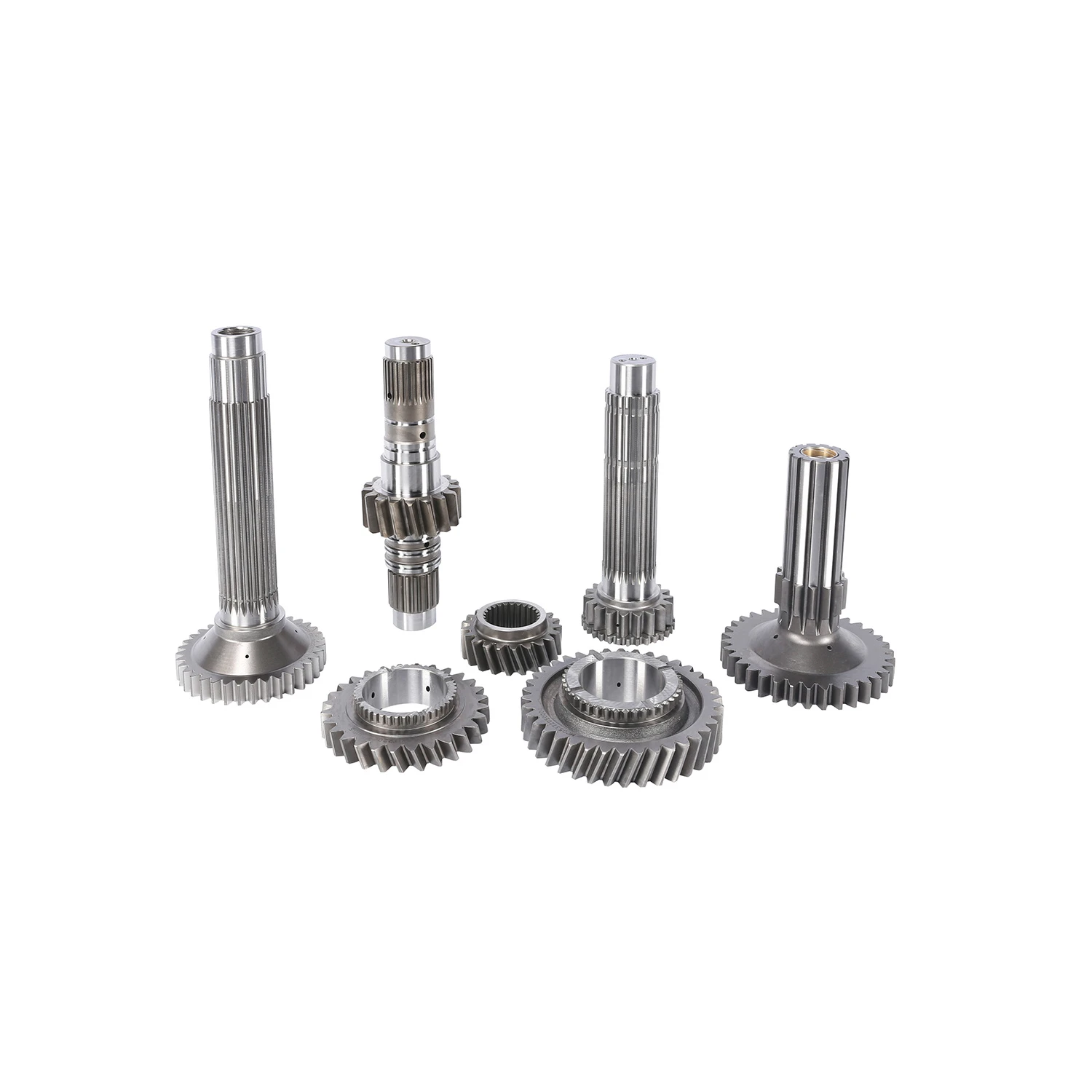 Tractor Gear Shaft
The tractor gear shaft is a crucial element in the power transmission system of a tractor. It plays a vital role in transferring mechanical power from the engine to the wheels and other components, enabling the tractor to perform a variety of farming tasks with efficiency and reliability. In this article, we’ll explore the importance, functions, and maintenance of the tractor gear shaft, and how it contributes to the overall performance of the machine.
-
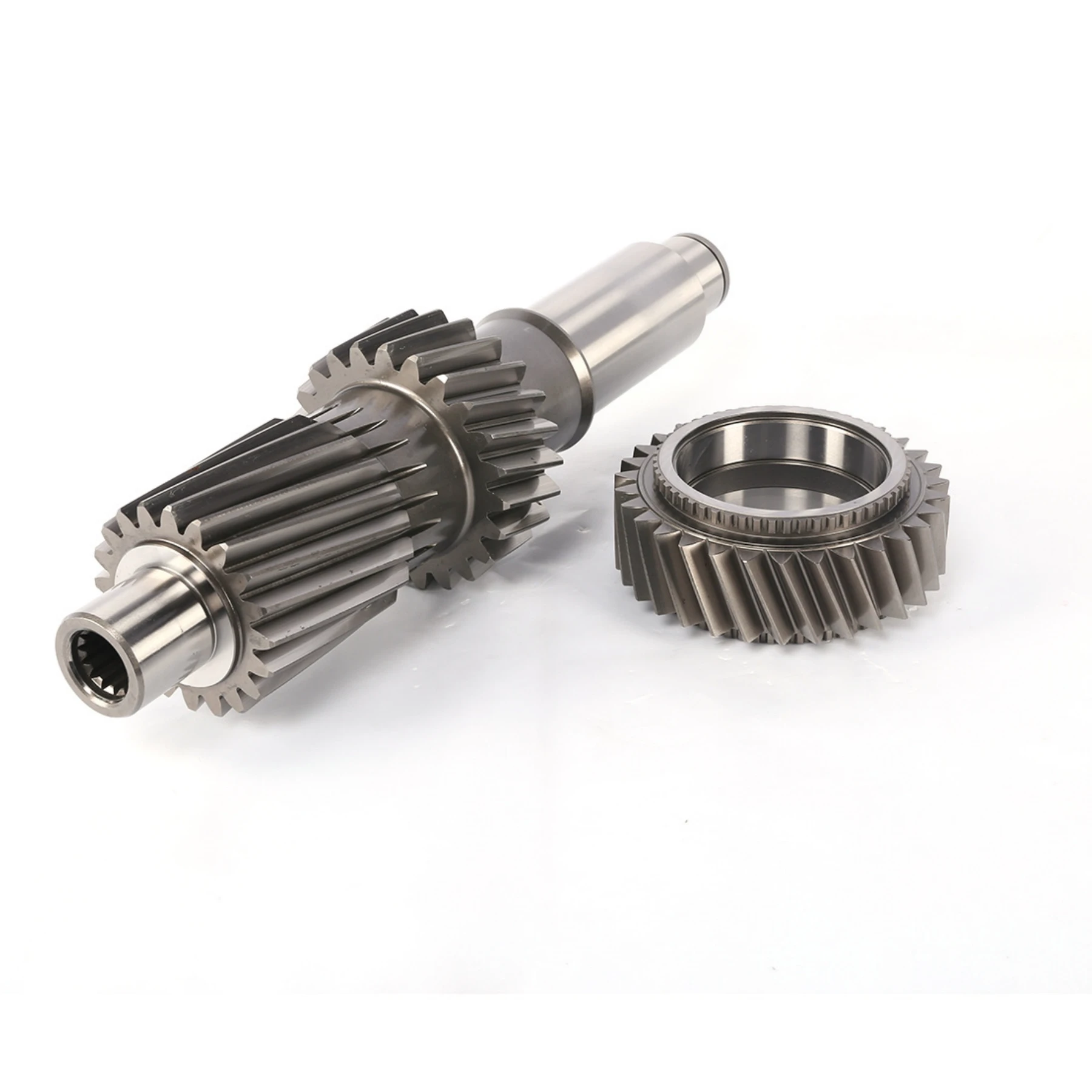 Transmission Gear
Power transmission: the engine operation drives the input gear on the input shaft to rotate, the input gear engages with other gears, and relies on the interaction between teeth and teeth to transfer the power to the intermediate gear (if any) and the output gear, and finally transfers the power to the driving wheel and other components through the output shaft to make the vehicle or equipment move.
Variable speed principle: Change the transmission ratio by meshing gears with different numbers of teeth. For example, when the big gear drives the small gear, the speed of the small gear will be faster than the big gear, but the output torque will be smaller, to achieve growth and torque reduction; On the contrary, when the pinion drives the big gear, the speed of the big gear slows down, the torque increases, and the torque increases. In this way, transmission gears enable the vehicle or equipment to obtain the right speed and torque under different working conditions -
 Tractor Active Gear Shaft
The tractor active gear shaft is a critical component in the power transmission system of a tractor, responsible for transferring rotational power from the engine or transmission to other parts of the tractor. By efficiently distributing torque and enabling smooth gear shifts, the active gear shaft plays a vital role in enhancing the performance and versatility of the tractor, making it essential for a wide range of agricultural tasks. In this article, we’ll explore the function, benefits, and maintenance of the tractor active gear shaft.
-
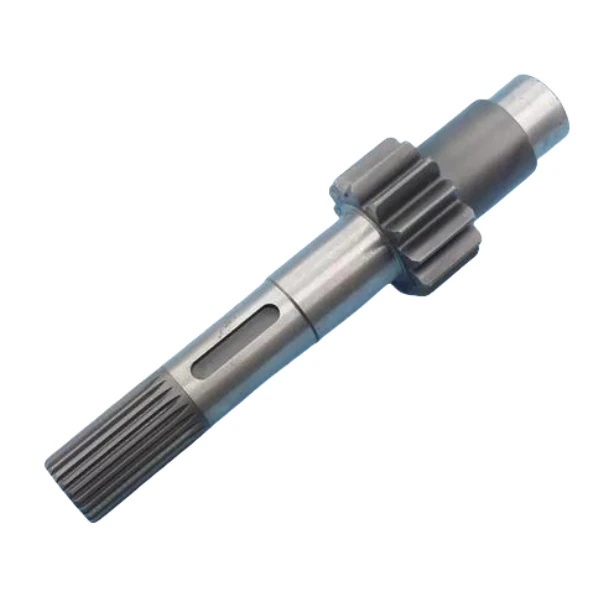 Harvester Input Shaft
The main role of the harvester input shaft is to introduce the power of the external power source into the internal transmission system of the harvester. When the power source (such as an engine) is running, the torque generated is transmitted to the input shaft through the connecting parts, causing the input shaft to start rotating. The gear, pulley or sprocket and other transmission parts installed on the input shaft will rotate with the rotation of the input shaft, and then transfer the power to the subsequent transmission parts and working parts, such as driving the cutting device, conveying device, threshing device, etc., to complete the crop harvesting, conveying, threshing and other work processes.
Related News

How to Choose a Gearbox Transmission for Agricultural Power Reversal
Choose a gearbox transmission for agricultural machinery by checking application, housing rigidity, compact fit, gear engagement, connections, and customization needs.
>

Drive axle price: choosing the 1204 axle for multi-wheel machinery
Compare the factors behind drive axle price for the 1204 axle, including 4WD, 6WD, 8WD layouts, differential locks, gearing, steering, and machine fit.
>

How to Choose a Wheel Transmission for Heavy-Duty 4WD Machinery
Choose a wheel transmission by checking hydraulic control, torque, braking, rear drive interface, and 4WD requirements for the D8 platform.
>

What Is the Use of Seeder? Air Suction No-Till Seeder FAQ
Learn what is the use of seeder equipment, how air suction seed placement works, supported crops, terrain features, and ordering checks for no-till planting.
>

Comparing A Rice Planter Options: Specifications, Materials and Supplier Documentation
Compare A Rice Planter options by planting controls, field conditions, materials, operating modes, customization, and documented information gaps.
>

Optimize Your Small Scale Farm With a Hobby Farm Seed Drill
Optimizing Your Small-Scale Farm with a Hobby Farm Seed Drill For many aspiring farmers and gardening enthusiasts, transitioning from hand-sowing to mechanized planting is a significant milestone. Utilizing a hobby farm seed drill allows for precision planting, ensuring that seeds are placed at the correct depth and spacing for optimal germination. Whether you are growing cover crops, vegetables, or grains on a small scale, the right equipment reduces physical labor and minimizes seed waste. In this guide, we will explore how the right seeding technology can transform your agricultural productivity and the key factors to consider when selecting equipment for your plot.
>

Maximize Crop Yields with the Professional Happy Seed Drill
Maximize Crop Yields with the Happy Seed Drill: An Essential Guide In the modern agricultural landscape, precision is the key to sustainability and profitability. The happy seed drill represents a significant leap in planting technology, designed to ensure that every seed is placed at the optimal depth and spacing. By reducing seed waste and improving germination rates, this machinery allows farmers to optimize their land use and increase overall harvest efficiency. Whether you are managing a small family plot or a large-scale industrial farm, understanding the mechanics and benefits of advanced seeding equipment is crucial for long-term success.
>

Professional Hand Seed Drill Machine for Precision Planting
Maximize Your Harvest with the Professional Hand Seed Drill Machine Efficient planting is the cornerstone of a successful harvest. For modern farmers seeking a balance between precision and manual control, the hand seed drill machine offers an indispensable solution. By integrating advanced seed distribution mechanisms with ergonomic design, these machines reduce the physical burden of sowing while ensuring every seed is placed at the optimal depth. Whether you are managing a small vegetable plot or a larger cereal field, investing in high-quality planting equipment can drastically improve crop uniformity and yield. In this guide, we will explore the features and advantages
>

Efficient Farming with Hand Operated Seed Drill Machine Guide
Revolutionizing Planting: The Ultimate Guide to the Hand Operated Seed Drill Machine For small to medium-scale farmers, precision in sowing is the cornerstone of a successful harvest. The hand operated seed drill machine offers a perfect blend of simplicity and efficiency, eliminating the tedious nature of manual broadcasting. By ensuring uniform seed depth and consistent spacing, this tool maximizes germination rates and optimizes crop yield. In an era where agricultural productivity is key to food security, adopting a reliable manual seeder is a strategic move for any grower looking to reduce labor costs while improving plant health.
>

Maximize Crop Yields with a hand operated automatic seed drill
Maximizing Crop Yields with a Hand Operated Automatic Seed Drill Efficient planting is the cornerstone of successful farming. The hand operated automatic seed drill represents a significant leap in agricultural technology for small to medium-scale farmers. By combining manual mobility with automatic precision, this tool eliminates the inconsistencies of hand-broadcasting seeds, ensuring optimal spacing and depth. Whether you are managing a vegetable garden or a commercial grain plot, utilizing a precision seeder reduces waste and promotes healthier plant growth. In this guide, we explore how this innovative machinery optimizes the sowing process and why it is an essential investment for modern sustainable agriculture.
>
International layout
Spread all over the world
our products are exported to various parts of the world. Currently, our products have been exported to more than 40 countries Our products cover Asia, Europe, Africa, South America, North America, and Oceania
Sign up
for Newsletter
Subscribe to the weekly newsletter for all the latest updates