- Tel: +86 13451474678 / 13451474678
- Email: / hbzinanmech@gmail.com

When evaluating the seed drill price, professional farmers and agricultural contractors often find themselves balancing the initial capital expenditure against the long-term productivity gains of the equipment. The cost of a seed drill is rarely a standalone figure; rather, it is a reflection of the machine's ability to handle specific soil complexities and ensure precise seed placement. Understanding the drivers behind these costs is essential for optimizing the sowing process and ensuring a high return on investment for every hectare planted.
The financial decision involves more than just the sticker price. It encompasses the integration of the machine within a broader fleet of Agricultural Machinery Category equipment, such as tractors and rotary tillers. The efficiency of a seed drill directly impacts the operational costs of the entire planting cycle, where a higher-quality machine can reduce the need for secondary soil preparation and minimize seed waste, effectively lowering the cost per acre over the machine's lifecycle.
This guide analyzes the technical specifications and economic factors that influence seed drill price, providing a framework for buyers to differentiate between basic models and advanced combined soil preparation systems. By examining the relationship between multifunctional design and operational efficiency, we aim to help operators select equipment that maximizes yield while controlling long-term overhead.


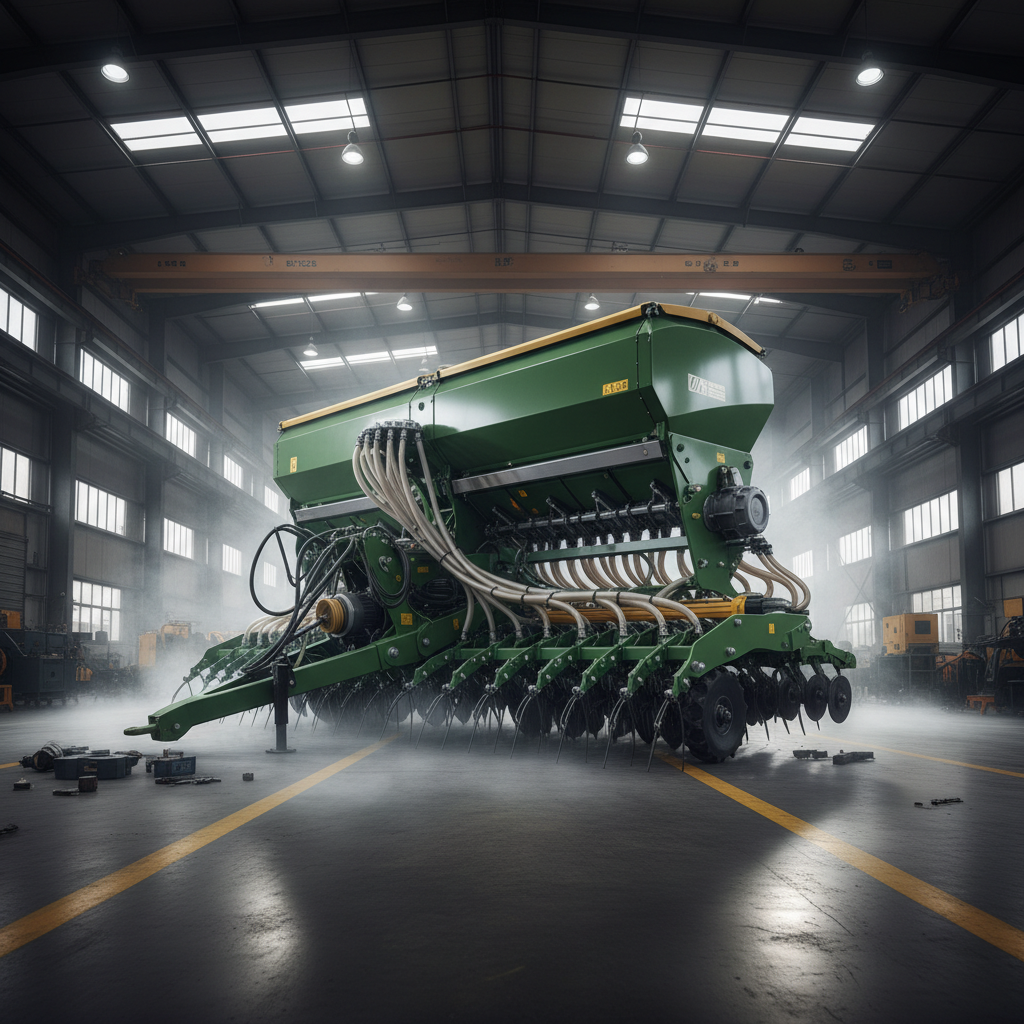
A seed drill is a specialized piece of agricultural machinery designed to sow seeds at precise depths and intervals, ensuring optimal germination and crop uniformity. Unlike traditional broadcasting methods, the modern seed drill integrates mechanical delivery systems that place the seed directly into the soil. This fundamental mechanism is what determines the core pricing, as the precision of the metering device and the durability of the furrow openers dictate the machine's overall effectiveness in the field.
Modern iterations of this technology often evolve into combined soil preparation machines. These systems integrate tilling, loosening, breaking, and leveling into a single pass. By combining multiple functions, these machines eliminate the need for separate Rotary Tiller or leveling passes, which fundamentally alters the value proposition for the farmer by reducing tractor fuel consumption and overall labor hours per hectare.
The primary factor influencing the investment level is the multifunctionality of the design. A machine capable of simultaneous tilling and sowing requires high-strength chassis components and advanced hydraulic systems to manage the increased load. The inclusion of heavy-duty soil breaking blades and leveling plates adds to the material cost but significantly reduces the number of machines required on the farm, creating a more streamlined operational flow.
Durability and material quality also play a critical role. High-wear components, such as the seed tubes and soil-engaging tools, must be manufactured from abrasion-resistant alloys to withstand tough farming conditions. The integration of high-quality Transmission Core Components and drive shafts ensures that the seed delivery remains consistent even when the machine encounters varying soil resistance, preventing skips or overlaps in the sowing pattern.
Customization options further modulate the final price. The ability to tailor the working width, blade types, and technical parameters to suit specific crop needs or soil textures—whether clay, sandy, or loamy—adds value through optimized performance. This flexibility ensures that the equipment is not a generic tool but a calibrated solution for the specific terrain of the farming operation.
The true value of a combined soil preparation machine is found in its ability to condense the land preparation workflow. By integrating soil loosening and leveling with the seeding process, farmers can transition from raw field conditions to a planted crop in a fraction of the time. This reduction in field passes preserves soil structure by minimizing compaction caused by repeated tractor traffic.
The core economic advantage lies in the synergy of functions: combining tilling, loosening, and leveling into one machine reduces total operational time and labor costs, directly improving the ROI by maximizing the available planting window during critical seasonal shifts.
Furthermore, the improvement in soil aeration and the reduction of soil clumps create an ideal environment for root growth. When seeds are placed in well-prepared, loosened soil, germination rates typically increase, leading to higher crop yields. This performance gain often offsets the initial higher price of a multifunctional machine compared to single-purpose seeders.
Performance varies significantly depending on the soil composition. In heavy clay soils, the ability to break soil clumps and loosen compacted layers is paramount. A combined machine with high-torque drive components can penetrate these soils more effectively than lightweight seeders, ensuring that the seed is not left on the surface where it is vulnerable to birds and drying.
In sandy or loamy soils, the focus shifts toward leveling and maintaining a consistent seed depth. The adaptability of the equipment's hydraulic systems allows for precise depth control, ensuring that the seed is placed in the moisture-rich zone of the soil. The following data represents the relative efficiency gain in hectares covered per day when using a combined system versus traditional multi-stage preparation.
For large-scale farming operations, the priority is maximizing productivity and reducing the cost per hectare. In these environments, combined soil preparation machines are the ideal solution because they allow for the rapid coverage of vast areas. The reduction in the number of machines required not only lowers the initial procurement cost but also simplifies the maintenance schedule and reduces the amount of specialized operator training needed.
These machines are particularly effective in diverse soil conditions where a single field may transition from loamy to clay-heavy textures. The customizable blade types and adjustable technical parameters allow the operator to adapt the machine's aggression level on the fly, ensuring that the soil is consistently prepared and the seeds are placed with uniform precision across the entire acreage.
The evolution of sowing technology is moving toward higher levels of integration and precision. We are seeing a shift where mechanical durability is being paired with more sophisticated control systems. The goal is to further reduce seed waste and optimize the spacing between rows to maximize the photosynthetic efficiency of the crop, which will continue to influence the pricing of high-end models.
Sustainability is also becoming a primary driver. Machines that can prepare the soil and sow in a single pass are inherently more sustainable as they reduce the carbon footprint associated with tractor fuel consumption. This trend toward "conservation tillage" is pushing manufacturers to develop equipment that provides the benefits of soil loosening without the disruptive impact of traditional deep plowing.
Looking forward, the ability to integrate these machines with broader digital farm management systems will be key. While the mechanical foundation—the gears, shafts, and chassis—remains the core of the machine's value, the addition of smart sensors for real-time soil analysis and seed flow monitoring is likely to become a standard for professional-grade agricultural equipment.
One of the most significant challenges in sowing is managing soil compaction and clumping. If the soil is not properly broken and leveled, the seed drill may create uneven furrows, leading to erratic germination. This is where the multi-functional design of combined machines provides a solution by ensuring the ground is perfectly prepped before the seed even touches the soil.
Another critical consideration is maintenance. Because combined machines perform multiple tasks, the wear and tear on working components can be higher than on a simple seeder. Implementing a strict quality inspection and parts replacement schedule is necessary to avoid downtime during the narrow planting window. Utilizing a reliable after-sales network for parts supply is essential for maintaining operational continuity.
Finally, compatibility with existing tractor power and PTO (Power Take Off) components must be verified. A combined machine requires significant power to operate the tilling and sowing mechanisms simultaneously. Ensuring that the tractor's transmission and drive axle can handle the load is vital to avoid premature equipment failure and to maintain a consistent working speed.
| Requirement | Basic Seed Drill | Combined Preparation | Impact on Value |
|---|---|---|---|
| Soil Prep Time | High (Multi-pass) | Low (Single-pass) | Labor Savings |
| Soil Compaction | Moderate | Low | Crop Health |
| Initial Cost | Lower | Higher | Capex Increase |
| Operational ROI | Steady | High | Efficiency Gain |
| Maintenance | Simple | Comprehensive | Uptime Focus |
| Soil Versatility | Limited | High | Adaptability |
The most significant factors are multifunctionality, material durability, and customization options. Machines that integrate tilling, loosening, and leveling into one unit are more expensive due to their complex chassis and hydraulic systems, but they offer higher value by reducing labor and fuel costs. Additionally, the use of high-grade abrasion-resistant alloys for working parts increases the cost but extends the machine's operational life.
Yes, for large-scale operations and diverse soil conditions. While a standard seed drill only handles sowing, a combined machine prepares the seedbed and plants in one pass. This reduces the need for multiple machines (like separate rotaries and levelers), minimizes soil compaction, and ensures that seeds are placed in an optimized environment, which typically leads to better germination and higher yields.
The choice depends on your soil texture. For heavy clay soils, you need aggressive soil-breaking blades that can penetrate and shatter clumps. For sandy or loamy soils, leveling plates and precision furrow openers are more important to maintain consistent depth. Most professional machines offer customizable blade options, so it is recommended to match the tool geometry to your specific terrain to ensure optimal performance.
With a strict maintenance schedule and the use of high-quality replacement parts, these machines can serve a farm for many years. The key is the regular inspection of the Transmission Core Components and the timely replacement of wear-and-tear parts like blades and seed tubes. Ensuring the hydraulic system is free of contaminants and that the drive gears are properly lubricated will maximize the longevity of the equipment.
No, they require a tractor with sufficient horsepower and a compatible Power Take Off (PTO) system. Because combined machines perform multiple heavy-duty tasks simultaneously, they place a significant load on the tractor's engine and transmission. You must verify that your tractor's drive axle and transmission capacity match the technical requirements of the machine to avoid mechanical failure and ensure consistent working speeds.
Multifunctional design improves ROI by drastically reducing operational overhead. Although the initial purchase price is higher, the savings are realized through fewer tractor passes, lower fuel consumption, and reduced labor requirements. Furthermore, the improved soil preparation quality leads to more uniform crop growth and higher yields, meaning the machine pays for itself through increased productivity and reduced seasonal costs.
Selecting the right sowing equipment requires a strategic shift from looking at the initial seed drill price to analyzing the total cost of ownership and operational efficiency. A combined soil preparation system, while requiring a higher initial investment, offers unmatched value by integrating tilling, loosening, and leveling into a single, high-efficiency workflow. This approach not only protects soil health by reducing compaction but also ensures that seeds are placed in the optimal conditions for maximum yield.
For farmers looking to modernize their operations and scale their productivity, investing in versatile, durable, and customizable machinery is the most sustainable path forward. By prioritizing technical performance and long-term reliability, operators can significantly reduce their labor costs and improve crop uniformity. For more information on high-quality agricultural machinery and professional support, we invite you to explore the solutions available at https://www.zinanmech.com.