Look, I’ve spent the last fifteen years getting dust in my boots and grease on my hands, watching how things actually get done on construction sites. And I’ll tell you, getting seed established quickly and efficiently is always a headache. Traditional methods are slow, prone to failure, and frankly, a waste of time and money. That's where the real value of an air assisted seed drill comes in. It’s not about fancy technology for technology's sake; it’s about solving a very real, practical problem: getting a solid, consistent seedbed down fast, especially in tough conditions.
What you’ve got to understand is the impact of a good stand. It’s not just about yield; it’s about time. Every day that seed is sitting exposed, you’re losing potential. Every uneven patch means rework. And every dollar wasted on reseeding cuts into the bottom line. I’ve seen projects delayed, budgets blown, and reputations damaged because of poor seed establishment. The air assisted seed drill tackles all of that head-on, offering a level of control and consistency that traditional methods just can't match.
The thing is, people often underestimate the power of precise seed placement. It's not just about dropping seed and hoping for the best. It's about getting it at the right depth, with the right spacing, and in contact with the soil. That's where the air assist comes in – it ensures consistent seed flow and accurate placement, even on uneven terrain. I’ve seen these drills working in conditions where you wouldn’t even think about trying to seed traditionally, and they still deliver.
The Core Functionality of air assisted seed drill
The whole point of an air assisted seed drill is precision. It uses air pressure to separate and deliver seed to the furrow. That sounds simple, but it makes a massive difference. You eliminate bridging and clumping, which you get with gravity-fed systems, especially with smaller seeds. It means a consistent flow, and a consistent stand.
I've seen operators struggle with traditional drills for hours just to get a uniform seed depth. With air assist, it’s a matter of setting the pressure and going. It's particularly crucial when dealing with cover crops or smaller grains where seed size is a major factor. It translates directly to less waste and higher germination rates. That’s real money saved.
Global Relevance and Market Dynamics
Look around the world – the demand for food production is only going up. And with that comes a need for more efficient farming practices. In areas with limited water resources, getting a quick, reliable stand is absolutely critical. An air assisted seed drill gives you that edge. It's not just about big farms, either.
We’re seeing increasing adoption in developing nations where land preparation is often minimal, and soil conditions are challenging. The ability to seed directly into residue, or even no-till conditions, is a game-changer for soil health and conservation. The market is responding, and you're seeing more and more manufacturers offering these drills, but the quality varies wildly.
The push for sustainable agriculture is also a huge driver. Reducing tillage, minimizing seed waste, and maximizing yield per acre all align perfectly with the benefits of air assisted technology. Plus, with the increasing cost of inputs, every seed counts.
Defining Air Assisted Seed Drill: A Practical Perspective
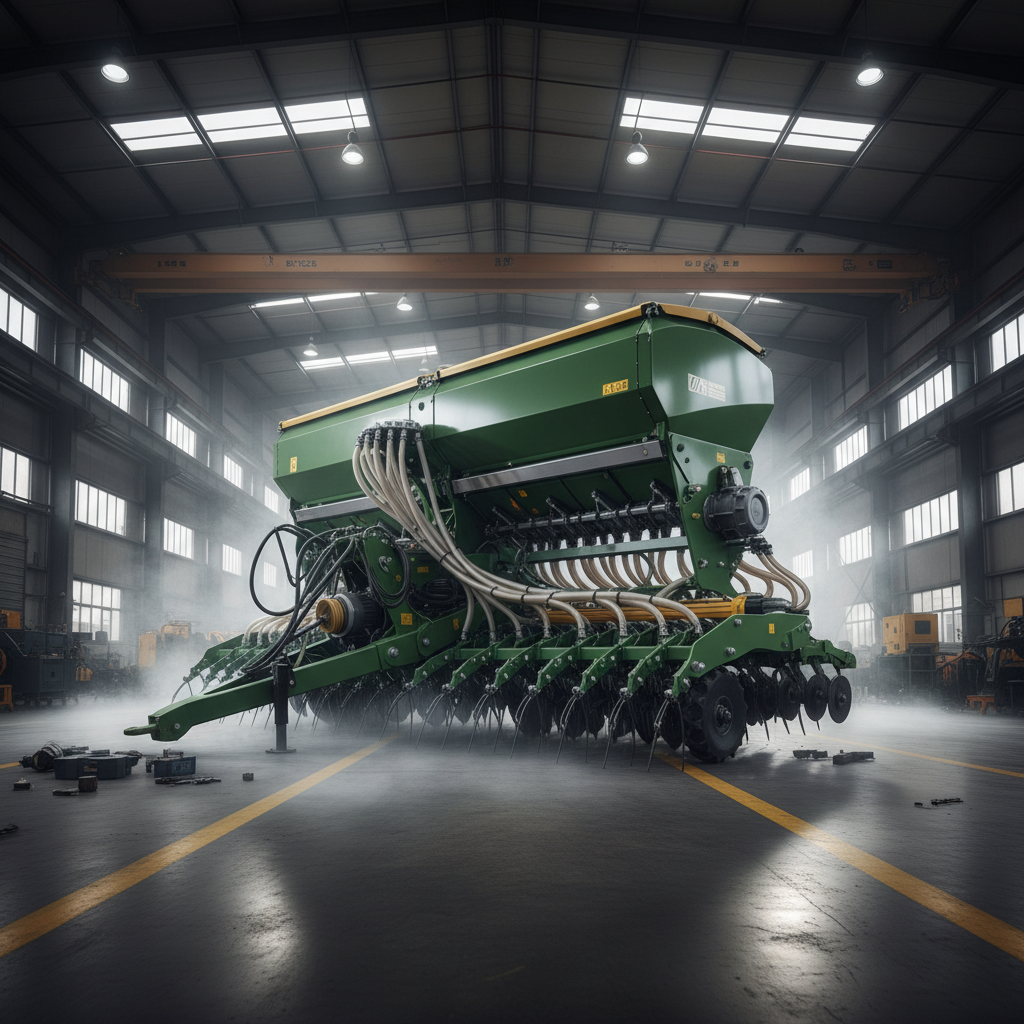
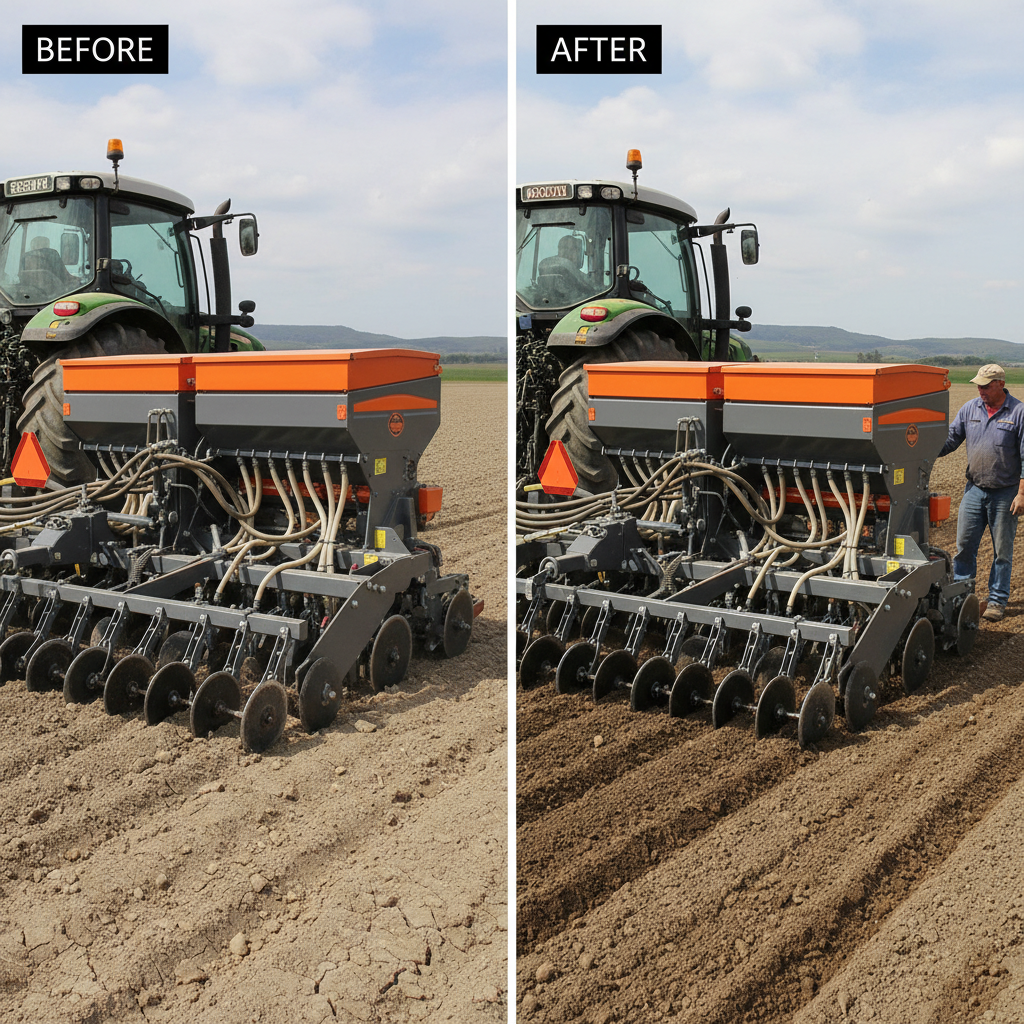
Essentially, an air assisted seed drill replaces the traditional fluted feed system with a metering system that uses air pressure to precisely control seed flow. A fan creates negative pressure, which draws seed from a hopper and delivers it through individual hoses to the seed openers.
It’s not a magic bullet, though. You still need a well-maintained drill, properly adjusted openers, and a good understanding of your seed characteristics. But it does take a lot of the guesswork out of the equation. I’ve seen guys who were struggling with their old drills become experts with an air assist system in a matter of hours.
Think of it like this: a traditional drill is like pouring water from a pitcher – you get some variation. An air assisted drill is like using a precise measuring cup – you get consistent results. That consistency translates directly into better stands, higher yields, and a more profitable operation.
Key Performance Indicators of Air Assisted Seed Drills
When you’re evaluating an air assisted seed drill, you need to look beyond the marketing hype. There are some key performance indicators (KPIs) that really matter.
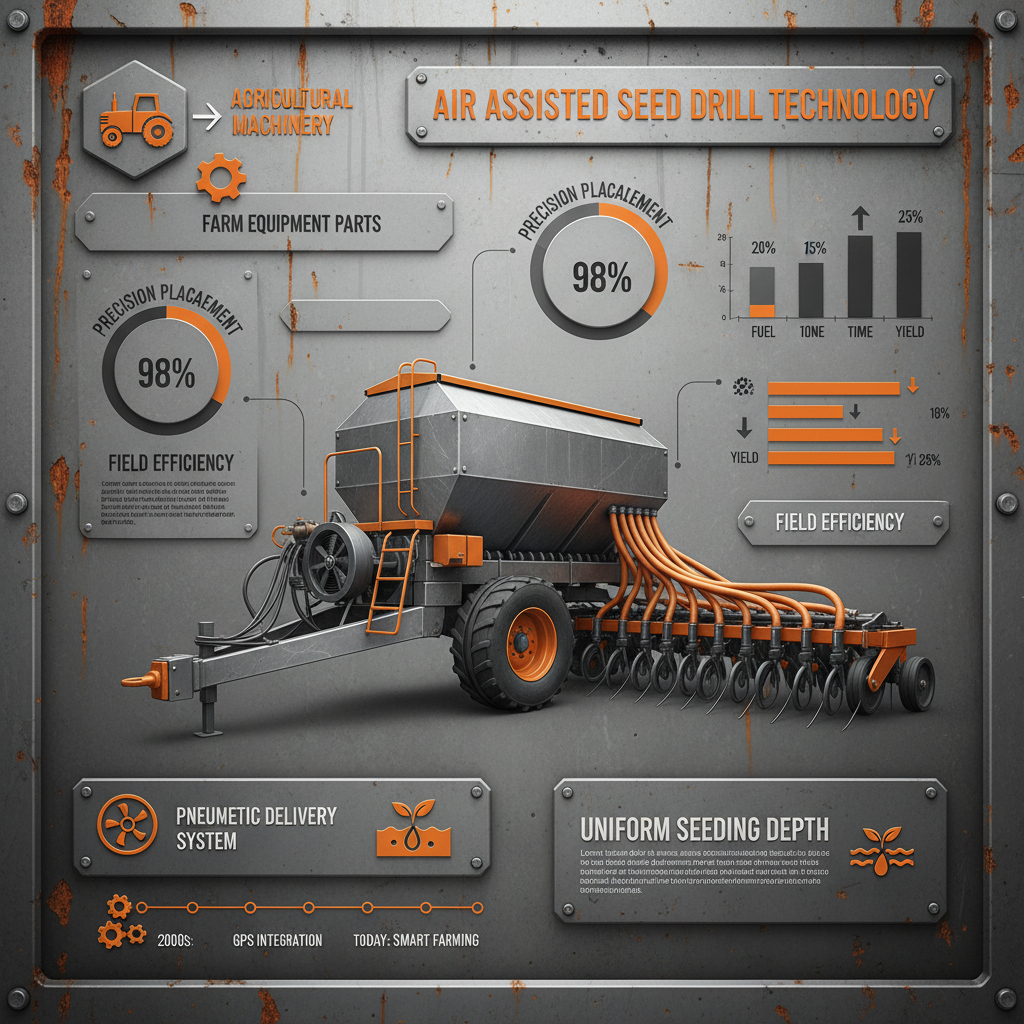
Seed placement accuracy is number one. You want consistent depth and spacing. Then there’s seed flow uniformity – minimizing skips and doubles. And finally, you need to consider the drill’s ability to handle different seed types and sizes.
KPI Comparison: Air Assisted Seed Drill Performance
Real-World Applications and Implementation Scenarios
I've seen these drills excel in a wide range of applications. From large-scale wheat and barley production in the Great Plains to smaller, diversified farms growing cover crops for soil health, the benefits are clear. They're particularly valuable in no-till or minimum-till systems.
In the hilly terrain of the Pacific Northwest, the ability to maintain consistent seed depth is critical. Traditional drills struggle on slopes, but air assist systems can adapt much more effectively. And in areas with heavy residue, the air blast helps clear the furrow for better seed-to-soil contact.
Long-Term Benefits and Return on Investment
The initial investment in an air assisted seed drill might be higher than a traditional model, but the long-term benefits far outweigh the cost. Reduced seed waste, improved germination rates, and higher yields all contribute to a faster return on investment.
You’re also reducing your labor costs. Less rework, fewer skips, and a more reliable stand mean less time spent in the field. And let’s not forget the environmental benefits. More efficient seed use, reduced tillage, and improved soil health all contribute to a more sustainable farming operation.
It’s not just about the numbers, either. It's about peace of mind. Knowing you’ve got a reliable system that’s going to deliver consistent results takes a huge weight off your shoulders.
Future Trends and Technological Advancements
We're starting to see integration of precision agriculture technologies with air assisted seed drills. Variable rate seeding, GPS guidance, and even sensor-based adjustments are becoming more common.
The trend towards electric drives is also gaining momentum, reducing fuel consumption and noise pollution. And manufacturers are constantly working on improving the durability and ease of maintenance of these machines.
I think we’ll also see more sophisticated seed metering systems that can handle an even wider range of seed types and sizes. The goal is to create a truly universal drill that can adapt to any condition and any crop.
Summary of Challenges and Potential Solutions for Air Assisted Seed Drills
| Challenge |
Impact on Seed Drill Performance |
Potential Solution |
Implementation Cost (1-10) |
| Seed Bridging in Hopper |
Inconsistent seed flow, skips in the seedbed |
Improved hopper design with steeper sides and vibration assistance |
4 |
| Air Pressure Fluctuations |
Variable seed placement depth and density |
Closed-loop air pressure control system with sensors and automated adjustments |
7 |
| Clogging of Seed Tubes |
Uneven seed distribution, reduced planting efficiency |
Self-cleaning seed tubes with integrated air jets and smoother internal surfaces |
5 |
| Maintenance Complexity |
Increased downtime, higher repair costs |
Modular design with easy-to-access components and simplified lubrication points |
6 |
| Terrain Adaptability |
Difficulty maintaining consistent depth on uneven ground |
Independent row unit suspension and adjustable downforce control |
8 |
| Dust and Debris Accumulation |
Reduced fan efficiency, potential for system failure |
Sealed fan housing with effective dust filtration system and regular cleaning schedule |
3 |
FAQS
The biggest difference is precision. Air assisted drills use air pressure to precisely meter and deliver seed, eliminating inconsistencies caused by gravity and mechanical wear. This results in more uniform seed spacing and depth, leading to better germination rates and stands. You also get better handling of different seed sizes and types, and reduced seed waste – all things that add up to significant cost savings.
This is where air assist really shines. The air blast helps clear the furrow of residue, ensuring good seed-to-soil contact. Traditional drills often struggle in these conditions, leading to poor germination and uneven stands. The ability to seed directly into residue is a major advantage for no-till or conservation tillage practices. It also reduces the need for pre-planting tillage, saving time and fuel.
Like any piece of equipment, regular maintenance is crucial. This includes cleaning the fan and air lines, checking for leaks, and lubricating moving parts. Modern drills are designed with easier access to these components, but it's still important to follow the manufacturer's recommendations. Paying attention to these details will ensure reliable performance and extend the life of your drill.
Absolutely. While often associated with large-scale agriculture, smaller air assisted drills are available and can be incredibly beneficial for smaller operations. The precision and efficiency they offer translate to better yields even on limited acreage. They're particularly valuable for specialty crops or when establishing cover crops for soil health. The initial investment can be justified by the improved results.
Consider your farm size, the types of crops you grow, and your specific soil conditions. Look for a drill with adjustable air pressure, a robust hopper capacity, and durable construction. Also, think about the availability of parts and service in your area. Don't just go for the cheapest option; prioritize quality and reliability. Research different brands and read reviews from other farmers.
Most modern air assisted seed drills are designed to handle a wide range of seed types and sizes, from small grains to larger seeds like corn and soybeans. However, some adjustments may be necessary depending on the seed characteristics. Look for a drill with adjustable metering rollers and a flexible air pressure control system to optimize performance for different seeds. Always consult the manufacturer’s guidelines.
Conclusion
In the end, an air assisted seed drill isn’t just a piece of equipment; it’s an investment in efficiency, reliability, and ultimately, your bottom line. From improving seed placement and reducing waste to adapting to challenging conditions, the benefits are undeniable. It’s about working with the land, not against it.
If you’re serious about maximizing your yields and building a sustainable farming operation, I highly recommend taking a closer look at air assisted technology. Don’t just take my word for it – talk to other farmers, do your research, and see for yourself the difference it can make. For more information, and to explore the latest models, visit our website: www.zinanmech.com