- Tel: +86 13451474678 / 13451474678
- Email: / hbzinanmech@gmail.com

How Many Gears Does a Tractor Have? Types, PDF Guide
So, how many gears does a tractor have? The real-world answer (and the gear shaft behind it)
If you’ve ever asked yourself how many gears does a tractor have, you already know the short answer is: it depends. On the job, the transmission type, and—less glamorous but equally crucial—the active gear shaft inside. I’ve toured plants in Shijiazhuang and Iowa, and to be honest, the hardware matters as much as the horsepower. Let’s break it down without the fluff.
How many gears are we actually talking about?
Older utility tractors ran simple 8F/2R or 12F/4R synchro boxes. Modern row-crop machines commonly ship with 16F/16R or 24F/24R powershift. Specialty work? You’ll see creeper ranges taking it to 32×32 or even 40×40. And with CVT/IVT, you get “stepless” ratios—effectively infinite in-use speeds. So when customers ask again—how many gears does a tractor have—I usually say: from about 8 up to 40 in fixed steps, or stepless if it’s a CVT. Real-world use may vary by market and model year.
The quiet hero: Tractor Active Gear Shaft
The Tractor Active Gear Shaft, built in Shijiazhuang, Hebei Province, China, is the component that transfers torque cleanly through those ranges. It supports smooth shifts, protects against shock loads, and—when properly heat-treated—keeps your uptime high during planting, baling, or municipal snow clearing. Actually, many operators tell me that “shift feel” improves most when the shaft geometry and case hardness are dialed in, not just the clutch packs.
Industry trends (quick take)
- Powershift and CVT adoption increasing on 90–300 hp tractors- More electrohydraulic control for smoother partial powershifts
- Higher durability targets due to heavier implements and transport speeds
- Global sourcing with tighter QA: ISO 9001 plants, gear metrology traceable to ISO 6336
Typical applications
- Row-crop tillage and planting (precise ground speed control)- Hay and forage (frequent shifting under load)
- Loader and utility work (back-and-forth cycles, clutch abuse risk)
- Orchard/vineyard with creeper gears (low-speed, high-torque finesse)
Product specification snapshot (Tractor Active Gear Shaft)
| Material | 20CrMnTi or AISI 8620 (carburizing steel) |
| Heat Treatment | Carburized, case depth ≈0.8–1.2 mm; HRC 58–62; optional shot peen |
| Spline Standard | ISO 4156-1 (involute splines), class per drawing |
| Runout / Concentricity | ≤0.015 mm TIR on bearing journals (typical) |
| Torque Capacity | Rated ≈1,000–2,500 N·m depending on model; test to ISO 6336 calc |
| Service Life | Designed for >10,000 h with proper lubrication (SAE J306 oils) |
| Certifications | ISO 9001:2015 plant; material certs with heat lot traceability |
Process flow and quality checks
Materials: certified 20CrMnTi/8620 billets → Methods: CNC turning, gear hobbing or shaping, carburize & quench, finish grind, spline roll/grind → Testing: hardness map, microstructure, magnetic particle inspection (ASTM E1444), gear lead/profile charts, runout → Bench validation: torsional fatigue and overload → Documentation: PPAP/FAI where required. We’ve seen torsional fatigue exceed 1.0×10^6 cycles at 70% rated torque—solid for mid-range tractors.
Vendor comparison (indicative)
| Vendor | Testing | Certs | Lead Time | Support |
|---|---|---|---|---|
| Zinan Mech (Hebei) | Mag particle, hardness map, gear metrology, fatigue rig | ISO 9001 | ≈30–45 days | Drawings, PPAP (on request), sample runs |
| Supplier A | Basic hardness, visual | ISO 9001 (pending) | ≈45–60 days | Email-only, limited samples |
| Supplier B | Hardness + runout | ISO 9001 | ≈35–55 days | Tech hotline, no PPAP |
Customization options
- Spline count/module per ISO 4156, custom keyways- Surface finishes Ra ≤0.4 μm on bearing seats
- Case depth tuning for shock vs. wear balance
- Anti-corrosion oil or phosphate pre-coat for storage
Mini case study
A Midwest hay operation moved from a 12×12 synchro to a 24×24 semi-powershift. With an upgraded active gear shaft (case depth ≈1.0 mm, tighter runout), clutch-pack life improved ~18% over one season, and operators reported fewer grindy shifts. It seems small, but over 1,200 hours, that’s real money.
Final thought: how many gears does a tractor have is only half the conversation. The shaft that carries those gears decides whether they feel smooth today—and still shift clean two harvests from now.
Authoritative citations
- OECD Tractor Codes – Official Testing of Agricultural Tractors.
- ISO 26322-1: Tractors for agriculture and forestry — Safety — Part 1.
- ISO 6336: Calculation of load capacity of spur and helical gears.
- ISO 4156-1: Straight cylindrical involute splines — Metric module.
- SAE J306: Automotive Gear Lubricants (viscosity grades for gear oils).
- ASTM E1444/E1444M: Standard Practice for Magnetic Particle Testing.

Related Products
-
 Tractor Gear Shaft
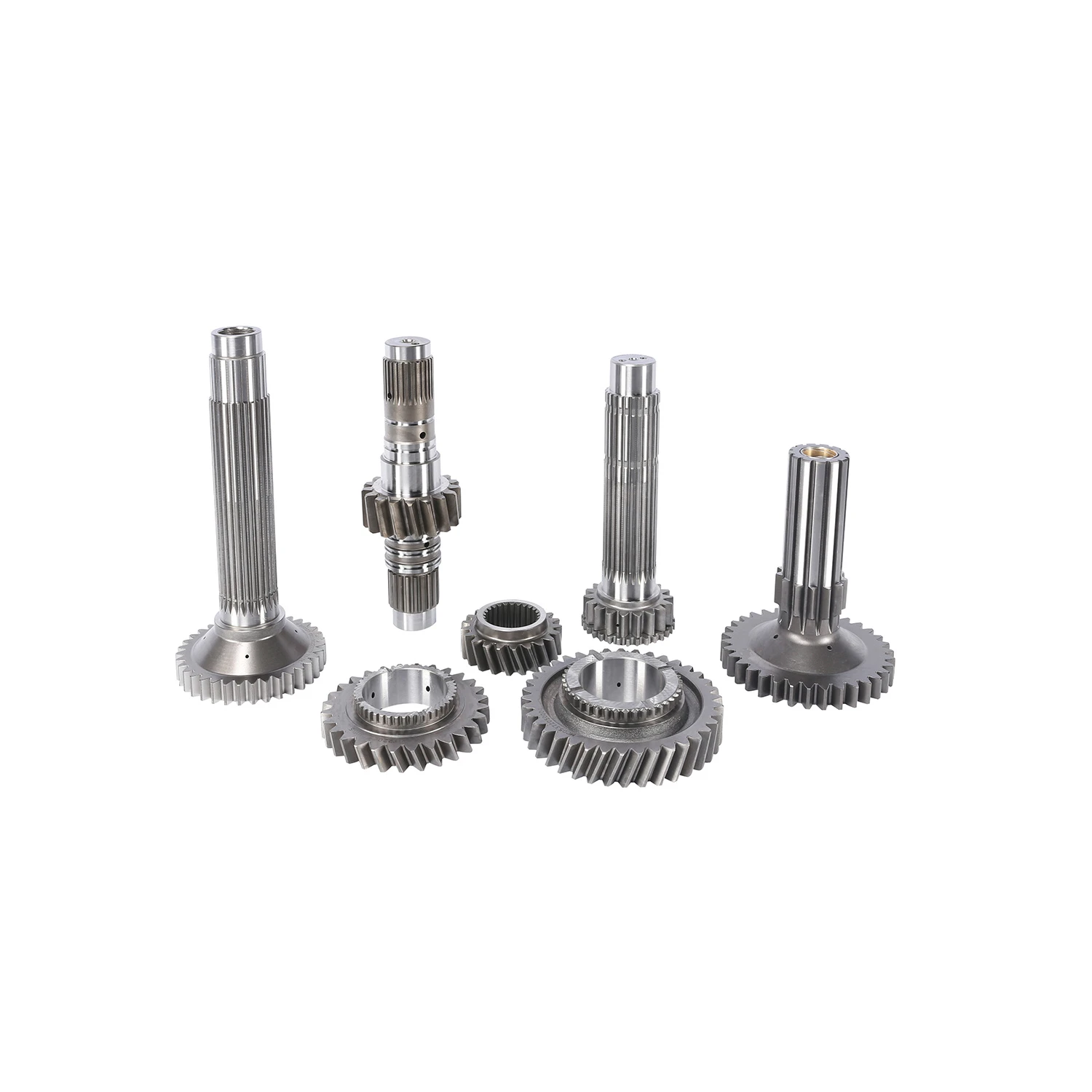
The tractor gear shaft is a crucial element in the power transmission system of a tractor. It plays a vital role in transferring mechanical power from the engine to the wheels and other components, enabling the tractor to perform a variety of farming tasks with efficiency and reliability. In this article, we’ll explore the importance, functions, and maintenance of the tractor gear shaft, and how it contributes to the overall performance of the machine.
-
 Transmission Gear
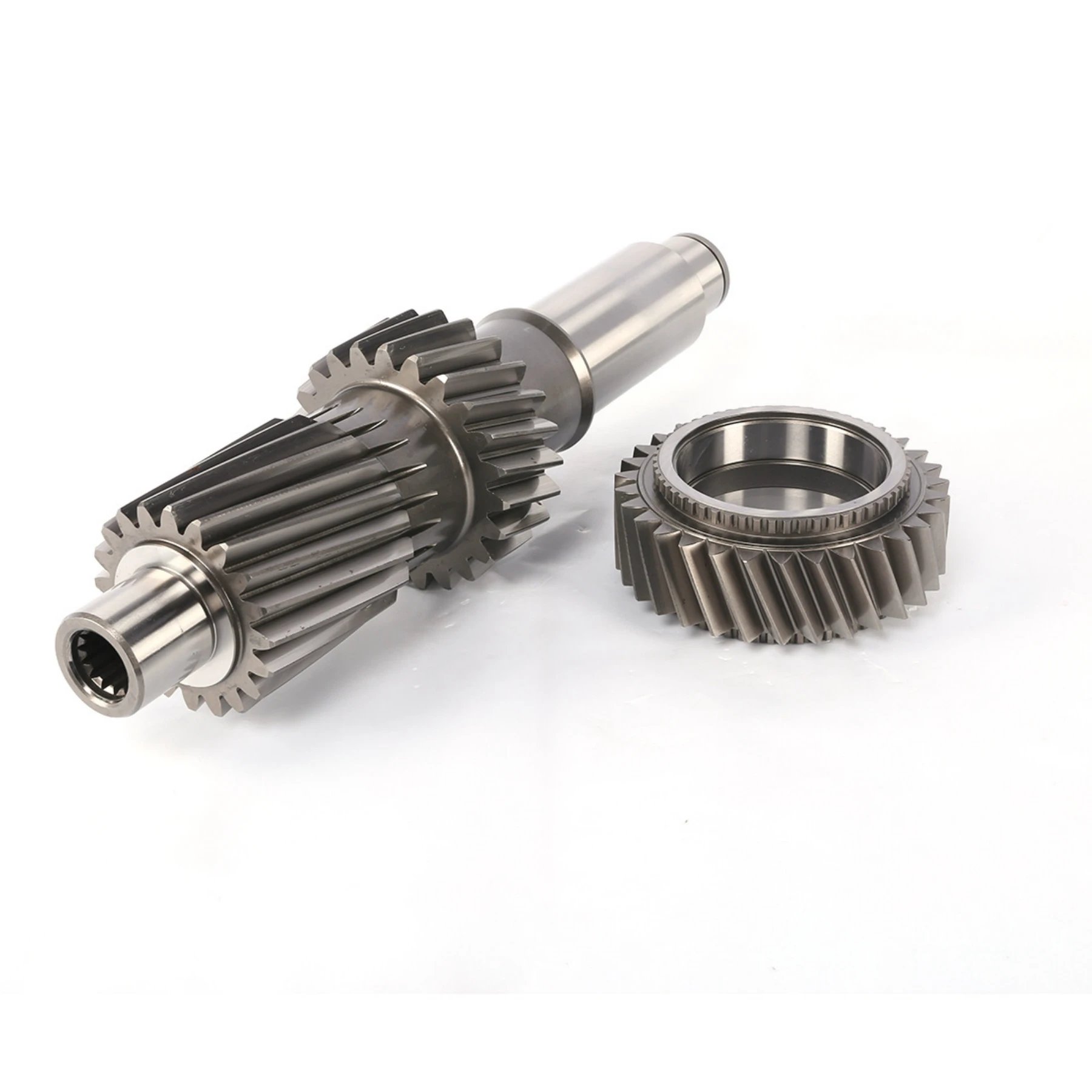
Power transmission: the engine operation drives the input gear on the input shaft to rotate, the input gear engages with other gears, and relies on the interaction between teeth and teeth to transfer the power to the intermediate gear (if any) and the output gear, and finally transfers the power to the driving wheel and other components through the output shaft to make the vehicle or equipment move.
Variable speed principle: Change the transmission ratio by meshing gears with different numbers of teeth. For example, when the big gear drives the small gear, the speed of the small gear will be faster than the big gear, but the output torque will be smaller, to achieve growth and torque reduction; On the contrary, when the pinion drives the big gear, the speed of the big gear slows down, the torque increases, and the torque increases. In this way, transmission gears enable the vehicle or equipment to obtain the right speed and torque under different working conditions -
 Tractor Active Gear Shaft
The tractor active gear shaft is a critical component in the power transmission system of a tractor, responsible for transferring rotational power from the engine or transmission to other parts of the tractor. By efficiently distributing torque and enabling smooth gear shifts, the active gear shaft plays a vital role in enhancing the performance and versatility of the tractor, making it essential for a wide range of agricultural tasks. In this article, we’ll explore the function, benefits, and maintenance of the tractor active gear shaft.
-
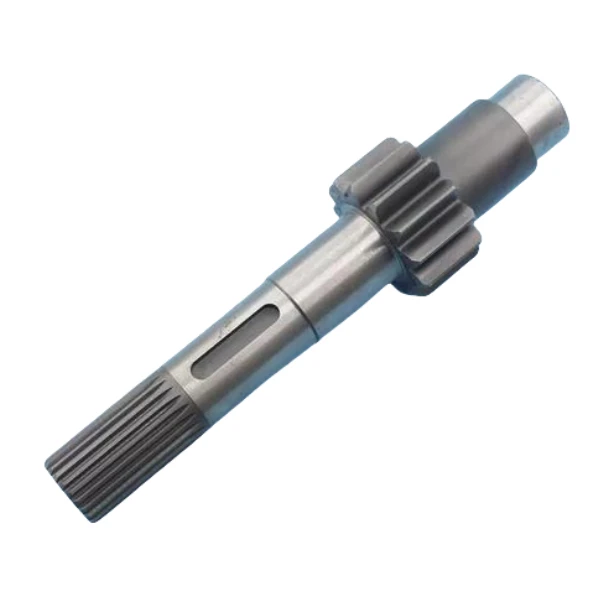 Harvester Input Shaft
The main role of the harvester input shaft is to introduce the power of the external power source into the internal transmission system of the harvester. When the power source (such as an engine) is running, the torque generated is transmitted to the input shaft through the connecting parts, causing the input shaft to start rotating. The gear, pulley or sprocket and other transmission parts installed on the input shaft will rotate with the rotation of the input shaft, and then transfer the power to the subsequent transmission parts and working parts, such as driving the cutting device, conveying device, threshing device, etc., to complete the crop harvesting, conveying, threshing and other work processes.
Related News
Professional Heavy Duty Tiller for Tractor for Soil Productivity
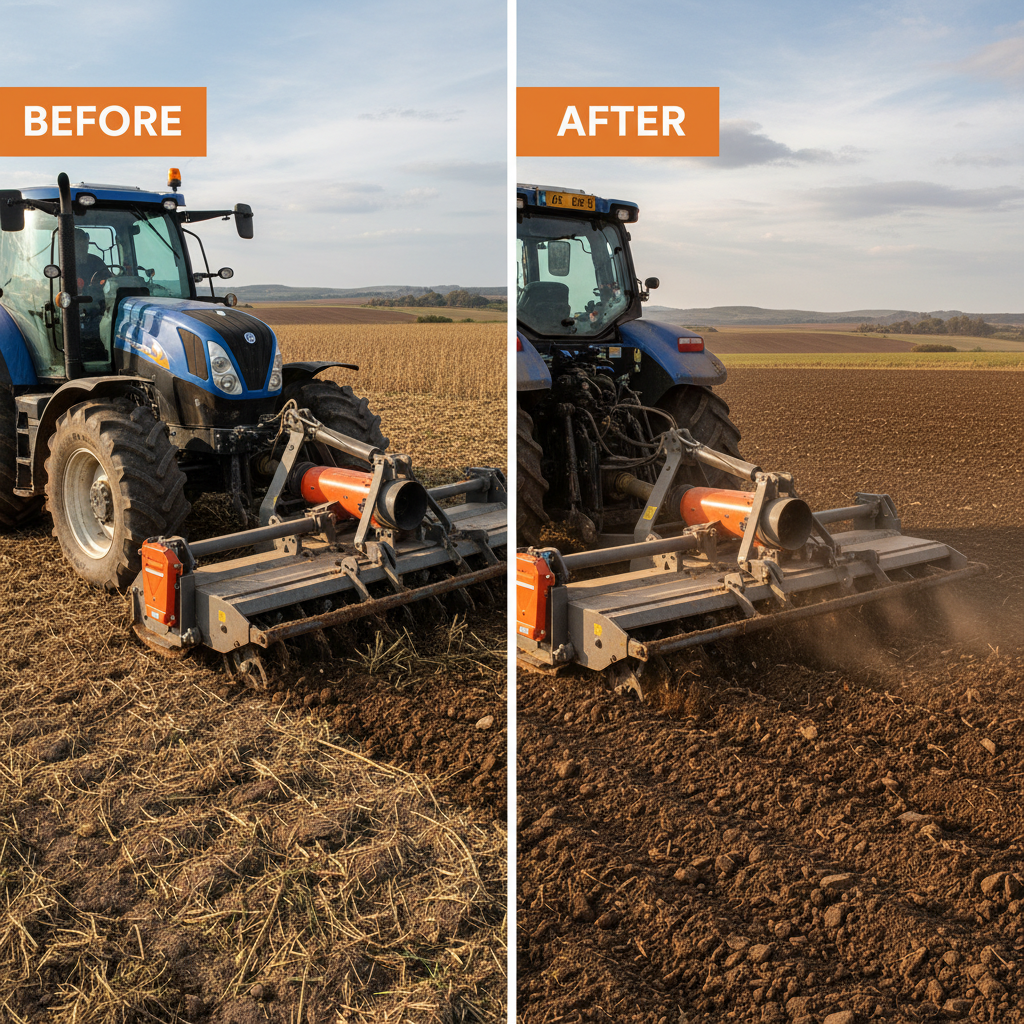
Achieving the perfect seedbed is the foundation of any successful harvest. For farmers dealing with compacted soil, stubborn crop residue, or expansive acreage, a standard rototiller often falls short. This is where a heavy duty tiller for tractor becomes an essential investment. These robust machines are engineered to penetrate deep into the earth, breaking up hardpan and aerating the soil with unmatched efficiency. By integrating a professional-grade tiller into your machinery lineup, you can significantly reduce preparation time and improve crop yield. In this guide, we will explore the technical advantages, selection criteria, and maintenance tips for choosing the right heavy-duty tilling solution.
>
Maximizing Land Productivity with Professional Heavy Duty Tillers
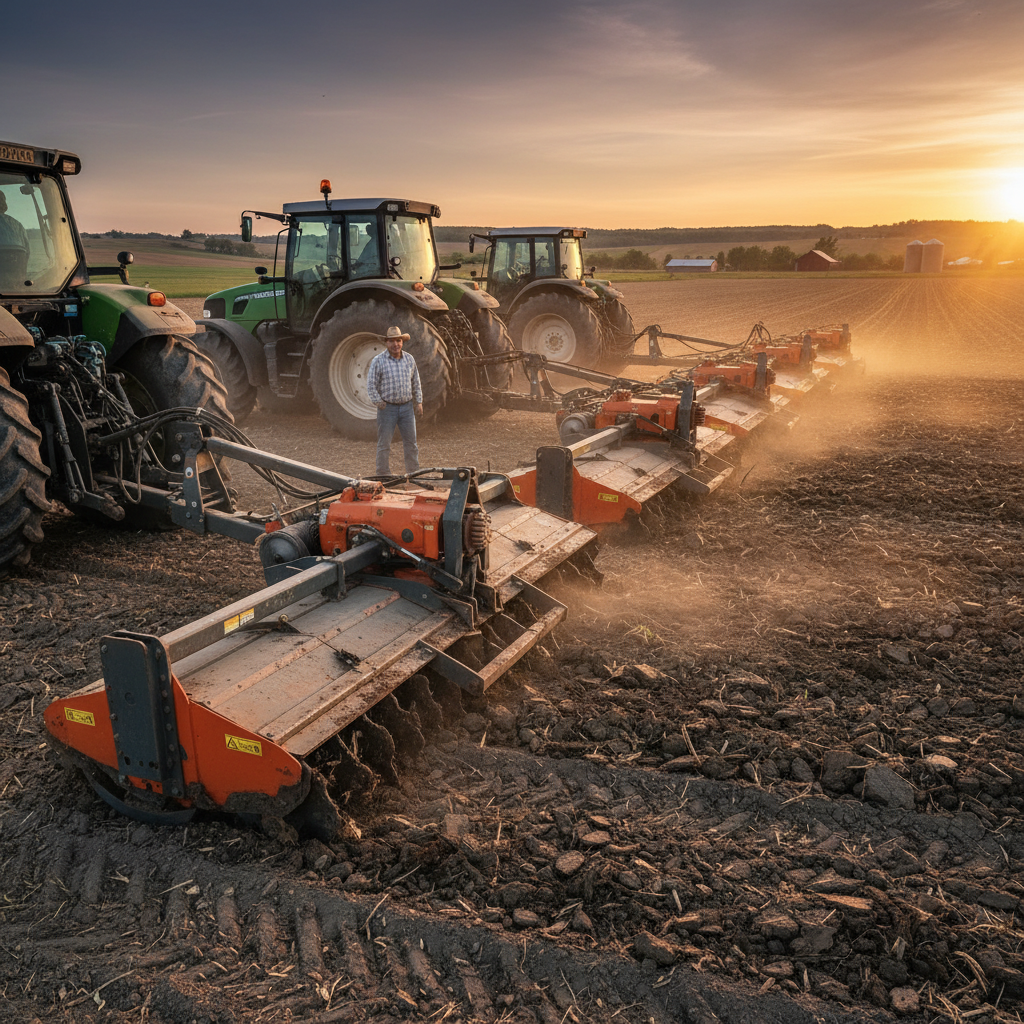
For professional farmers and landscaping contractors, the quality of soil preparation determines the success of the entire growing season. Investing in high-performance heavy duty tillers is essential for breaking through compacted earth, removing stubborn weeds, and integrating organic matter deeply into the soil. Unlike standard garden cultivators, these industrial-grade machines are engineered to handle vast acreages and the most challenging terrain without compromising efficiency. In this guide, we will explore how choosing the right equipment can transform your agricultural output and streamline your land management process.
>
Choosing the Best Heavy Duty Rototiller for Efficient Land Preparation
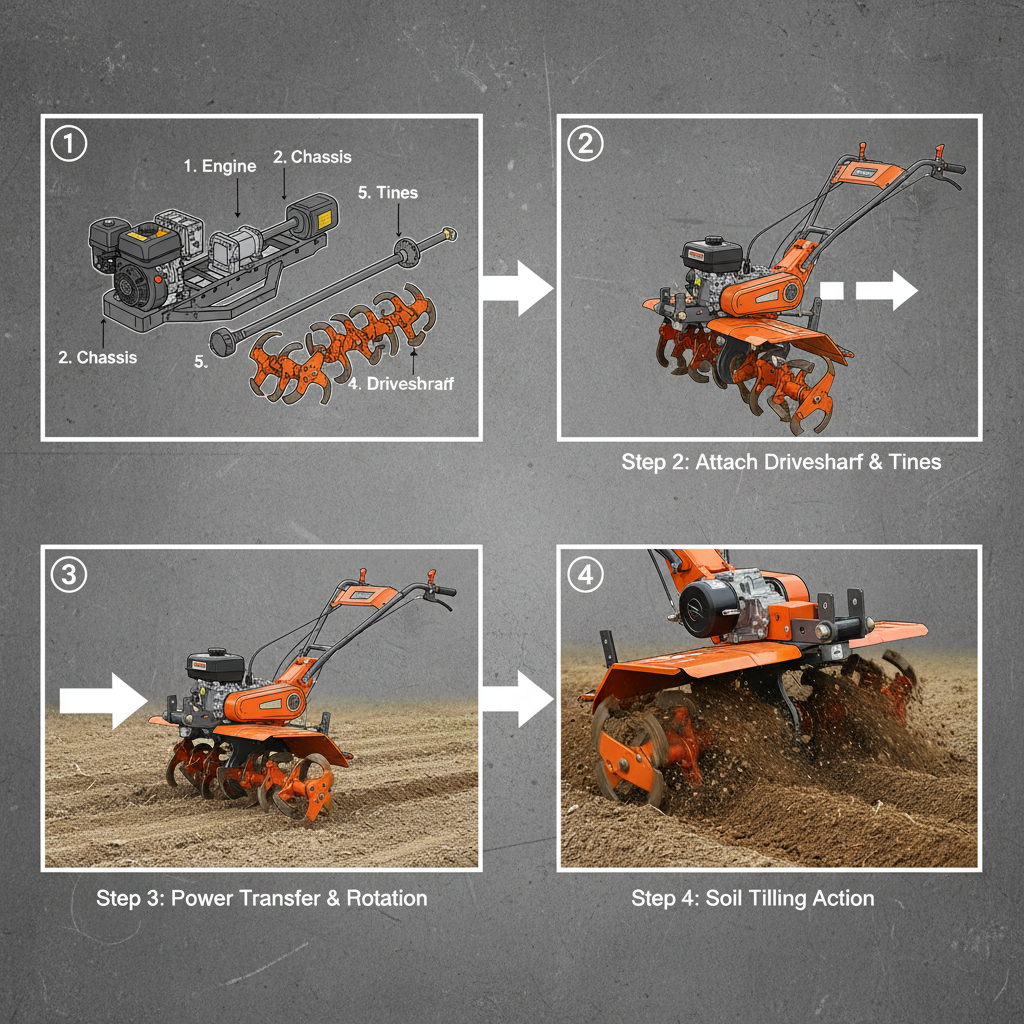
A heavy duty rototiller is an invaluable tool for anyone involved in serious gardening, small-scale farming, or land preparation. Whether you're breaking new ground, maintaining existing garden beds, or preparing for planting, the right rototiller can significantly reduce labor and improve efficiency. However, with numerous options available, selecting the best model requires careful consideration. This article will guide you through the key factors to consider when purchasing a heavy-duty rototiller, helping you make an informed decision. ZinanMech offers a wide range of rototillers to suit various needs.
>
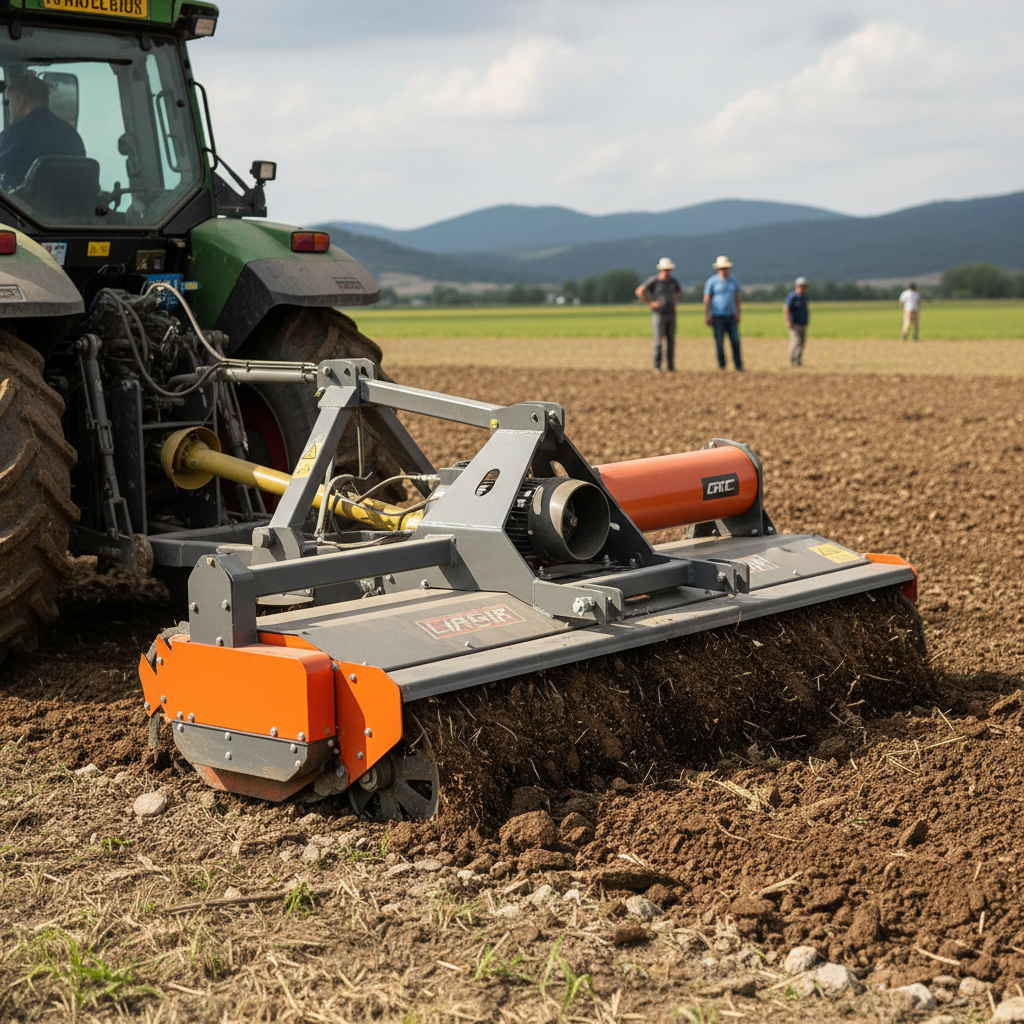
Comprehensive Guide to Heavy Duty Rotary Tiller Selection and Application
When it comes to land preparation, a heavy duty rotary tiller is an invaluable tool. This robust machinery excels at breaking up compacted soil, creating a fine seedbed, and incorporating organic matter. This article dives deep into the world of heavy duty rotary tillers, covering their benefits, applications, key features, and how to choose the right one for your needs. Whether you're a farmer, landscaper, or large-scale gardener, understanding these tillers is essential for efficient and effective soil management.
>
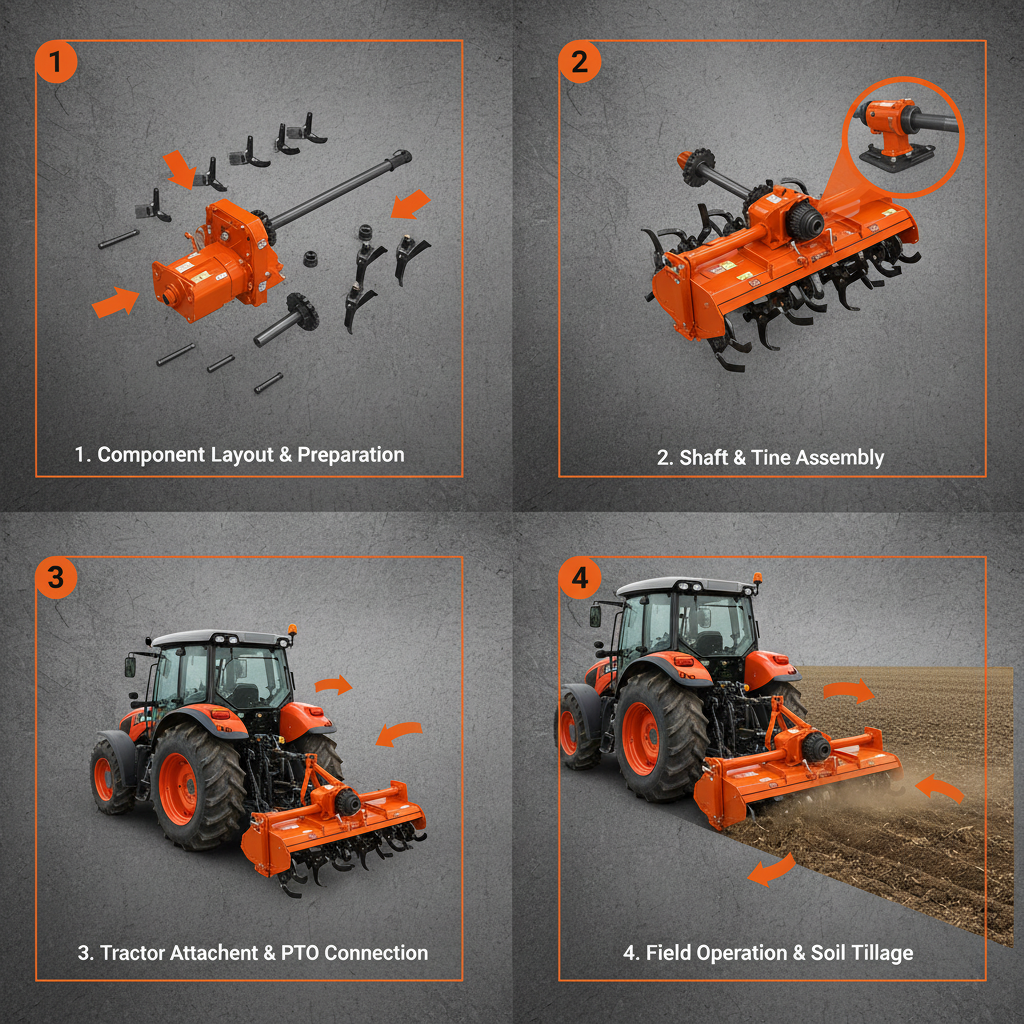
Comprehensive Guide to Selecting the Ideal Farm Tractor Tiller for Your Needs
Selecting the ideal farm tractor tiller is crucial for efficient soil preparation and maximizing agricultural yields. With a diverse range of models available, understanding your needs and the features offered by different tillers is paramount. This article provides a detailed overview of farm tractor tillers, covering their types, benefits, key considerations, and how to choose the right one for your specific farming operation. Proper tillage significantly impacts seedbed quality, weed control, and ultimately, crop performance.
>
Boost Farm Productivity with a High Performance Farm Pro Rotary Tiller
Are you looking to enhance your agricultural productivity and streamline your soil preparation process? A Farm Pro rotary tiller is an invaluable investment for farmers of all scales. This article delves into the benefits, features, applications, and considerations when choosing the right rotary tiller for your farm. We’ll explore how this machinery can significantly reduce labor costs and improve soil quality, ultimately leading to higher yields. From small hobby farms to large-scale commercial operations, a Farm Pro tiller offers a robust and efficient solution for a variety of tilling needs.
>
Unlock Farming Efficiency with a Powerful Agricultural Tiller Solution
In the world of farming and gardening, efficiency and productivity are key. An agricultural tiller is a vital piece of equipment that streamlines soil preparation, saving time and labor. This article dives deep into the world of tillers, exploring their types, benefits, how to choose the right one, and the quality solutions offered by Zinanmech. We’ll cover everything from small garden tillers to heavy-duty agricultural models, ensuring you have the knowledge to make an informed decision. An agricultural tiller, also known as a rotary tiller, is a motorized machine used to break up and cultivate soil. Unlike manual digging or plowing, tillers use rotating blades to loosen the soil, creating a fine, even tilth that's ideal for planting. This process improves soil aeration, drainage, and nutrient availability, leading to healthier plant growth.
>
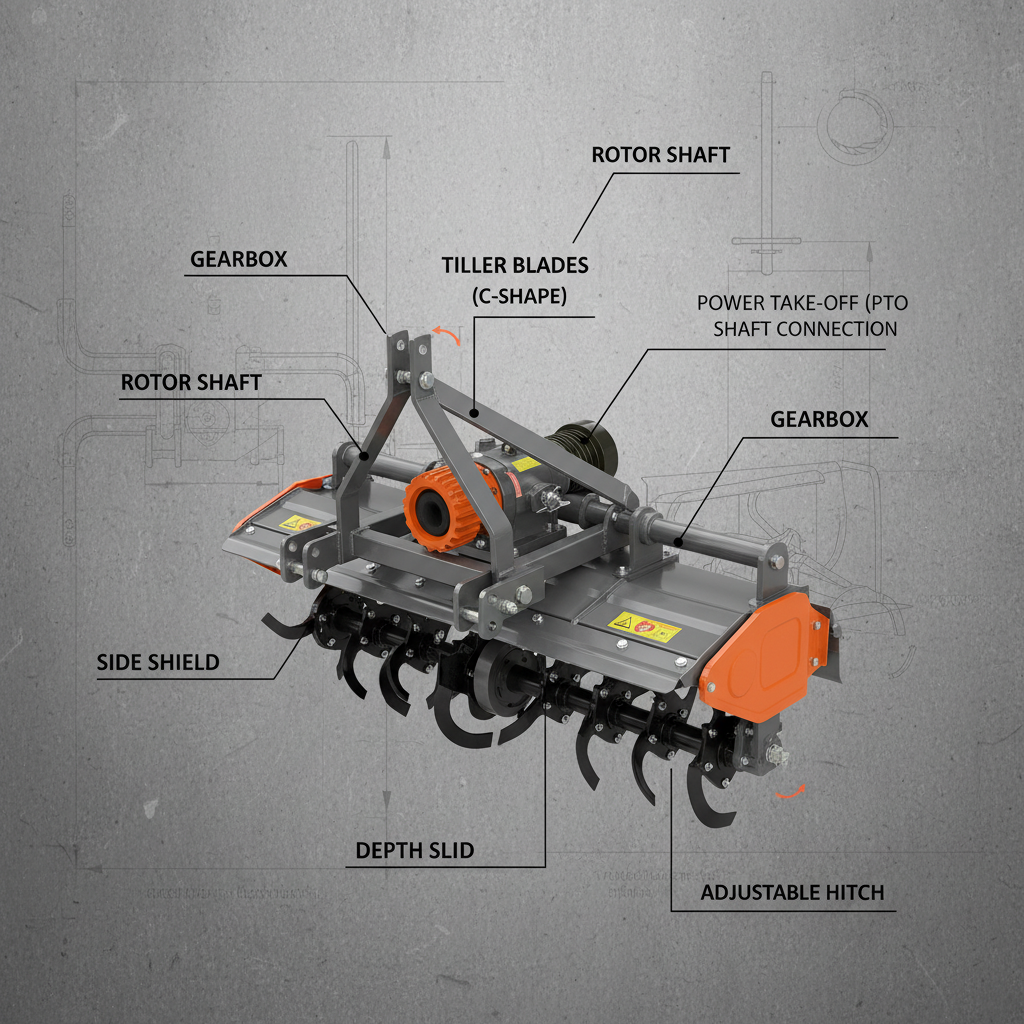
Comprehensive Guide to Agricultural Rotary Tiller Selection and Usage
An agricultural rotary tiller is an essential tool for modern farming, designed to efficiently prepare soil for planting. This powerful machinery significantly reduces labor and time compared to traditional methods. Whether you're a smallholder or manage a large-scale agricultural operation, understanding the benefits and features of a rotary tiller is crucial for maximizing productivity. Choosing the right tiller can transform your land preparation process. This article provides a detailed overview of agricultural rotary tillers, covering their uses, types, benefits, and key considerations when selecting the right model. Modern tillers are available in various sizes and configurations, catering to different farm sizes and soil conditions. Zinanmech provides a range of high-quality rotary tillers designed for optimal performance and durability. An agricultural rotary tiller, also known as a rototiller, is a motorized machine used to prepare agricultural land for cultivation. It works by using rotating blades – typically called tines – to break up, churn, and mix the soil.
>
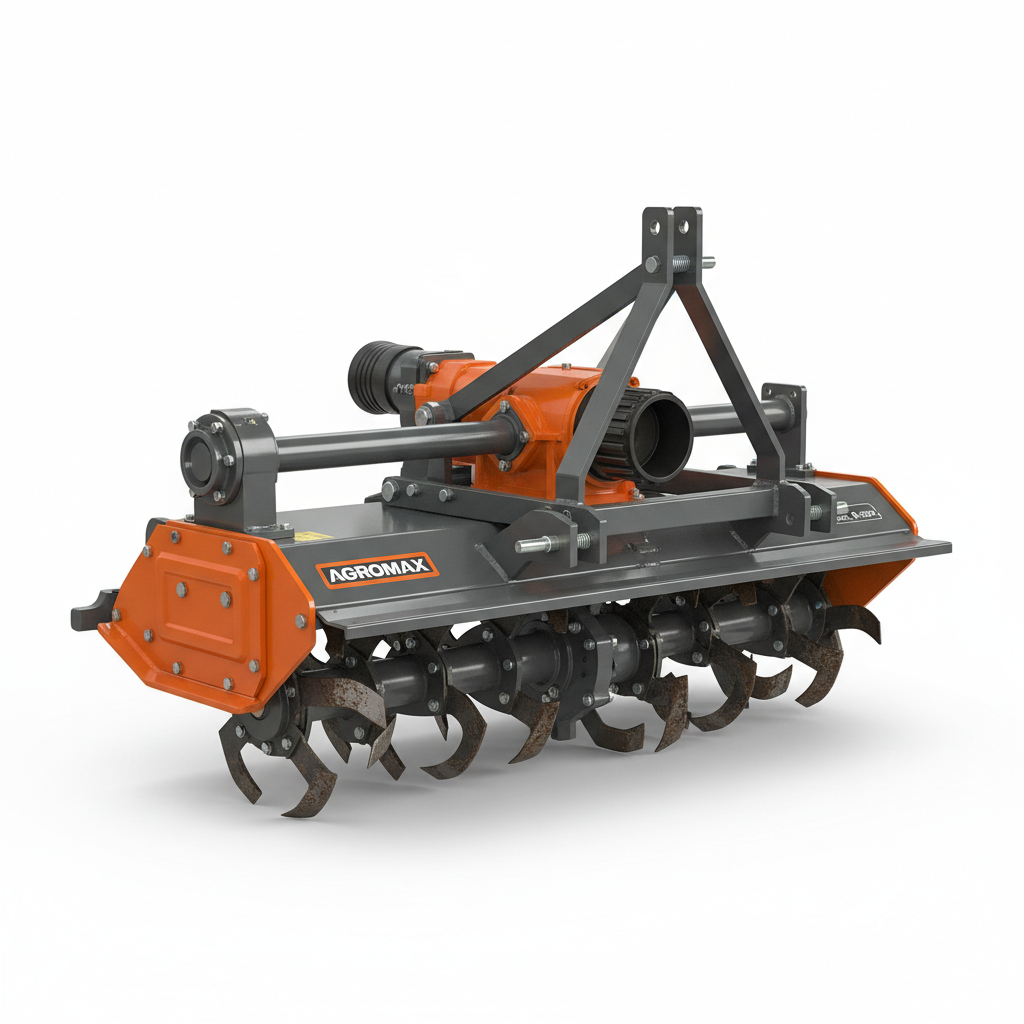
Comprehensive Guide to Selecting the Ideal Agric Rototiller for Your Farm
Selecting the right agric rototiller is crucial for efficient soil preparation and maximizing crop yields. This guide will explore the different types of rototillers, their applications, and how to choose the best model for your farming needs. We’ll cover everything from small, handheld rototillers to larger, tractor-mounted versions, helping you make an informed decision to enhance your agricultural operations. A well-chosen rototiller significantly reduces manual labor and improves soil quality. Agric rototillers come in various sizes and configurations, each suited for different farming tasks. The main types include: Front-Tine Rototillers, ideal for smaller gardens and breaking up already tilled soil; Rear-Tine Rototillers, offering more power and suitable for larger areas and tougher soil conditions; and Mid-Tine Rototillers, a versatile option for medium-sized farms. Choosing the correct type depends on your farm size, soil type, and the crops you intend to grow.
>
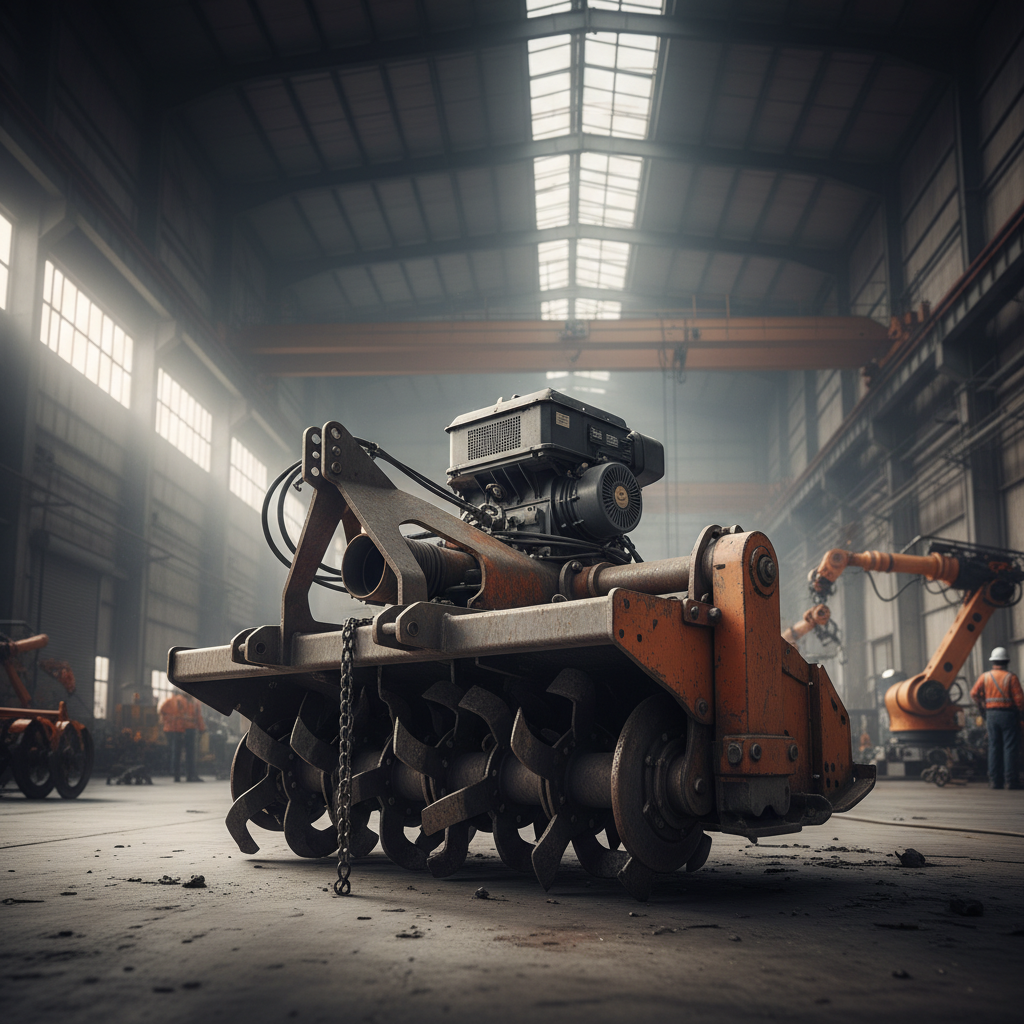
Unlock Farming Efficiency with a Powerful Agri Rototiller for Modern Agriculture
In today's agricultural landscape, efficiency and productivity are paramount. An agri rototiller, also known as a rotary tiller, is an invaluable tool for preparing soil for planting. This versatile machine cultivates, mixes, and levels the soil in a single pass, saving farmers significant time and effort. From small-scale farms to large agricultural operations, the benefits of using a rototiller are numerous. Investing in a quality rototiller is investing in the future success of your harvest. An agri rototiller is a motorized machine designed to break up and aerate soil using rotating blades. These blades, often called tines, churn the soil, creating a fine, even texture ideal for planting seeds or transplanting seedlings. Unlike traditional plowing, rototilling doesn't invert the soil, minimizing disruption to the soil's natural structure.
>
International layout
Spread all over the world
our products are exported to various parts of the world. Currently, our products have been exported to more than 40 countries Our products cover Asia, Europe, Africa, South America, North America, and Oceania
Sign up
for Newsletter
Subscribe to the weekly newsletter for all the latest updates