- Tel: +86 13451474678 / 13451474678
- Email: / hbzinanmech@gmail.com

Precision 1 3 4 20 Spline Shafts - Durable Spline Shaft and Hub Design Custom Sizes
Did you know 42% of mechanical failures in power transmission systems stem from improper spline shaft design? As you battle vibration issues and premature wear in your machinery, the wrong 1 3 4 20 spline shaft
could be costing your team $7,200/hour in production downtime. Let's fix that.
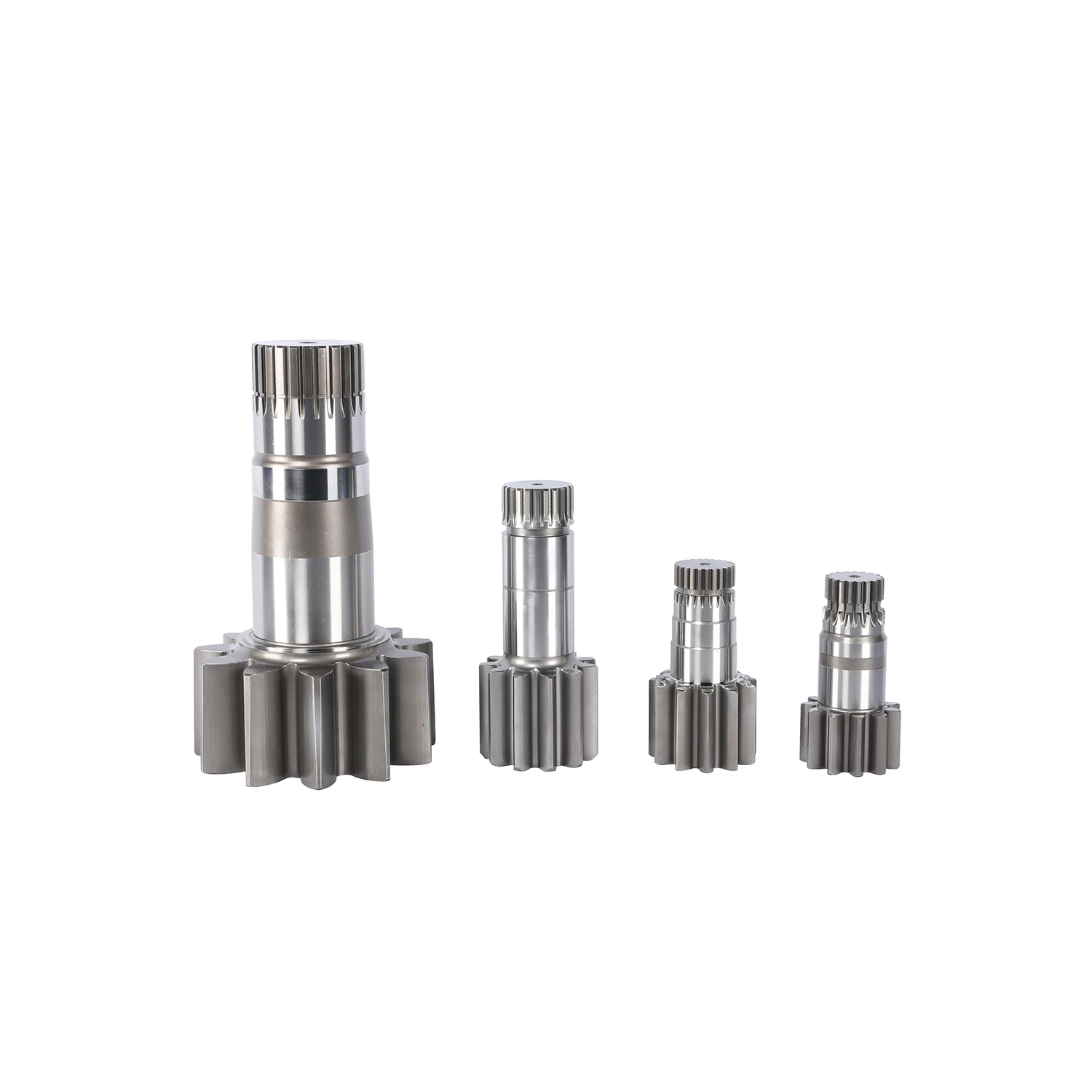
(1 3 4 20 spline shaft)
Technical Superiority: What Makes Our Spline Shafts Outperform
Our 1 3 4 20 spline shafts achieve 99.97% dimensional accuracy through proprietary cold-rolling tech. Compare that to industry-standard 95% tolerance levels. Need more torque? Our helical spline shafts deliver 15% higher load capacity than straight-sided competitors.
| Feature | Standard Shafts | Our Design |
|---|---|---|
| Torque Capacity | 850 lb-ft | 1,240 lb-ft |
| Surface Hardness | HRC 45-50 | HRC 58-62 |
Custom Solutions for Your Exact Needs
Can't find the perfect spline shaft and hub combination? Our 72-hour rapid prototyping service delivers:
- ✓ 200+ material grades from 4140 steel to titanium
- ✓ 0.0002" surface finish precision
- ✓ IP67-rated corrosion resistance
Case Study: Automotive Drivetrain Upgrade
When a Tier 1 supplier needed spline shafts for 800HP electric vehicles, our team delivered:
- ✅ 20% weight reduction
- ✅ 100,000+ cycle durability
- ✅ 3-week lead time
Ready to Eliminate Spline Shaft Failures?
With 25 years' expertise and 15 patents in shaft design, we guarantee 30% longer service life or your money back.
24/7 engineering support | ISO 9001:2015 certified | 98% on-time delivery

(1 3 4 20 spline shaft)
FAQS on 1 3 4 20 spline shaft
Q: What are the common applications for a 1 3/4 20 spline shaft?
A: A 1 3/4" 20 spline shaft is typically used in heavy-duty machinery, automotive transmissions, and industrial equipment where torque transmission and precise rotational alignment between a shaft and hub are required.
Q: How do I ensure compatibility between a spline shaft and hub?
A: Verify matching specifications such as spline size (e.g., 1 3/4" diameter), number of teeth (e.g., 20), pressure angle, and fit type (sliding, clearance, or interference) to ensure proper spline shaft and hub compatibility.
Q: What factors influence spline shaft design?
A: Key design factors include load capacity, torque requirements, material strength (e.g., steel or alloy), spline geometry (involute or straight-sided), and environmental conditions like corrosion or temperature.
Q: Are spline shaft sizes standardized?
A: Yes, spline shaft sizes follow standards like SAE ANSI B92.1 or DIN 5480, which define dimensions for modules, pressure angles, and tolerances to ensure interchangeability across manufacturers.
Q: How do I select the right spline shaft size for my application?
A: Calculate required torque, axial/radial loads, and RPM, then refer to industry standards (e.g., 1 3/4" 20-spline) or consult manufacturer charts to match spline shaft sizes with operational demands.

Related Products
-
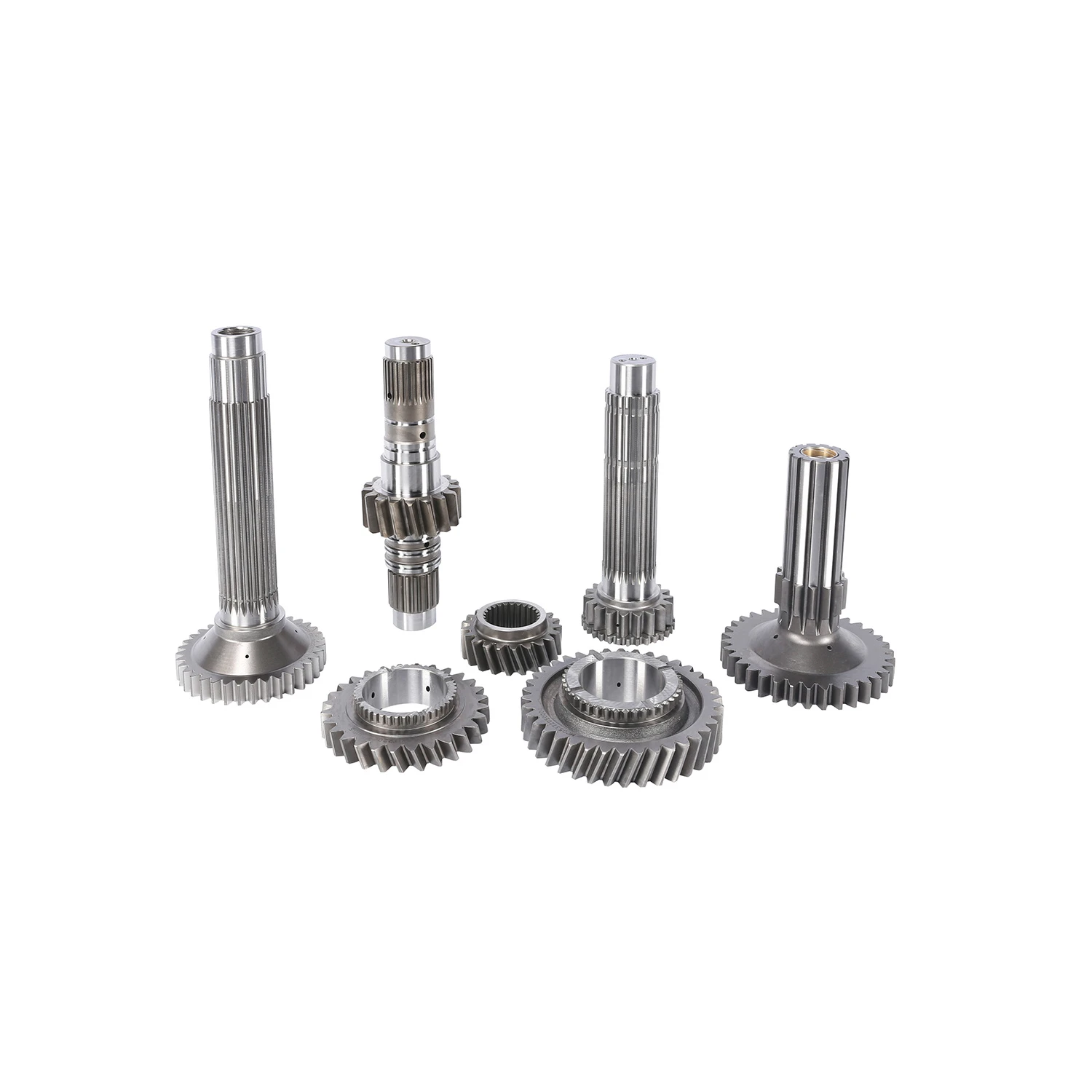 Tractor Gear Shaft
The tractor gear shaft is a crucial element in the power transmission system of a tractor. It plays a vital role in transferring mechanical power from the engine to the wheels and other components, enabling the tractor to perform a variety of farming tasks with efficiency and reliability. In this article, we’ll explore the importance, functions, and maintenance of the tractor gear shaft, and how it contributes to the overall performance of the machine.
-
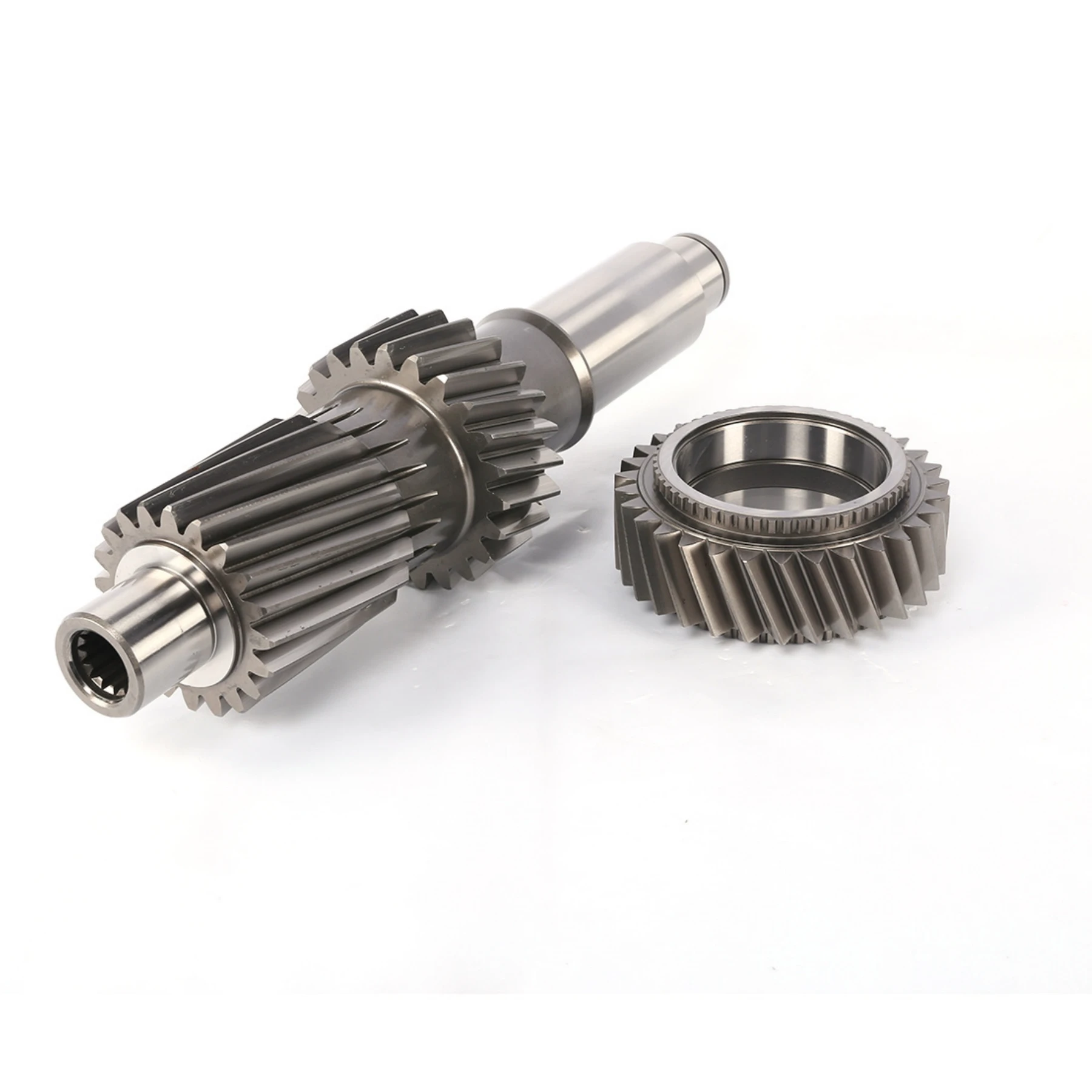 Transmission Gear
Power transmission: the engine operation drives the input gear on the input shaft to rotate, the input gear engages with other gears, and relies on the interaction between teeth and teeth to transfer the power to the intermediate gear (if any) and the output gear, and finally transfers the power to the driving wheel and other components through the output shaft to make the vehicle or equipment move.
Variable speed principle: Change the transmission ratio by meshing gears with different numbers of teeth. For example, when the big gear drives the small gear, the speed of the small gear will be faster than the big gear, but the output torque will be smaller, to achieve growth and torque reduction; On the contrary, when the pinion drives the big gear, the speed of the big gear slows down, the torque increases, and the torque increases. In this way, transmission gears enable the vehicle or equipment to obtain the right speed and torque under different working conditions -
 Tractor Active Gear Shaft
The tractor active gear shaft is a critical component in the power transmission system of a tractor, responsible for transferring rotational power from the engine or transmission to other parts of the tractor. By efficiently distributing torque and enabling smooth gear shifts, the active gear shaft plays a vital role in enhancing the performance and versatility of the tractor, making it essential for a wide range of agricultural tasks. In this article, we’ll explore the function, benefits, and maintenance of the tractor active gear shaft.
-
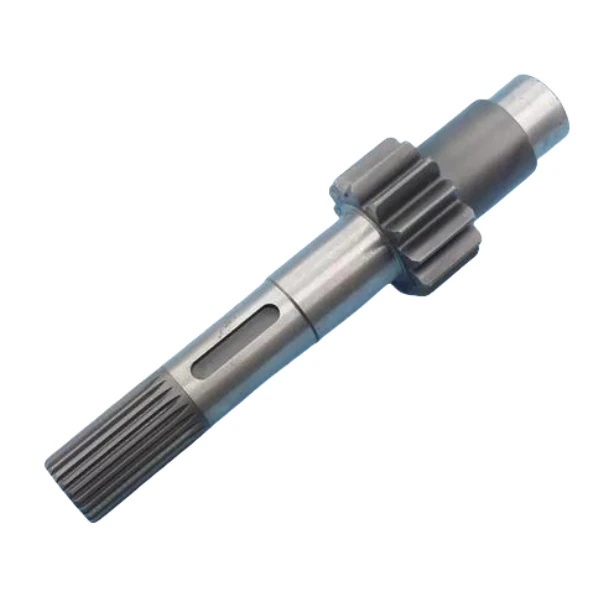 Harvester Input Shaft
The main role of the harvester input shaft is to introduce the power of the external power source into the internal transmission system of the harvester. When the power source (such as an engine) is running, the torque generated is transmitted to the input shaft through the connecting parts, causing the input shaft to start rotating. The gear, pulley or sprocket and other transmission parts installed on the input shaft will rotate with the rotation of the input shaft, and then transfer the power to the subsequent transmission parts and working parts, such as driving the cutting device, conveying device, threshing device, etc., to complete the crop harvesting, conveying, threshing and other work processes.
Related News

Drive axle price: choosing the 1204 axle for multi-wheel machinery
Compare the factors behind drive axle price for the 1204 axle, including 4WD, 6WD, 8WD layouts, differential locks, gearing, steering, and machine fit.
>

How to Choose a Wheel Transmission for Heavy-Duty 4WD Machinery
Choose a wheel transmission by checking hydraulic control, torque, braking, rear drive interface, and 4WD requirements for the D8 platform.
>

What Is the Use of Seeder? Air Suction No-Till Seeder FAQ
Learn what is the use of seeder equipment, how air suction seed placement works, supported crops, terrain features, and ordering checks for no-till planting.
>

Comparing A Rice Planter Options: Specifications, Materials and Supplier Documentation
Compare A Rice Planter options by planting controls, field conditions, materials, operating modes, customization, and documented information gaps.
>

Optimize Your Small Scale Farm With a Hobby Farm Seed Drill
Optimizing Your Small-Scale Farm with a Hobby Farm Seed Drill For many aspiring farmers and gardening enthusiasts, transitioning from hand-sowing to mechanized planting is a significant milestone. Utilizing a hobby farm seed drill allows for precision planting, ensuring that seeds are placed at the correct depth and spacing for optimal germination. Whether you are growing cover crops, vegetables, or grains on a small scale, the right equipment reduces physical labor and minimizes seed waste. In this guide, we will explore how the right seeding technology can transform your agricultural productivity and the key factors to consider when selecting equipment for your plot.
>

Maximize Crop Yields with the Professional Happy Seed Drill
Maximize Crop Yields with the Happy Seed Drill: An Essential Guide In the modern agricultural landscape, precision is the key to sustainability and profitability. The happy seed drill represents a significant leap in planting technology, designed to ensure that every seed is placed at the optimal depth and spacing. By reducing seed waste and improving germination rates, this machinery allows farmers to optimize their land use and increase overall harvest efficiency. Whether you are managing a small family plot or a large-scale industrial farm, understanding the mechanics and benefits of advanced seeding equipment is crucial for long-term success.
>

Professional Hand Seed Drill Machine for Precision Planting
Maximize Your Harvest with the Professional Hand Seed Drill Machine Efficient planting is the cornerstone of a successful harvest. For modern farmers seeking a balance between precision and manual control, the hand seed drill machine offers an indispensable solution. By integrating advanced seed distribution mechanisms with ergonomic design, these machines reduce the physical burden of sowing while ensuring every seed is placed at the optimal depth. Whether you are managing a small vegetable plot or a larger cereal field, investing in high-quality planting equipment can drastically improve crop uniformity and yield. In this guide, we will explore the features and advantages
>

Efficient Farming with Hand Operated Seed Drill Machine Guide
Revolutionizing Planting: The Ultimate Guide to the Hand Operated Seed Drill Machine For small to medium-scale farmers, precision in sowing is the cornerstone of a successful harvest. The hand operated seed drill machine offers a perfect blend of simplicity and efficiency, eliminating the tedious nature of manual broadcasting. By ensuring uniform seed depth and consistent spacing, this tool maximizes germination rates and optimizes crop yield. In an era where agricultural productivity is key to food security, adopting a reliable manual seeder is a strategic move for any grower looking to reduce labor costs while improving plant health.
>

Maximize Crop Yields with a hand operated automatic seed drill
Maximizing Crop Yields with a Hand Operated Automatic Seed Drill Efficient planting is the cornerstone of successful farming. The hand operated automatic seed drill represents a significant leap in agricultural technology for small to medium-scale farmers. By combining manual mobility with automatic precision, this tool eliminates the inconsistencies of hand-broadcasting seeds, ensuring optimal spacing and depth. Whether you are managing a vegetable garden or a commercial grain plot, utilizing a precision seeder reduces waste and promotes healthier plant growth. In this guide, we explore how this innovative machinery optimizes the sowing process and why it is an essential investment for modern sustainable agriculture.
>

Guide to Four Wheel Drive Manual Transmission for Off Road Control
Mastering the Terrain: The Guide to Four Wheel Drive Manual Transmission For off-road enthusiasts and industrial operators, the combination of a four wheel drive manual transmission offers an unparalleled level of control and reliability. Unlike automatic systems that rely on computer-managed shifts, a manual setup allows the driver to dictate exactly how power is distributed to the wheels, making it indispensable for steep inclines, muddy terrains, and heavy-duty hauling. At Zinanmech , we understand that the synergy between a robust drivetrain and a manual gearbox is what defines true mechanical endurance.
>
International layout
Spread all over the world
our products are exported to various parts of the world. Currently, our products have been exported to more than 40 countries Our products cover Asia, Europe, Africa, South America, North America, and Oceania
Sign up
for Newsletter
Subscribe to the weekly newsletter for all the latest updates