- Tel: +86 13451474678 / 13451474678
- Email: / hbzinanmech@gmail.com

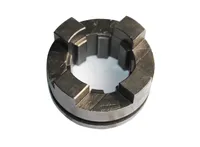
Tractor Coupling - Heavy-Duty, Leak-Proof Quick Connects
Field Notes on Power Transfer: The Tractor Coupling Most Folks Overlook
If you work the land, you know the tiny parts do big jobs. The Tractor Coupling is one of those unsung bits—quiet, tough, and honestly, decisive for uptime. It’s the link that turns your tractor’s intent into implement action: plowing, hauling, planting, or towing a baler at dusk when the forecast isn’t friendly. I’ve seen fleets hampered by a $30 pin before a $300K tractor; so yes, we should talk about couplings.
What’s Changing in Couplings (and Why It Matters)
The market’s shifting toward higher drawbar loads, quick-hitch compatibility, and better corrosion resistance. Farmers tell me they want two things: faster swaps between implements and fewer surprises mid-season. Surprisingly, modest upgrades—like switching to 42CrMo steel or e-coat—can extend service life and keep the whole rig feeling tighter under shock loads.
Typical Applications
- Drawbar towing for grain carts, wagons, and slurry tanks
- Three-point hitching (Cat 1/2/3/4) for plows, planters, cultivators
- Mowing and baling where frequent hitching/unhitching happens
- Municipal and construction tasks: sweepers, trailers, spreaders
Technical Specs (Core)
Below is a representative spec for a heavy-duty Tractor Coupling assembly from Shijiazhuang, Hebei Province, China—built for day-in, day-out ag work.
| Material | 42CrMo / 40Cr, drawbar eye in 45# steel; hardness ≈ HRC 28–36 after heat-treat |
| Rated static load | ≈ 120–180 kN (real-world use may vary by implement and tire grip) |
| Hitch categories | Cat 1/2/3/4 (ISO 730 compatible) |
| Coatings | Phosphate + powder coat; optional zinc flake or e-coat for high-salt regions |
| Fatigue life | ≥ 1.2×10⁶ cycles at ±40% rated load (lab), ≈ 8,000–12,000 hours field |
| Compliance | ISO 6489 series, ISO 730, OECD tractor test codes; ISO 9001 QA |
How It’s Made (Quick Process Flow)
Materials: forged 42CrMo blanks, drawbar eyes in 45# steel. Methods: CNC machining for bore concentricity, induction hardening on wear faces, shot blasting, dimensional gauging, then phosphate and powder coat. Testing: ultrasonic flaw detection, magnetic particle on critical fillets, torque and tensile verification per ISO 6489; 240–480 h salt spray (ASTM B117 equivalent) depending on coating package. Each lot gets pull tests and traceability. Seems basic, but the QC discipline is what separates “fine” from “keeps working in November.”
Real-World Feedback
Many customers say the upgraded latch geometry reduces rattle on stony ground. One large-coop mechanic told me they cut hitch swap time by about 20% after standardizing pins and bushings—less fiddling, fewer gloves thrown (we’ve all been there).
Case Snippets
- Mixed-crop farm, Midwest: 2 seasons, no visible ovalizing on the drawbar eye; 360 h salt-spray spec chosen due to winter road salt.
- Vineyard, Mediterranean: Cat 1N low-profile setup for tight headlands; operators liked the smoother latch ramp.
Vendor Comparison (What to Watch)
| Vendor | Standards & QC | Lead Time | Notes |
|---|---|---|---|
| Zinan (Hebei, CN) | ISO 9001; ISO 6489/730 alignment; batch UT/MP; salt-spray 240–480 h | ≈ 2–4 weeks | Customization on holes, latch type, coatings; solid documentation |
| Generic Importer | Variable; may state ISO but limited test data | 1–8 weeks | Check material certs and weld procedures carefully |
| Local Dealer Brand | Often compliant; QC depends on OEM | In stock | Great support; price can be higher |
Customization Options
You can spec pin diameters, drawbar eye sizes (per ISO 6489 variants), hitch category, latch style (spring or captured), and coatings (powder, e-coat, zinc flake). For coastal or winter-salt regions, I’d definitely tick the higher corrosion package.
Maintenance (the 5-Minute Habit)
- Grease per schedule; wipe grit from latch faces
- Check ovality of eyes and pins; replace at first sign of slop
- Verify torque on mounting hardware after the first 10 hours
- Look for coating breach and touch up before winter
Bottom line? A well-built Tractor Coupling makes everything downstream feel more predictable. It’s not glamorous. But it’s the handshake your equipment depends on.
References
- ISO 6489 series — Agricultural vehicles — Mechanical connections between tractor and implement — Hitching devices.
- ISO 730 — Agricultural tractors — Category 1N/1/2/3/4 three-point linkage.
- ISO 500-1 — Agricultural tractors — Power take-off and mounting dimensions — Part 1.
- OECD Codes for the Official Testing of Agricultural and Forestry Tractor Performance (hitch and drawbar related tests).

Related Products
-
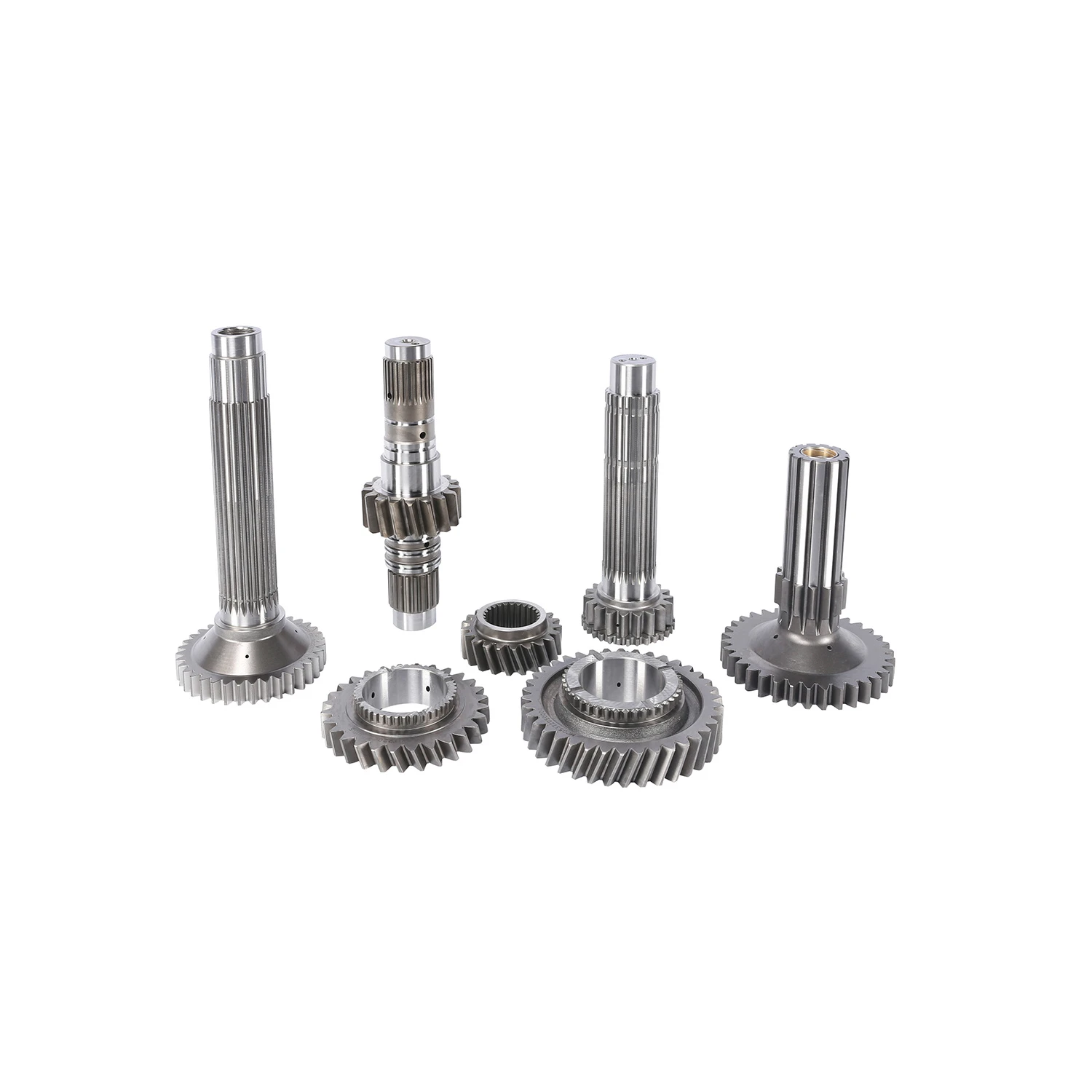 Tractor Gear Shaft
The tractor gear shaft is a crucial element in the power transmission system of a tractor. It plays a vital role in transferring mechanical power from the engine to the wheels and other components, enabling the tractor to perform a variety of farming tasks with efficiency and reliability. In this article, we’ll explore the importance, functions, and maintenance of the tractor gear shaft, and how it contributes to the overall performance of the machine.
-
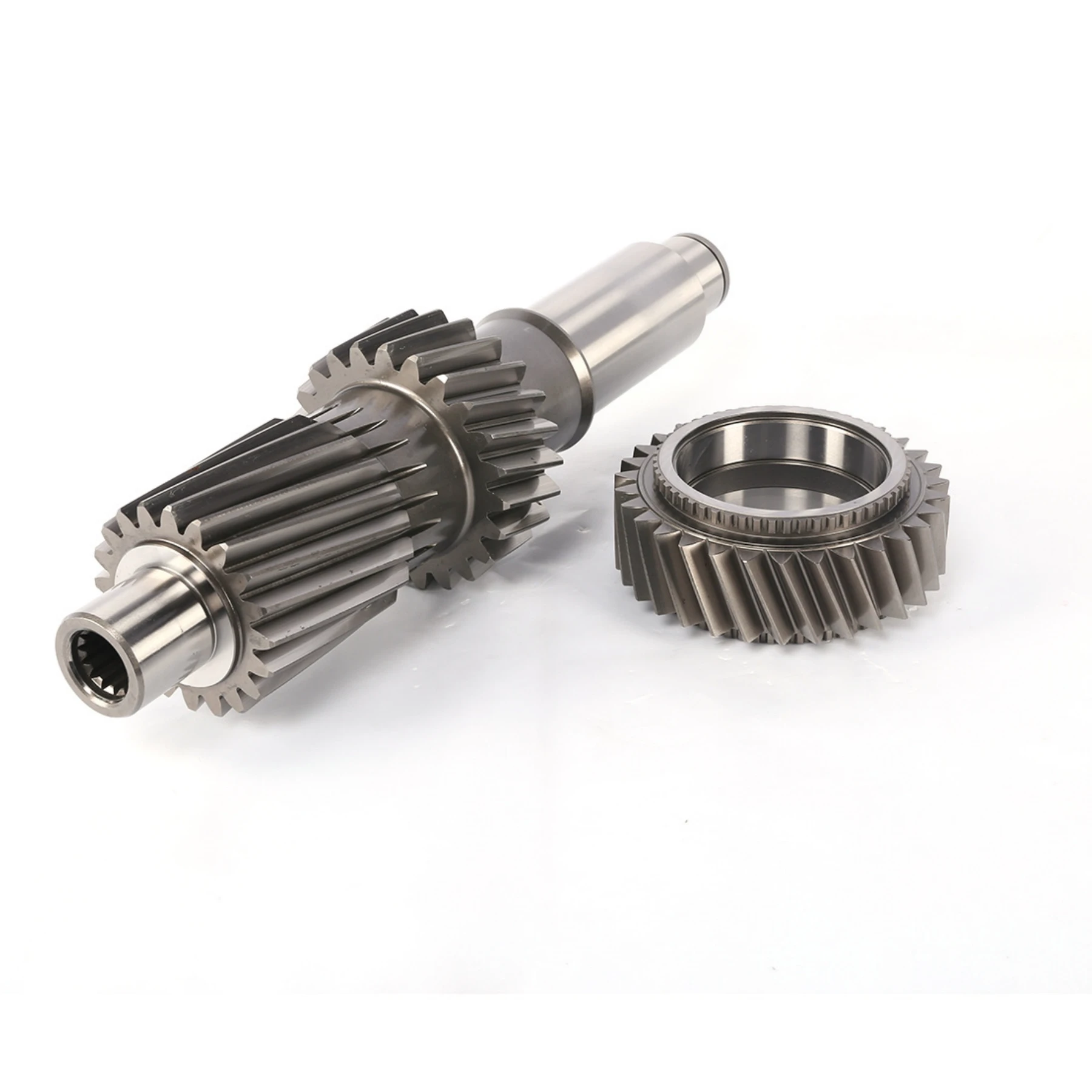 Transmission Gear
Power transmission: the engine operation drives the input gear on the input shaft to rotate, the input gear engages with other gears, and relies on the interaction between teeth and teeth to transfer the power to the intermediate gear (if any) and the output gear, and finally transfers the power to the driving wheel and other components through the output shaft to make the vehicle or equipment move.
Variable speed principle: Change the transmission ratio by meshing gears with different numbers of teeth. For example, when the big gear drives the small gear, the speed of the small gear will be faster than the big gear, but the output torque will be smaller, to achieve growth and torque reduction; On the contrary, when the pinion drives the big gear, the speed of the big gear slows down, the torque increases, and the torque increases. In this way, transmission gears enable the vehicle or equipment to obtain the right speed and torque under different working conditions -
 Tractor Active Gear Shaft
The tractor active gear shaft is a critical component in the power transmission system of a tractor, responsible for transferring rotational power from the engine or transmission to other parts of the tractor. By efficiently distributing torque and enabling smooth gear shifts, the active gear shaft plays a vital role in enhancing the performance and versatility of the tractor, making it essential for a wide range of agricultural tasks. In this article, we’ll explore the function, benefits, and maintenance of the tractor active gear shaft.
-
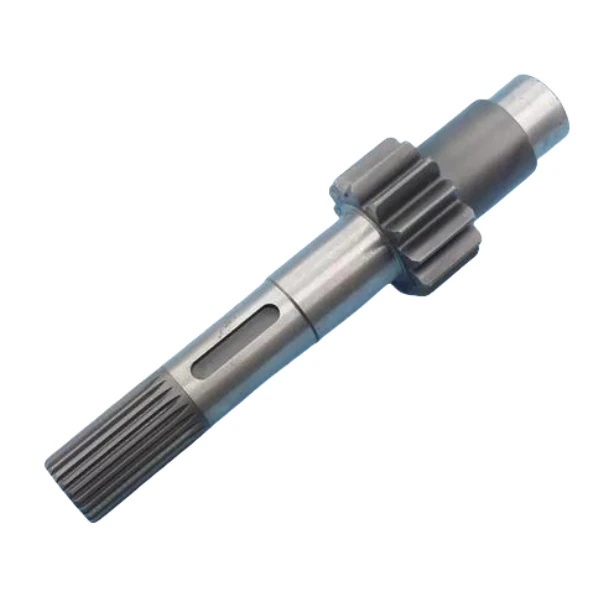 Harvester Input Shaft
The main role of the harvester input shaft is to introduce the power of the external power source into the internal transmission system of the harvester. When the power source (such as an engine) is running, the torque generated is transmitted to the input shaft through the connecting parts, causing the input shaft to start rotating. The gear, pulley or sprocket and other transmission parts installed on the input shaft will rotate with the rotation of the input shaft, and then transfer the power to the subsequent transmission parts and working parts, such as driving the cutting device, conveying device, threshing device, etc., to complete the crop harvesting, conveying, threshing and other work processes.
Related News

How to Choose a Gearbox Transmission for Agricultural Power Reversal
Choose a gearbox transmission for agricultural machinery by checking application, housing rigidity, compact fit, gear engagement, connections, and customization needs.
>

Drive axle price: choosing the 1204 axle for multi-wheel machinery
Compare the factors behind drive axle price for the 1204 axle, including 4WD, 6WD, 8WD layouts, differential locks, gearing, steering, and machine fit.
>

How to Choose a Wheel Transmission for Heavy-Duty 4WD Machinery
Choose a wheel transmission by checking hydraulic control, torque, braking, rear drive interface, and 4WD requirements for the D8 platform.
>

What Is the Use of Seeder? Air Suction No-Till Seeder FAQ
Learn what is the use of seeder equipment, how air suction seed placement works, supported crops, terrain features, and ordering checks for no-till planting.
>

Comparing A Rice Planter Options: Specifications, Materials and Supplier Documentation
Compare A Rice Planter options by planting controls, field conditions, materials, operating modes, customization, and documented information gaps.
>

Optimize Your Small Scale Farm With a Hobby Farm Seed Drill
Optimizing Your Small-Scale Farm with a Hobby Farm Seed Drill For many aspiring farmers and gardening enthusiasts, transitioning from hand-sowing to mechanized planting is a significant milestone. Utilizing a hobby farm seed drill allows for precision planting, ensuring that seeds are placed at the correct depth and spacing for optimal germination. Whether you are growing cover crops, vegetables, or grains on a small scale, the right equipment reduces physical labor and minimizes seed waste. In this guide, we will explore how the right seeding technology can transform your agricultural productivity and the key factors to consider when selecting equipment for your plot.
>

Maximize Crop Yields with the Professional Happy Seed Drill
Maximize Crop Yields with the Happy Seed Drill: An Essential Guide In the modern agricultural landscape, precision is the key to sustainability and profitability. The happy seed drill represents a significant leap in planting technology, designed to ensure that every seed is placed at the optimal depth and spacing. By reducing seed waste and improving germination rates, this machinery allows farmers to optimize their land use and increase overall harvest efficiency. Whether you are managing a small family plot or a large-scale industrial farm, understanding the mechanics and benefits of advanced seeding equipment is crucial for long-term success.
>

Professional Hand Seed Drill Machine for Precision Planting
Maximize Your Harvest with the Professional Hand Seed Drill Machine Efficient planting is the cornerstone of a successful harvest. For modern farmers seeking a balance between precision and manual control, the hand seed drill machine offers an indispensable solution. By integrating advanced seed distribution mechanisms with ergonomic design, these machines reduce the physical burden of sowing while ensuring every seed is placed at the optimal depth. Whether you are managing a small vegetable plot or a larger cereal field, investing in high-quality planting equipment can drastically improve crop uniformity and yield. In this guide, we will explore the features and advantages
>

Efficient Farming with Hand Operated Seed Drill Machine Guide
Revolutionizing Planting: The Ultimate Guide to the Hand Operated Seed Drill Machine For small to medium-scale farmers, precision in sowing is the cornerstone of a successful harvest. The hand operated seed drill machine offers a perfect blend of simplicity and efficiency, eliminating the tedious nature of manual broadcasting. By ensuring uniform seed depth and consistent spacing, this tool maximizes germination rates and optimizes crop yield. In an era where agricultural productivity is key to food security, adopting a reliable manual seeder is a strategic move for any grower looking to reduce labor costs while improving plant health.
>

Maximize Crop Yields with a hand operated automatic seed drill
Maximizing Crop Yields with a Hand Operated Automatic Seed Drill Efficient planting is the cornerstone of successful farming. The hand operated automatic seed drill represents a significant leap in agricultural technology for small to medium-scale farmers. By combining manual mobility with automatic precision, this tool eliminates the inconsistencies of hand-broadcasting seeds, ensuring optimal spacing and depth. Whether you are managing a vegetable garden or a commercial grain plot, utilizing a precision seeder reduces waste and promotes healthier plant growth. In this guide, we explore how this innovative machinery optimizes the sowing process and why it is an essential investment for modern sustainable agriculture.
>
International layout
Spread all over the world
our products are exported to various parts of the world. Currently, our products have been exported to more than 40 countries Our products cover Asia, Europe, Africa, South America, North America, and Oceania
Sign up
for Newsletter
Subscribe to the weekly newsletter for all the latest updates