- Tel: +86 13451474678 / 13451474678
- Email: / hbzinanmech@gmail.com

Transmission Shaft Supplier — Precision, Durable, OEM Ready
Field Notes on the Transmission Shaft: What Buyers Are Really Asking
I’ve toured machine shops from Shijiazhuang to Stuttgart, and one topic keeps popping up over coffee: how to spec a Transmission Shaft that won’t let you down at peak load. This unit from Shijiazhuang, Hebei Province, China, has become a quiet favorite among farm OEMs and industrial packagers—partly because it ships consistently, partly because the metallurgy is solid, and, to be honest, because the factory answers emails fast.

What’s trending (and why it matters)
Across ag, construction, and materials handling, the trend is toward higher torque density and lower NVH (noise, vibration, harshness). Customers say they want plug-and-play shafts with tighter runout, better surface integrity, and documented balancing. Actually, more buyers now ask for ISO 1940-1 balance grades and traceable heat-treatment charts. It’s not hype—real downtime costs are pushing that rigor.
Quick spec snapshot (typical, customizable)
| Parameter | Typical Spec (≈ / real-world use may vary) |
|---|---|
| Base Material | 42CrMo (GB/T 3077) or 4140/4340 equivalent, fine-grain alloy steel |
| Length / OD Range | ≈ 300–1,800 mm / Ø 25–120 mm |
| Max Rated Torque | Up to ≈ 5,000 N·m (design-dependent) |
| Hardness (HT zones) | HRC 28–36 core; HRC 50–58 at spline/gear seat (induction) |
| Runout / Concentricity | ≤ 0.03–0.06 mm TIR (after grind) |
| Balancing | ISO 1940-1 G6.3 standard; G2.5 on request |
| Spline/Keyway | Involute per ISO 4156 or keyway per ISO/R 773; DIN 5480 on request |
Process flow (how it’s actually made)
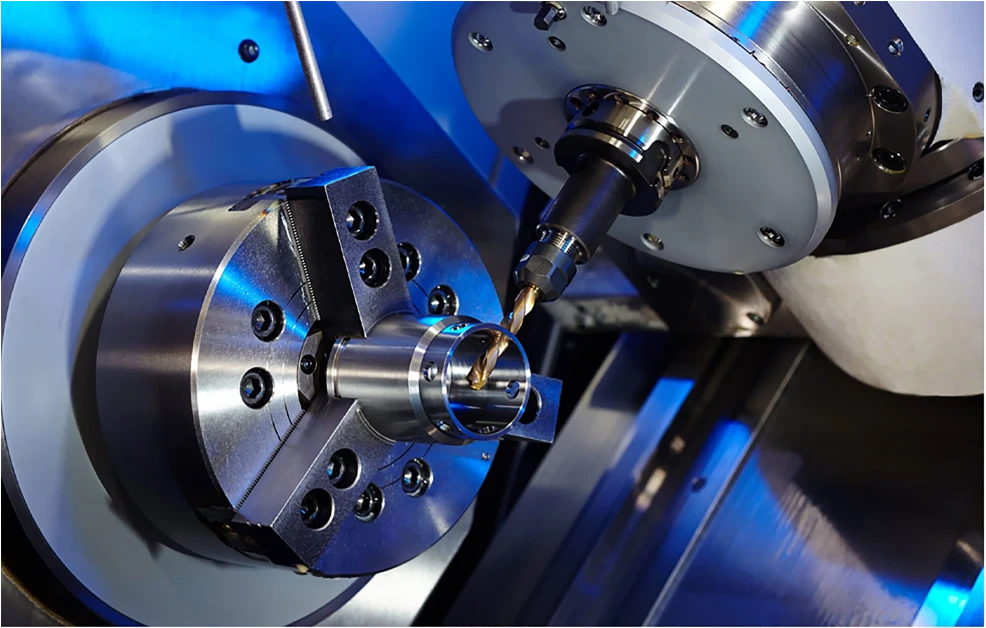
Material cert check → Forging or precision bar → Rough turn → Normalizing → CNC turning/milling → Induction hardening (localized) → OD/ID grinding → Spline shaping or hobbing → Straightening → Dynamic balancing → Shot peen → Phosphate or QPQ where needed → 100% dimensional + MT/UT NDT → Packing with VCI. Testing follows ISO 1940-1 for balance, ASTM E1444 for magnetic particle, hardness per HRC, and torque proof per customer drawing. Expected service life: ≈ 10,000–20,000 hours in ag duty, assuming aligned bearings and proper lubrication.
Where it works best
- Agriculture: tractors, balers, harvesters (many users report quieter drivetrains after switch).
- Construction: compact loaders, road rollers, mixers—steady torque with fewer vibration hotspots.
- Industrial: conveyor drives, reduction gear inputs, test rigs.
Why this Transmission Shaft stands out
- Traceable steel lots and heat-treatment charts on file.
- Balancing to G6.3 standard (G2.5 if you’re chasing NVH targets).
- Custom splines, shoulders, and stepped geometries without drama.
- Consistent runout control; surprisingly good grind quality for the price band.
Vendor comparison (real-world buying factors)
| Criteria | Zinan Mech (Hebei) | Vendor B (Trading House) | Vendor C (General Foundry) |
|---|---|---|---|
| Lead Time | ≈ 25–35 days | ≈ 40–55 days | ≈ 30–45 days |
| Balancing Cert | ISO 1940-1 report included | On request | Not standard |
| Customization | High (splines, coatings, HT zones) | Medium | Low–Medium |
| Quality System | ISO 9001; PPAP on request | ISO 9001 (varies) | Internal only |
Customization playbook
Options include material upgrades (4340 + nitriding), corrosion packages (phosphate, QPQ), spline forms (ISO 4156/DIN 5480), and balance to G2.5 for high-speed lines. Send torque curve, peak shock factor, shaft span, bearing type, and target life; the team will iterate drawings. I guess that’s why many customers say the process feels “engineer-to-engineer.”
Case snippets
- EU tractor OEM: switched to the Transmission Shaft with localized hardening; field failures dropped ≈ 18% over two seasons, NVH improved at 1,800 rpm.
- Aggregate plant: upgraded to G2.5 balance; conveyor drive saw a ≈ 0.04 mm runout reduction and cut bearing replacements by around 30% YoY.
Compliance, tests, and paperwork
Certs include ISO 9001:2015. Balancing per ISO 1940-1, NDT per ASTM E1444/E1444M, materials per GB/T 3077 or SAE, and spline conformance to ISO 4156. Typical test data pack: COC, material mill cert, balance sheet, hardness map, runout chart, and torque proof notes. If you’re in automotive-adjacent projects, PPAP Level 3 is available.
Authoritative references:
- ISO 1940-1: Mechanical vibration — Balance quality requirements for rotors in a constant (rigid) state.
- GB/T 3077-2015: Alloy structure steels (includes 42CrMo).
- ISO 4156: Straight involute splines — Metric module, side fit.
- ASTM E1444/E1444M: Standard Practice for Magnetic Particle Testing.
- ISO 9001:2015 Quality management systems — Requirements.

Related Products
-
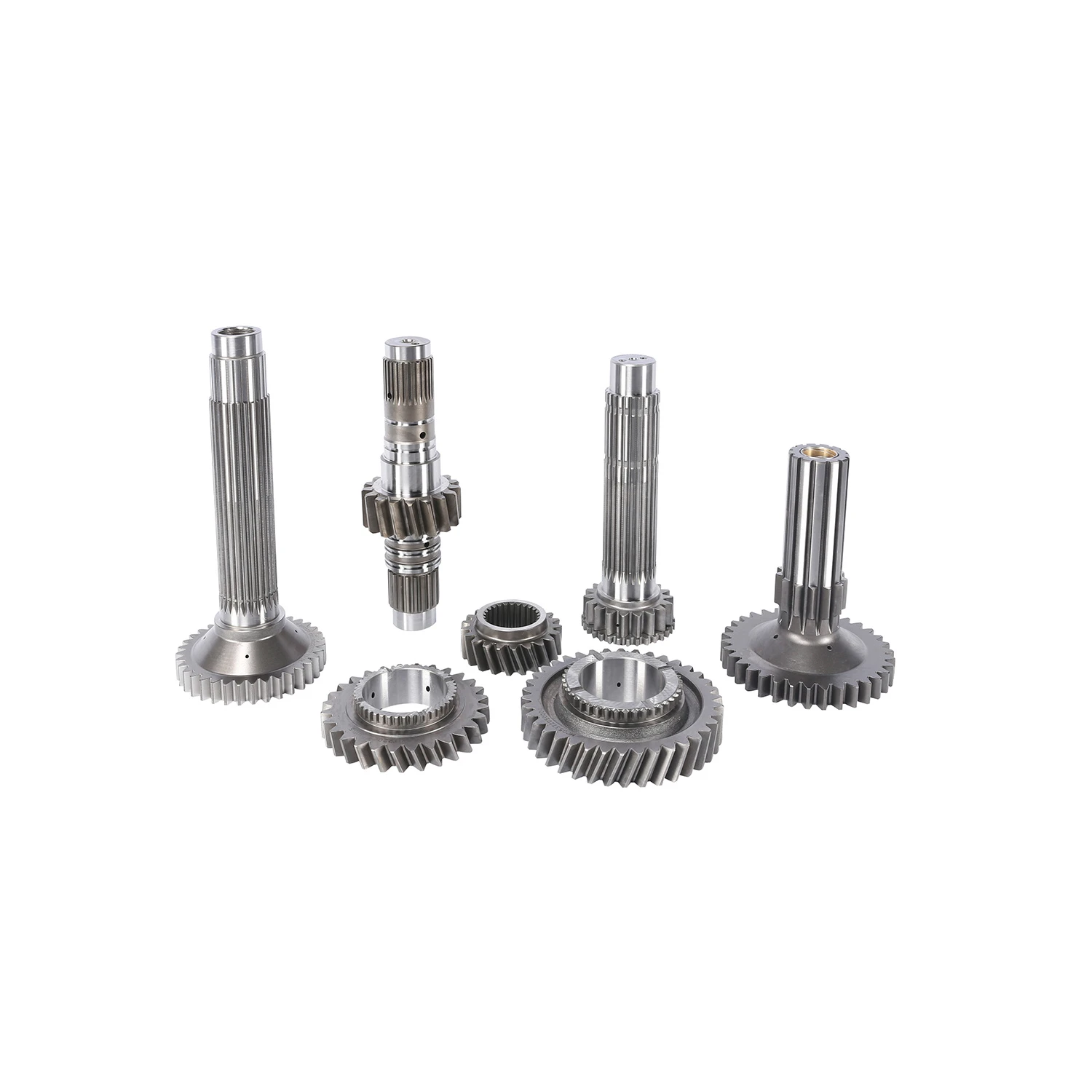 Tractor Gear Shaft
The tractor gear shaft is a crucial element in the power transmission system of a tractor. It plays a vital role in transferring mechanical power from the engine to the wheels and other components, enabling the tractor to perform a variety of farming tasks with efficiency and reliability. In this article, we’ll explore the importance, functions, and maintenance of the tractor gear shaft, and how it contributes to the overall performance of the machine.
-
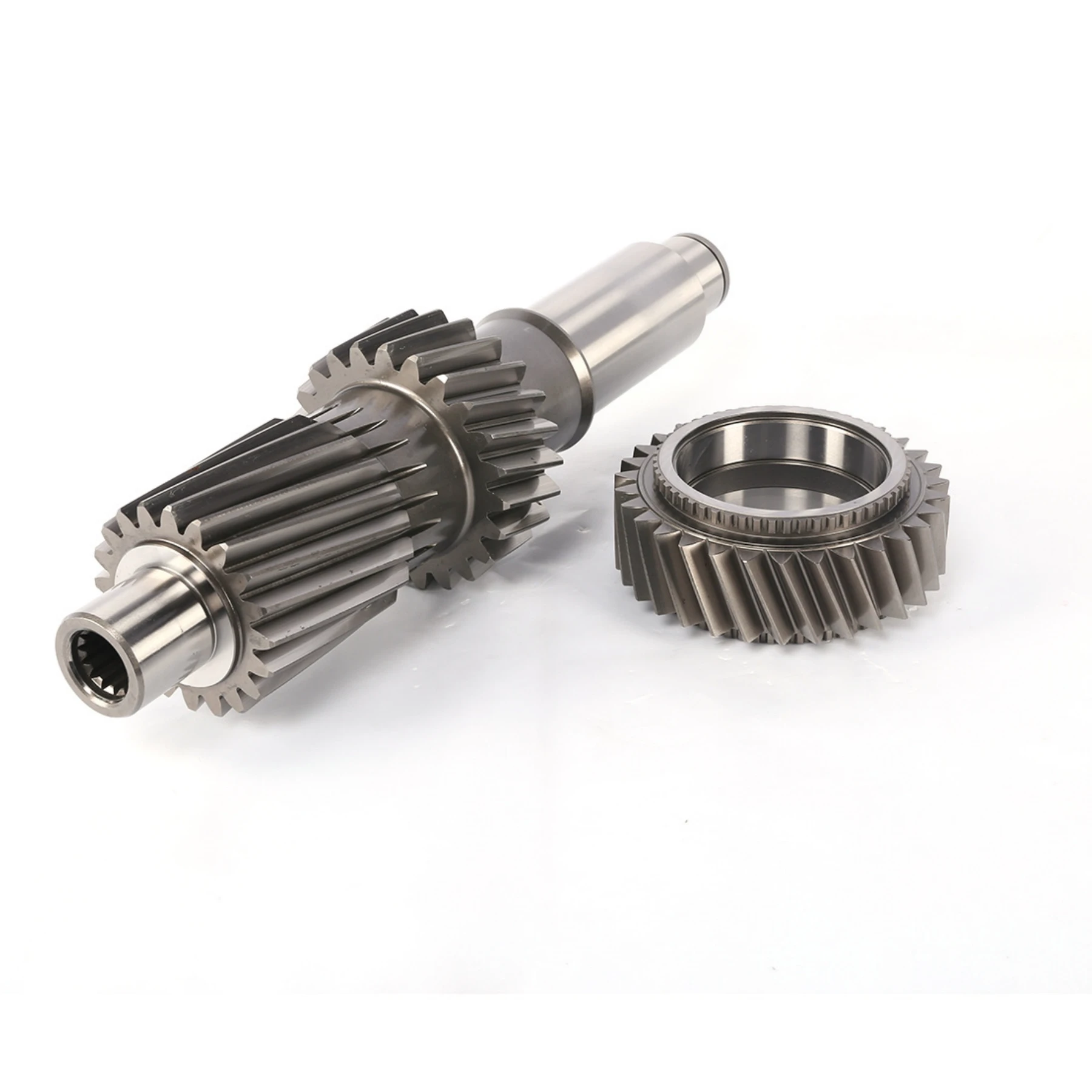 Transmission Gear
Power transmission: the engine operation drives the input gear on the input shaft to rotate, the input gear engages with other gears, and relies on the interaction between teeth and teeth to transfer the power to the intermediate gear (if any) and the output gear, and finally transfers the power to the driving wheel and other components through the output shaft to make the vehicle or equipment move.
Variable speed principle: Change the transmission ratio by meshing gears with different numbers of teeth. For example, when the big gear drives the small gear, the speed of the small gear will be faster than the big gear, but the output torque will be smaller, to achieve growth and torque reduction; On the contrary, when the pinion drives the big gear, the speed of the big gear slows down, the torque increases, and the torque increases. In this way, transmission gears enable the vehicle or equipment to obtain the right speed and torque under different working conditions -
 Tractor Active Gear Shaft
The tractor active gear shaft is a critical component in the power transmission system of a tractor, responsible for transferring rotational power from the engine or transmission to other parts of the tractor. By efficiently distributing torque and enabling smooth gear shifts, the active gear shaft plays a vital role in enhancing the performance and versatility of the tractor, making it essential for a wide range of agricultural tasks. In this article, we’ll explore the function, benefits, and maintenance of the tractor active gear shaft.
-
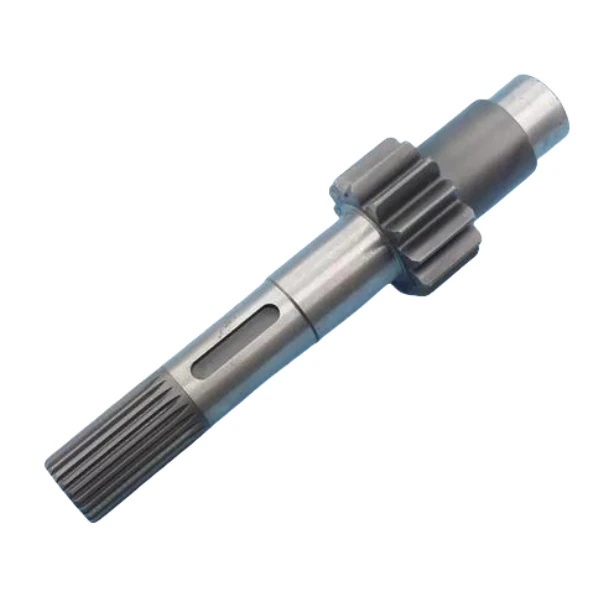 Harvester Input Shaft
The main role of the harvester input shaft is to introduce the power of the external power source into the internal transmission system of the harvester. When the power source (such as an engine) is running, the torque generated is transmitted to the input shaft through the connecting parts, causing the input shaft to start rotating. The gear, pulley or sprocket and other transmission parts installed on the input shaft will rotate with the rotation of the input shaft, and then transfer the power to the subsequent transmission parts and working parts, such as driving the cutting device, conveying device, threshing device, etc., to complete the crop harvesting, conveying, threshing and other work processes.
Related News

What Is the Use of Seeder? Air Suction No-Till Seeder FAQ
Learn what is the use of seeder equipment, how air suction seed placement works, supported crops, terrain features, and ordering checks for no-till planting.
>

Comparing A Rice Planter Options: Specifications, Materials and Supplier Documentation
Compare A Rice Planter options by planting controls, field conditions, materials, operating modes, customization, and documented information gaps.
>

Optimize Your Small Scale Farm With a Hobby Farm Seed Drill
Optimizing Your Small-Scale Farm with a Hobby Farm Seed Drill For many aspiring farmers and gardening enthusiasts, transitioning from hand-sowing to mechanized planting is a significant milestone. Utilizing a hobby farm seed drill allows for precision planting, ensuring that seeds are placed at the correct depth and spacing for optimal germination. Whether you are growing cover crops, vegetables, or grains on a small scale, the right equipment reduces physical labor and minimizes seed waste. In this guide, we will explore how the right seeding technology can transform your agricultural productivity and the key factors to consider when selecting equipment for your plot.
>

Maximize Crop Yields with the Professional Happy Seed Drill
Maximize Crop Yields with the Happy Seed Drill: An Essential Guide In the modern agricultural landscape, precision is the key to sustainability and profitability. The happy seed drill represents a significant leap in planting technology, designed to ensure that every seed is placed at the optimal depth and spacing. By reducing seed waste and improving germination rates, this machinery allows farmers to optimize their land use and increase overall harvest efficiency. Whether you are managing a small family plot or a large-scale industrial farm, understanding the mechanics and benefits of advanced seeding equipment is crucial for long-term success.
>

Professional Hand Seed Drill Machine for Precision Planting
Maximize Your Harvest with the Professional Hand Seed Drill Machine Efficient planting is the cornerstone of a successful harvest. For modern farmers seeking a balance between precision and manual control, the hand seed drill machine offers an indispensable solution. By integrating advanced seed distribution mechanisms with ergonomic design, these machines reduce the physical burden of sowing while ensuring every seed is placed at the optimal depth. Whether you are managing a small vegetable plot or a larger cereal field, investing in high-quality planting equipment can drastically improve crop uniformity and yield. In this guide, we will explore the features and advantages
>

Efficient Farming with Hand Operated Seed Drill Machine Guide
Revolutionizing Planting: The Ultimate Guide to the Hand Operated Seed Drill Machine For small to medium-scale farmers, precision in sowing is the cornerstone of a successful harvest. The hand operated seed drill machine offers a perfect blend of simplicity and efficiency, eliminating the tedious nature of manual broadcasting. By ensuring uniform seed depth and consistent spacing, this tool maximizes germination rates and optimizes crop yield. In an era where agricultural productivity is key to food security, adopting a reliable manual seeder is a strategic move for any grower looking to reduce labor costs while improving plant health.
>

Maximize Crop Yields with a hand operated automatic seed drill
Maximizing Crop Yields with a Hand Operated Automatic Seed Drill Efficient planting is the cornerstone of successful farming. The hand operated automatic seed drill represents a significant leap in agricultural technology for small to medium-scale farmers. By combining manual mobility with automatic precision, this tool eliminates the inconsistencies of hand-broadcasting seeds, ensuring optimal spacing and depth. Whether you are managing a vegetable garden or a commercial grain plot, utilizing a precision seeder reduces waste and promotes healthier plant growth. In this guide, we explore how this innovative machinery optimizes the sowing process and why it is an essential investment for modern sustainable agriculture.
>

Guide to Four Wheel Drive Manual Transmission for Off Road Control
Mastering the Terrain: The Guide to Four Wheel Drive Manual Transmission For off-road enthusiasts and industrial operators, the combination of a four wheel drive manual transmission offers an unparalleled level of control and reliability. Unlike automatic systems that rely on computer-managed shifts, a manual setup allows the driver to dictate exactly how power is distributed to the wheels, making it indispensable for steep inclines, muddy terrains, and heavy-duty hauling. At Zinanmech , we understand that the synergy between a robust drivetrain and a manual gearbox is what defines true mechanical endurance.
>

Complete Guide to Choosing All Wheel Drive Transmission Systems
Mastering Traction: The Ultimate Guide to All Wheel Drive Transmission When it comes to vehicle performance and safety across diverse terrains, the all wheel drive transmission plays a pivotal role. Unlike standard drivetrains, AWD systems are engineered to distribute power to all four wheels simultaneously, providing superior grip and stability regardless of the road surface. Whether you are navigating snowy mountain passes or rain-slicked highways, understanding how these systems function can help you make an informed decision for your fleet or personal vehicle. In this comprehensive guide, we will explore the technical nuances, different types of AWD systems, and how to maintain them
>

Find High Quality All Wheel Drive Manual Transmission for Sale
Finding the Best All Wheel Drive Manual Transmission for Sale: A Buyers Guide For driving enthusiasts and off-road professionals, the combination of all-wheel drive AWD and a manual gearbox represents the pinnacle of vehicle control. Searching for an all wheel drive manual transmission for sale can be a daunting task, as these configurations have become increasingly rare in the modern automotive market. Whether you are looking to upgrade your current vehicles drivetrain or purchasing a specialized machine for rugged terrain, understanding the mechanical nuances is key. This guide provides an in-depth look at how to identify high-quality transmissions
>
International layout
Spread all over the world
our products are exported to various parts of the world. Currently, our products have been exported to more than 40 countries Our products cover Asia, Europe, Africa, South America, North America, and Oceania
Sign up
for Newsletter
Subscribe to the weekly newsletter for all the latest updates