Precision in sowing is the cornerstone of a successful harvest, and the process of calibrating a seed drill ensures that every seed is placed at the optimal depth and spacing. In an era of rising food demand and dwindling arable land, the ability to optimize seed distribution directly impacts crop yield and resource efficiency. For modern farmers, this technical adjustment is not merely a routine chore but a strategic necessity to eliminate waste and maximize genetic potential.
Globally, the agricultural sector is shifting toward "precision farming," where the margin for error is shrinking. When a seed drill is improperly calibrated, the results are often catastrophic: either over-seeding leads to nutrient competition and wasted capital, or under-seeding creates gaps that allow weeds to thrive. By mastering the art of calibrating a seed drill, operators can ensure a uniform plant population, which is essential for mechanized harvesting and overall field health.
This guide aims to demystify the technicalities of seed drill calibration, bridging the gap between complex machinery parameters and practical field application. Whether you are utilizing traditional mechanical drills or advanced pneumatic systems, understanding the relationship between ground speed, gear ratios, and seed flow is vital. By focusing on rigorous calibration, agricultural enterprises can significantly reduce seed costs while enhancing the sustainability of their farming operations.
Global Relevance of Seed Drill Calibration
On a global scale, agricultural efficiency is no longer optional; it is a requirement for food security. According to data aligned with FAO and ISO standards, precision in planting can increase yields by up to 15% by optimizing plant density. The process of calibrating a seed drill is the primary mechanism through which this precision is achieved, ensuring that expensive hybrid seeds are not wasted.
In regions like the Great Plains of North America or the vast steppes of Eurasia, where thousands of hectares are sown in narrow windows, a calibration error of even 5% can result in tons of lost production. This global challenge underscores the need for high-quality transmission components and gears that can maintain consistent seed flow despite varying soil conditions and tractor speeds.
Defining the Calibration Process in Modern Farming
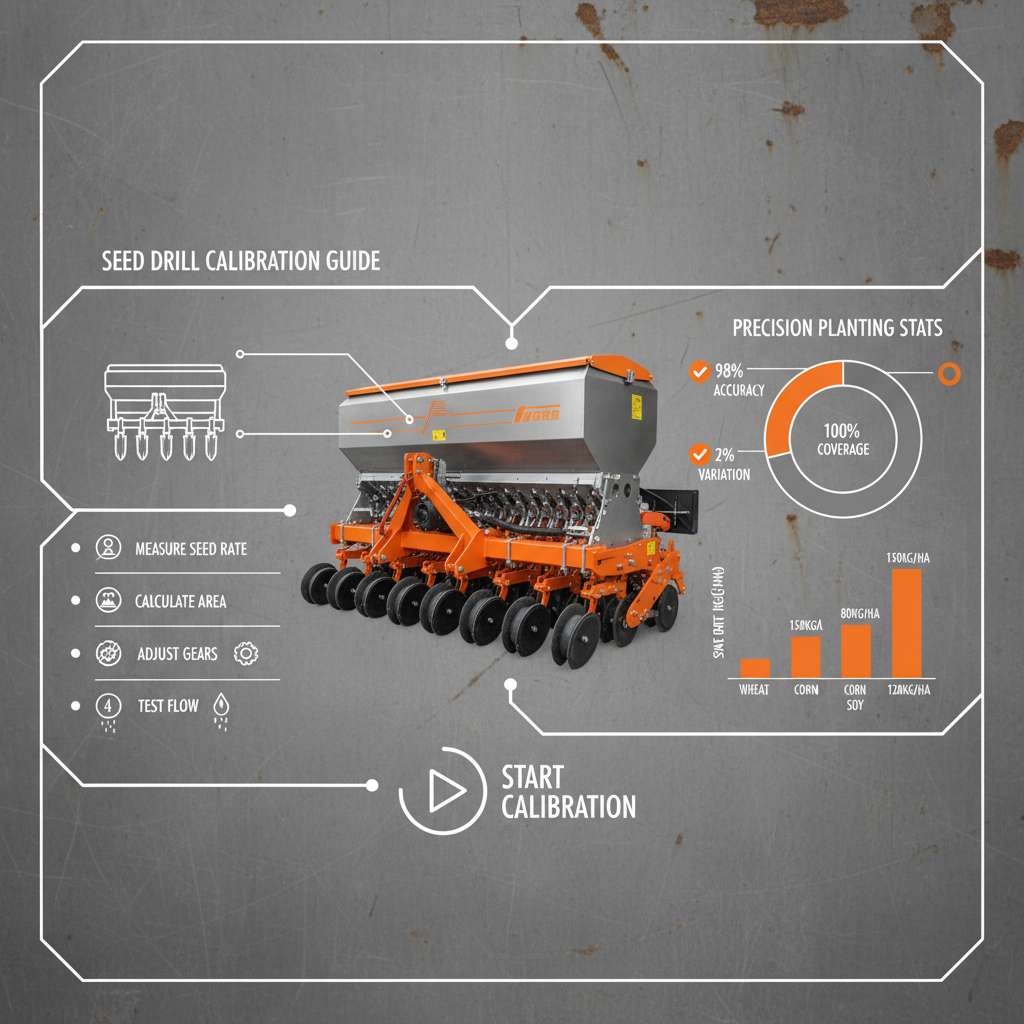
In simple terms, calibrating a seed drill is the act of adjusting the machinery to ensure that the specific amount of seed required per unit of area is delivered accurately. It involves calculating the desired seed rate (kg/ha) and adjusting the machine's metering mechanism—whether through gear changes, dial settings, or electronic controllers—to match that target.
This process is intrinsically linked to humanitarian needs, as increasing the efficiency of small-to-medium scale farms in developing nations can significantly reduce poverty. When a farmer knows exactly how much seed is entering the ground, they can manage their limited resources more effectively, reducing the risk of crop failure due to over-crowding or insufficient plant populations.
Modern calibration transcends simple measurements; it is a synergy between mechanical engineering and agronomy. By integrating precise drive gears and shafts, manufacturers enable farmers to switch between different seed varieties (from fine-seeded clover to large corn kernels) with minimal downtime, ensuring the machinery adapts to the crop rather than forcing the crop to adapt to the machine.
Key Technical Factors for Accurate Sowing
One of the most critical factors in calibrating a seed drill is Mechanical Precision. The quality of the transmission box and the wear level of the drive gears directly influence the consistency of the metering roll. Any slippage in the drive system leads to "skips" in the field, creating uneven growth patterns that complicate later harvesting stages.
Seed Morphology also plays a pivotal role. Different seeds have different coefficients of friction and flowability. Proper calibration requires adjusting the seed plates or metering rollers to match the seed size and shape, ensuring that the machine doesn't "bridge" or clog, which would otherwise disrupt the calculated seed rate.
Finally, Ground Speed Synchronization is essential. Since seed drills are typically ground-driven, the rate of delivery is tied to the speed of the tractor. An operator must calibrate the machine based on the actual working speed in the field, accounting for wheel slip in wet soils to ensure the actual seed placement matches the theoretical design.
Practical Applications Across Diverse Terrains
The application of calibrating a seed drill varies significantly depending on the geography. In the heavy clay soils of Central Europe, calibration must account for higher drag on the coulters, which can affect the drive wheel's rotation. In contrast, in the sandy loams of the Midwestern US, the focus shifts toward preventing seed bounce and ensuring precise depth control.
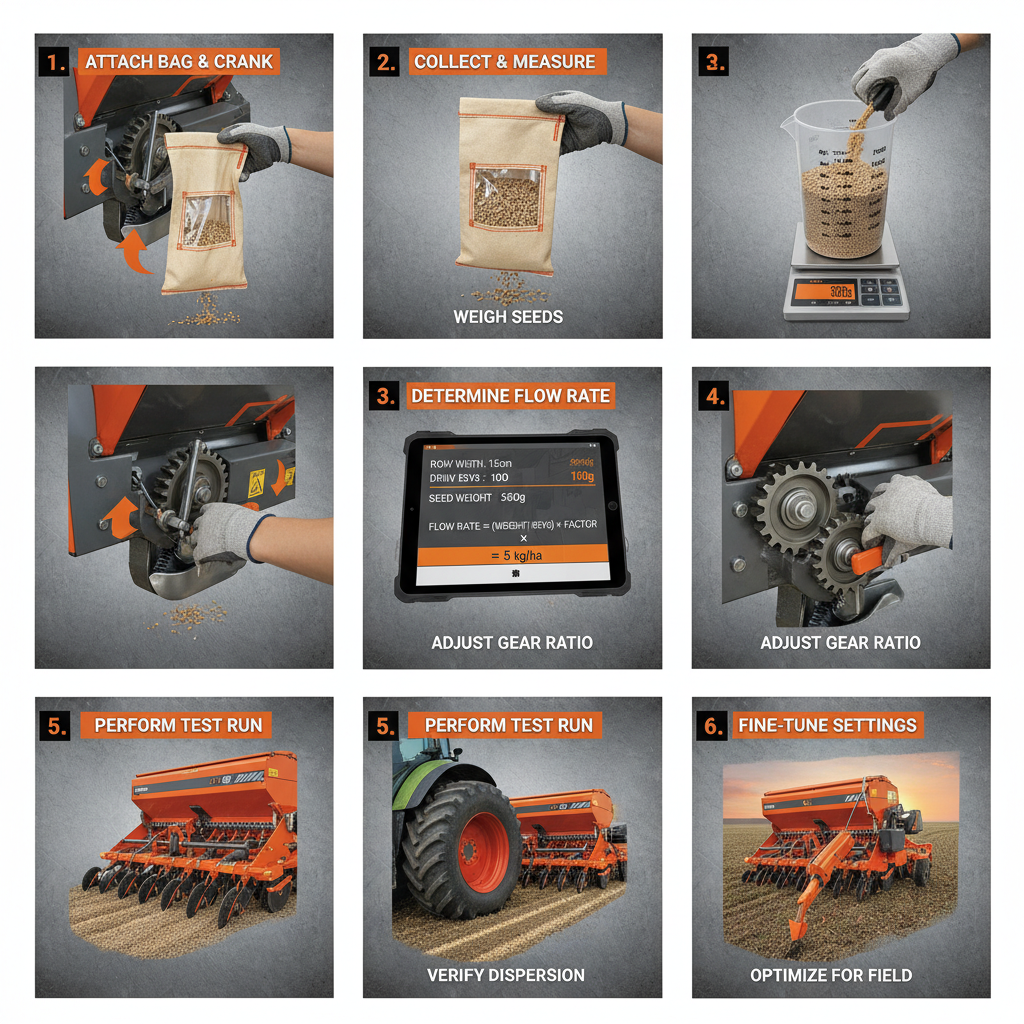
In remote industrial zones or large-scale corporate farms, calibration is often performed using "catch-can" tests or electronic seed monitors. By stopping the tractor at set intervals and weighing the output of each row, operators can fine-tune the machine to account for slight manufacturing variances in the gears or seed plate wear, ensuring absolute uniformity across thousands of acres.
Effectiveness of Different Methods for Calibrating a Seed Drill
Long-Term Economic and Environmental Value
The financial impact of calibrating a seed drill is immediate and measurable. Seed costs represent a significant portion of the operating budget; by preventing over-seeding, a farm can save hundreds of dollars per hectare. Beyond the direct cost of seeds, proper calibration reduces the need for subsequent thinning operations and minimizes the competition for nitrogen and water, leading to healthier, more resilient crops.
From a sustainability perspective, precise sowing reduces the environmental footprint of agriculture. Fewer seeds wasted means less energy spent in seed production and transport. Furthermore, uniform plant spacing allows for more efficient application of fertilizers and pesticides, as the chemical inputs are targeted exactly where the plants are located, reducing runoff into local water systems and protecting biodiversity.
Future Trends in Automated Calibration
The future of calibrating a seed drill lies in the integration of IoT and real-time sensor feedback. We are seeing a transition from static, pre-planting calibration to "dynamic calibration," where the machine adjusts its output on the fly based on the tractor's GPS speed and soil resistance sensors. This eliminates the human error associated with manual calculations and catch-can tests.
Digital transformation is also bringing AI-driven diagnostics to the transmission. Smart gears and sensors can now detect wear and tear in the drive shafts before they cause a calibration drift. By alerting the operator to a worn gear, the system ensures that the sowing rate remains consistent throughout the entire season, regardless of the mechanical age of the equipment.
Furthermore, the move toward "green energy" is influencing the design of seed drills. Electric drive motors are replacing traditional hydraulic and ground-driven systems, allowing for infinitely variable seed rates that can be controlled via a tablet. This shift represents the pinnacle of calibrating a seed drill, moving from gear-swapping to software-defined precision.
Overcoming Common Calibration Challenges
Despite the available technology, many farmers struggle with "calibration drift," where the machine begins accurately but deviates over time. This is often caused by seed buildup in the metering box or the gradual loosening of drive chains. The professional solution is to implement a "mid-field check" protocol, where the drill is re-verified every few hours of operation to ensure the settings remain true.
Another common challenge is the variation in seed moisture content, which can change how seeds flow through the tubes. To combat this, experts suggest adjusting the calibration based on the seed lot's moisture percentage, slightly increasing the rate for drier, more "slippery" seeds to maintain the same actual plant population in the soil.
Ultimately, the most effective way to ensure successful calibrating a seed drill is through the use of high-grade, precision-engineered components. Investing in high-quality transmission boxes and durable gears reduces the frequency of recalibration and ensures that the machine delivers a consistent performance from the first acre to the last.
Comparative Analysis of Seed Drill Calibration Variables
| Calibration Variable |
Impact on Yield |
Complexity to Adjust |
Recommended Check Frequency |
| Drive Gear Ratio |
High |
Medium |
Per Crop Type |
| Metering Plate Size |
Critical |
High |
Per Seed Lot |
| Tractor Ground Speed |
Medium |
Low |
Real-time |
| Seed Moisture Level |
Low |
Low |
Daily |
| Coulter Depth |
High |
Medium |
Per Field Block |
| Drive Chain Tension |
Medium |
Low |
Weekly |
FAQS
Ideally, you should calibrate your seed drill before starting every new crop variety or seed lot. Additionally, performing a quick "catch-can" check every 10-20 hours of operation is recommended to account for mechanical wear or changes in seed flowability caused by humidity and temperature shifts.
Manufacturer charts provide a critical baseline, but they assume "ideal" conditions. Real-world factors like tire slip, gear wear, and seed coating variations mean that manual verification is always necessary to ensure the theoretical rate matches the actual ground delivery.
Over-calibrating leads to excessive seed placement, which increases costs and causes "intra-species competition." Plants will compete for the same nutrients and water, often resulting in thinner stalks and smaller yields than a correctly spaced crop.
Since most drills use ground-driven transmissions, the speed of the drive wheel determines the seed output. If you drive faster than the speed used during calibration, or if your wheels slip in mud, the seed rate per acre will be incorrect, leading to uneven plant populations.
While the principle of calibrating a seed drill remains the same, the method differs. Pneumatic drills focus on air pressure and vacuum settings rather than gear ratios, though the final verification of seed output per meter is still required.
The most common culprits are worn drive gears, stretched chains, and degraded seed plates. These components cause "slippage" or inconsistent metering, making the machine output less than what the settings indicate.
Conclusion
Mastering the process of calibrating a seed drill is far more than a mechanical necessity; it is an investment in the productivity and sustainability of the land. From selecting the right gear ratios to implementing real-time monitoring and rigorous field tests, every step in the calibration journey contributes to a more uniform crop and a higher return on investment. By bridging the gap between theoretical seed rates and actual field delivery, farmers can minimize waste and maximize their genetic yield potential.
Looking forward, the integration of smart transmission components and automated feedback loops will continue to refine the precision of sowing. We encourage operators to prioritize the maintenance of their drive systems and to adopt a culture of continuous verification. For those seeking the highest precision components to ensure their machinery is always ready for perfect calibration, we invite you to explore our professional range of agricultural gears and shafts. Visit our website: www.zinanmech.com