The global agricultural landscape is undergoing a seismic shift toward precision farming, where the efficiency of planting determines the overall yield of the season. Central to this evolution is the carrier seed drill, a sophisticated piece of machinery designed to optimize seed placement and soil contact. By integrating advanced mechanical distribution systems, these machines ensure that every seed is planted at the precise depth and interval required for maximum germination.
Across various terrains, from the vast prairies of North America to the intensive farming zones of Asia, the demand for high-performance seeding equipment has never been higher. The carrier seed drill addresses the critical challenge of reducing seed waste and labor costs while maximizing the use of available land. As global populations rise, the ability to scale food production through such mechanical innovations becomes not just an economic advantage, but a necessity for food security.
Understanding the nuances of this technology allows farm operators and equipment distributors to make informed decisions about their fleet. Whether it is through improving the durability of transmission gears or enhancing the precision of the metering system, the engineering behind the carrier seed drill represents a perfect blend of heavy-duty manufacturing and agricultural science. This guide explores the technical depth and practical utility of these essential machines in modern farming.
Global Relevance of Carrier Seed Drill
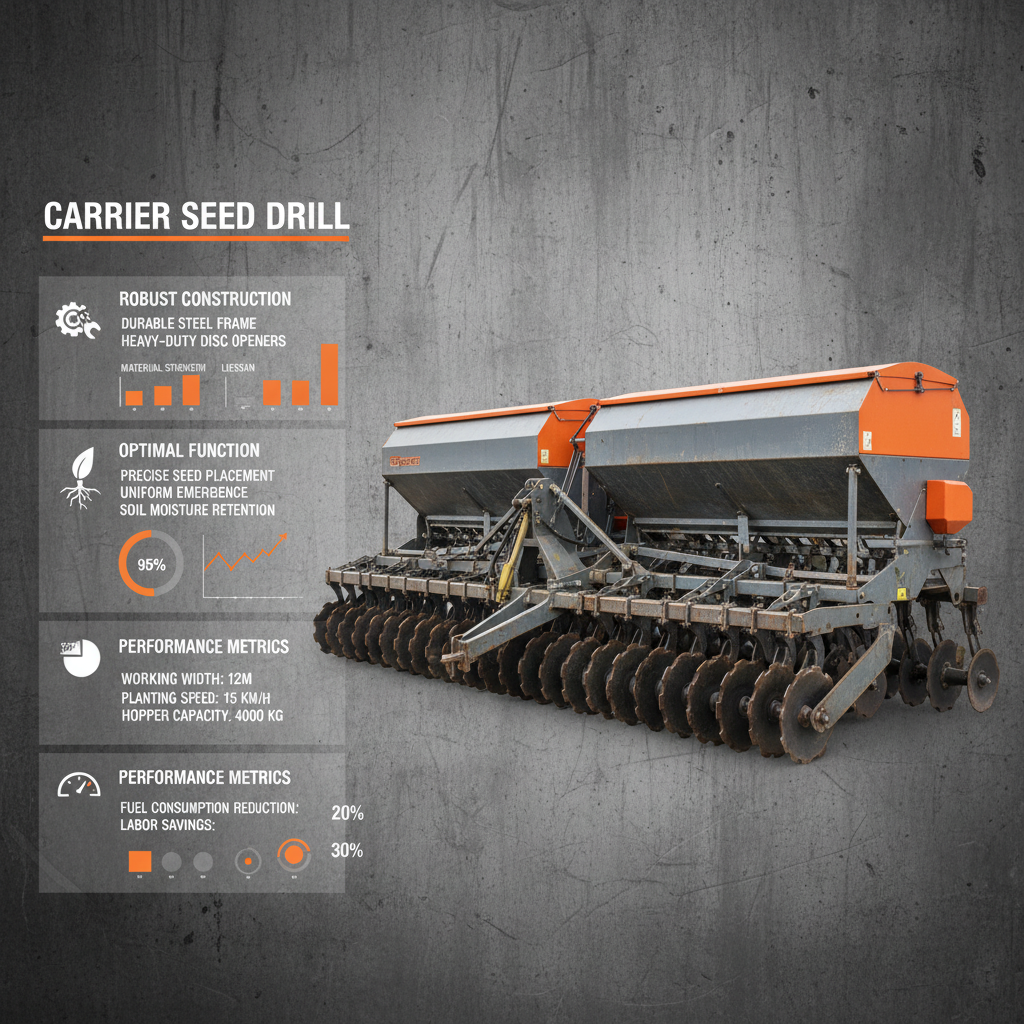
The global agricultural sector is facing unprecedented pressure to increase caloric output while minimizing environmental impact. According to data trends aligned with ISO standards for agricultural machinery, the adoption of a high-efficiency carrier seed drill can increase planting speed by up to 30% compared to traditional methods. This efficiency is vital in regions with short planting windows, where a few days of rain can make the difference between a bumper crop and a total loss.
Beyond speed, the global relevance of these machines lies in their ability to standardize crop density. In the pursuit of Sustainable Development Goals (SDGs) regarding hunger, the precision offered by a carrier seed drill reduces the reliance on over-seeding, which in turn lowers the cost of inputs and prevents the depletion of soil nutrients.
Defining the Modern Carrier Seed Drill
In simple technical terms, a carrier seed drill is a specialized agricultural implement designed to carry a large volume of seeds and precisely deposit them into the soil at controlled depths. Unlike basic broadcasters, the carrier system utilizes a mechanical or pneumatic delivery mechanism that ensures each seed is placed in a furrows, covering it immediately with soil to protect it from birds and wind.
Modern iterations of this machinery are often integrated with transmission systems that allow for adjustable seeding rates. This connection to modern industry is evident in the use of high-grade alloy gears and shafts, which allow the machine to operate under heavy loads in varying soil conditions without losing calibration. The "carrier" aspect refers to the robust hopper and frame system that supports the weight of the seeds and fertilizers over large acreage.
From a humanitarian perspective, the widespread availability of an affordable and durable carrier seed drill empowers small-to-medium scale farmers in developing nations. By moving away from manual broadcasting, these farmers can significantly increase their yields, leading to improved local food security and economic stability for rural communities.
Core Components and Engineering Factors
The durability of a carrier seed drill begins with its chassis and transmission core. The use of heat-treated gears and precision-ground shafts ensures that the drive system can withstand the immense torque required to pull openers through compacted clay or rocky soils. Without these high-strength components, the machine would suffer from frequent downtime during the critical planting window.
Scalability is another key factor, allowing the carrier seed drill to be adapted for different crop types, from fine seeds like canola to larger grains like corn. This is achieved through interchangeable metering plates and adjustable depth control wheels, ensuring that the equipment remains versatile across different farming seasons and regional requirements.
Cost efficiency is realized not just in the purchase price, but in the operational life of the machine. A well-engineered carrier seed drill minimizes seed waste through precise calibration. When paired with high-quality transmission connection components, the friction is reduced, lowering the fuel consumption of the tractor pulling the implement and extending the service interval of the machinery.
Practical Applications Across Global Regions
In the vast agricultural belts of Brazil and the United States, the carrier seed drill is used in large-scale industrial farming to manage thousands of hectares. These regions rely on wide-span drills that can cover massive areas in a single pass, utilizing GPS-guided steering to ensure that no overlap occurs, which prevents over-saturation of seeds and fertilizer in any single area.
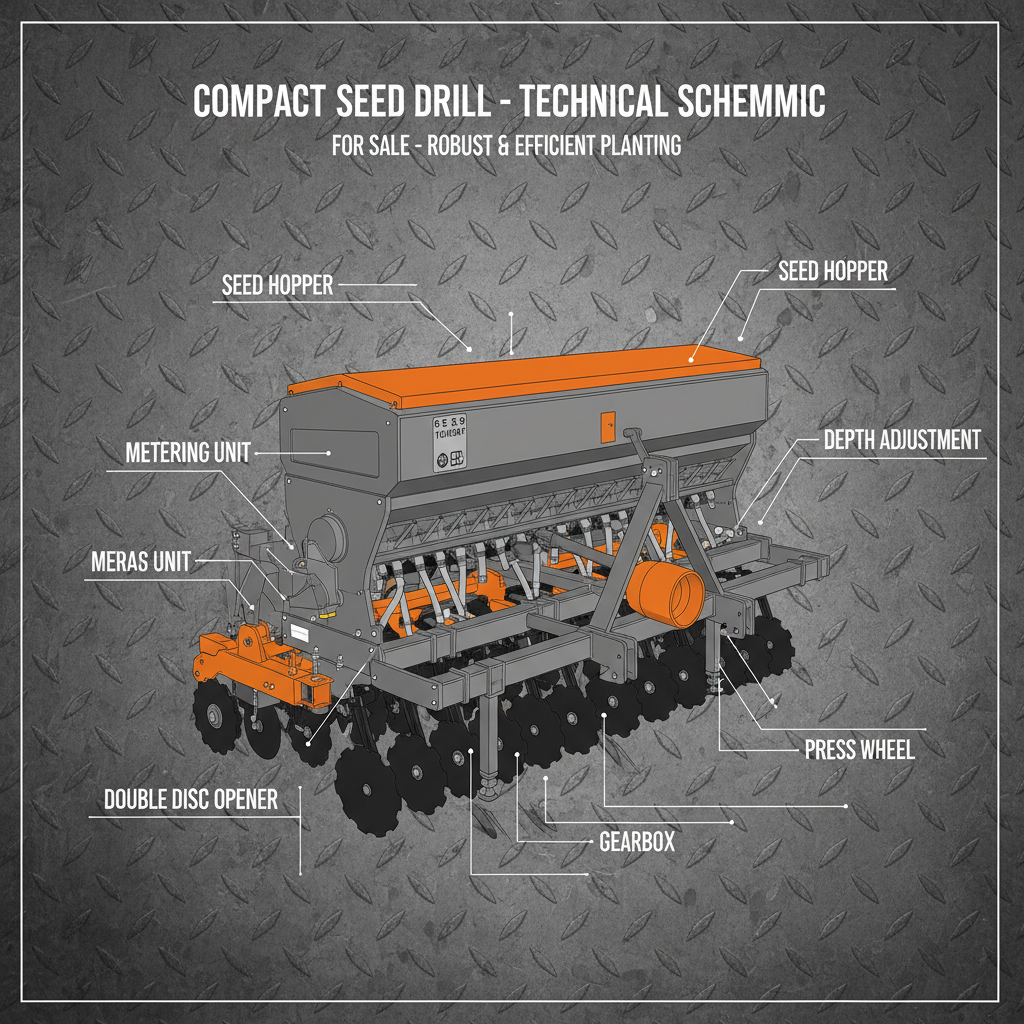
Conversely, in the smaller, fragmented plots of Southeast Asia or Sub-Saharan Africa, compact carrier seed drill models are deployed. These are often designed to be pulled by smaller tractors or even animal-drawn systems, providing the same precision as industrial models but scaled for accessibility. In post-disaster relief operations where rapid reforestation or crop replanting is necessary, these portable drills are essential for restoring local food cycles.
Comparative Efficiency of Carrier Seed Drill Models
Long-Term Value and Sustainability
The long-term value of investing in a high-quality carrier seed drill extends beyond immediate harvest gains. By ensuring a uniform plant population, farmers can optimize the application of water and nutrients. This reduction in waste not only saves money but also protects the surrounding ecosystem from nutrient runoff, which is a primary cause of water pollution in agricultural zones.
From a logical angle, the reliability of the machine builds trust in the farming cycle. When a farmer knows that their carrier seed drill will not fail mid-season due to a broken gear or a jammed metering system, they can plan their labor and logistics with confidence. This emotional security, combined with the tangible increase in yield, drives the adoption of precision machinery globally.
Future Innovations in Seeding Technology
The future of the carrier seed drill is inextricably linked to digital transformation. We are seeing the emergence of "Smart Drills" equipped with IoT sensors that monitor soil moisture and temperature in real-time, adjusting the seeding depth and rate on the fly. This level of automation ensures that every seed is placed in the optimal micro-environment for growth.
Material science is also playing a role, with the introduction of carbon-fiber reinforced frames and ceramic-coated seed tubes to reduce friction and wear. These innovations make the carrier seed drill lighter, reducing the soil compaction caused by heavy machinery, which is a critical factor in maintaining soil health over decades.
Furthermore, the integration of autonomous tractor systems allows for the carrier seed drill to operate with centimeter-level accuracy without a human driver. This shift toward automation not only solves the problem of agricultural labor shortages but also allows for "intercropping" patterns that were previously too complex for human operators to execute.
Overcoming Operational Challenges
One of the most common limitations in current practice is the clogging of seed tubes in high-humidity conditions. To overcome this, innovative manufacturers are implementing anti-static coatings and vibration-assisted delivery systems within the carrier seed drill to ensure a constant flow of seeds even when the material is slightly damp.
Another challenge is the wear and tear of ground-engaging parts. Expert insights suggest a shift toward modular design, where the high-wear components of the carrier seed drill can be replaced in the field without requiring a full workshop teardown. This reduces downtime and extends the overall lifespan of the machine.
Finally, calibration errors can lead to uneven crop distribution. The solution lies in the adoption of electronic seed monitors that provide real-time feedback to the operator. By integrating these sensors into the carrier seed drill, farmers can detect a blocked row immediately and correct it, ensuring 100% field coverage.
Technical Analysis and Comparison of Carrier Seed Drill Specifications
| Drill Model Type |
Seeding Precision |
Durability Score |
Maintenance Cost |
| Standard Mechanical |
Moderate |
8/10 |
Low |
| Pneumatic Precision |
High |
7/10 |
Medium |
| Heavy-Duty Industrial |
Moderate |
10/10 |
Medium |
| IoT Integrated Smart |
Ultra-High |
6/10 |
High |
| Compact Multi-Crop |
Moderate |
8/10 |
Low |
| Vacuum Carrier System |
High |
7/10 |
Medium |
FAQS
A carrier seed drill provides precise depth control and spacing, which ensures that seeds have optimal soil contact and reduced competition for nutrients. Traditional broadcasting often results in seeds sitting on the surface where they are prone to drying out or being eaten by birds, leading to significantly lower germination rates and wasted seed costs.
Depending on the soil hardness and usage hours, high-quality alloy gears typically last several seasons. However, we recommend a full inspection of the drive shafts and transmission connection components every 500 operating hours to check for wear and ensure proper lubrication, which prevents premature failure during peak planting.
Yes, most modern carrier seed drills are designed for versatility. By changing the metering plates and adjusting the furrow opener depth, you can switch from planting coarse grains to smaller oilseeds. Some premium models even feature adjustable hopper dividers to carry two different seed types for intercropping.
Compatibility depends on the model's weight and the tractor's horsepower. We offer compact carrier seed drills specifically engineered for low-horsepower tractors, ensuring that the machine doesn't overload the engine while still maintaining the precision and durability required for professional farming.
Pneumatic systems use air pressure to transport seeds from the hopper to the row units. This eliminates many of the mechanical friction points found in chain-driven systems, allowing for faster planting speeds and a more consistent seed flow, which is especially beneficial for very light or irregularly shaped seeds.
The best way is to reference the specific part numbers of your transmission core components and shafts. Our technical team provides detailed exploded-view diagrams to help international clients identify the exact replacement gears and connection components needed for their specific model of carrier seed drill.